![PortStrategy[GreenPort]](https://www.portstrategy.com/wp-content/uploads/2026/09/PortStrategyGreenPort.svg)



CARGO SHIPPERS’ PORT SELECTION: CHOICES AND CORRIDORS
Who can planners believe- when they are looking beyond the short-term issues (and we have more than a few of those swirling around “On The Waterfront” locally)?

Who can planners believe- when they are looking beyond the short-term issues (and we have more than a few of those swirling around “On The Waterfront” locally)?
There is a school of thought that supply chains will move back towards “normal”, if the World Trade Organisation is to be believed. However, this view (predicated on the idea of fewer “goods” moving around as Covid-weary consumers go with “services”) flies in the face of that of logistics digitizer Flexport, which suggests that 2022 will still be a year of continued disruptions (noting that the real problems are way beyond the weekly counts of anchored vessels – extending deep into technology, trucking and employment issues more generally).
One trend that has caught my eye, and I’ve written about here and elsewhere, concerns Environment, Social, and Governance (ESG). Ports, responsible to taxpayers and citizenry generally, are not strangers to the ESG concept- it’s been around for a while, and has certainly driven funding of projects. What is notable on the commercial side, are recent consultancy suggestions that “reputational issues” are soon going to be right up there with profits in evaluating corporate performance- which drives investor capital inbound. What could evolve in this respect, if one agrees with this train of reasoning, is that ports’ ESG postures may analogously drive cargo routings.
This analogy may seem tenuous- arguably. But then, I listened in to a recent briefing by the World Shipping Council (WSC)- which included remarks by the top executive in a leading liner consortium. In his discussion, centred around “decarbonisation” (the centerpiece of that “E” in ESG), the liner manager envisioned a future where cargo shippers would be able to choose between “faster” and “cleaner” routings (I am paraphrasing) – in other words, supply lines could be varied. Guess which choice the name-brand cargo interests(with their own reputations publicly broadcast) will make?
The ”choices” future won’t happen instantly, but ideas like this ought to be on the radar of port planners in their discussions with carriers. As I’ve said here (and readers have no doubt seen elsewhere), “reputation matters.”
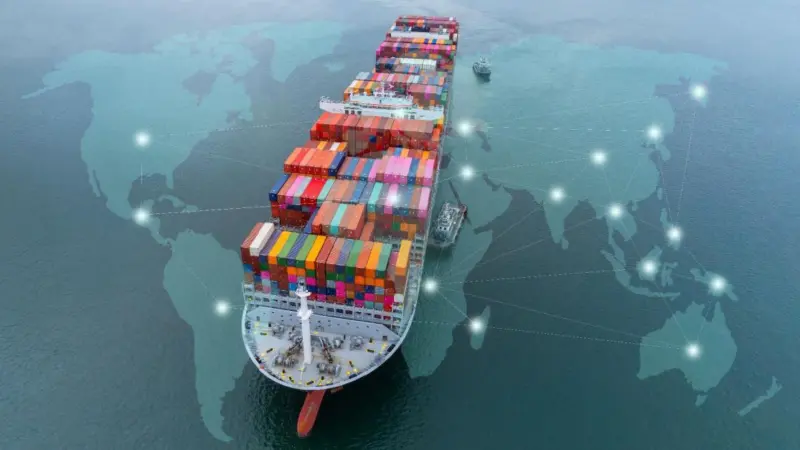
A different sort of future that was brought up in the same WSC presentation, is the idea of “Green Corridors”- built on a concept which emerged at last year’s climate meetings in Glasgow. These corridors, set to emerge in the next few years, will be origin/ destination pathways for early-stage implementation of decarbonised supply chains. By definition, ports are integral here.
So, while there is still considerable uncertainty about 2022’s disruptions, the longer term green path, with choices and corridors, is gaining increasing traction.
Related Articles
 INSIGHT & OPINION
 INSIGHT & OPINION
 INSIGHT & OPINION