![PortStrategy[GreenPort]](https://www.portstrategy.com/wp-content/uploads/2026/09/PortStrategyGreenPort.svg)


Sticks to Carrots
The potential of trade corridors and the impact on shipping fuels.
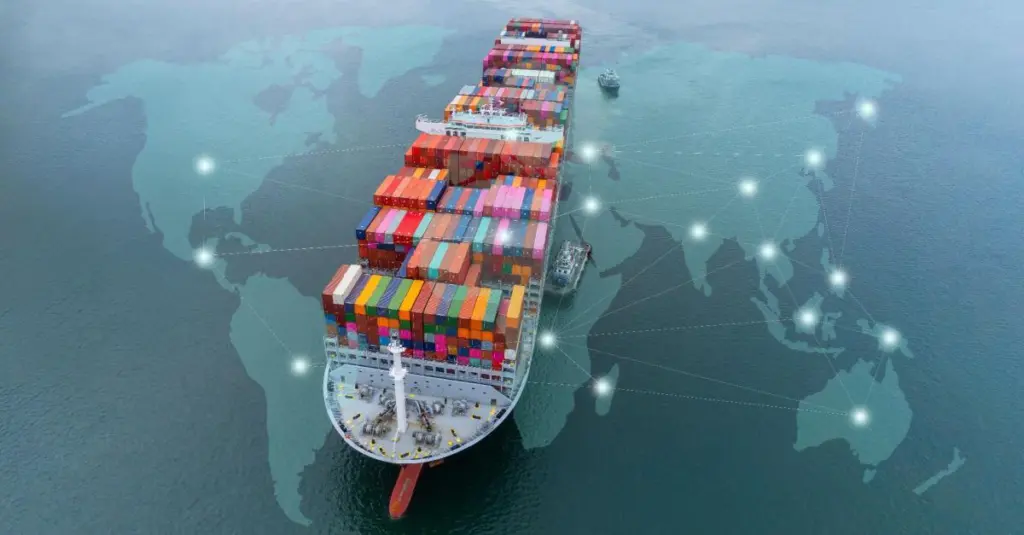
As the maritime business across the US enters its new year, planners are looking at existing and future trade flows and broad industry developments to determine how they might modify their blueprints for the future. An important topic throughout the shipowner side concerns fuels for vessels; in late 2025, the International Maritime Organization (IMO), which develops international standards for vessel specifications, failed to enact guidelines that would specify needed reductions in fuels going out in the coming decades. With nearly 200 nations participating in IMO discussions, the politics are complicated, but, looking at the bigger picture, vessel owners will continue to shift over time to vessels with lower greenhouse gas (GHG) footprints. Industry experts have suggested that the IMO will continue to develop technical standards for the vessels, including limits on allowable emissions, but leave matters such as emissions trading programs, which were the subject of the disputes (and the ultimate failure to agree at the 2025 meetings) to the free marketplace.
Ports have an important role in furthering the transition to lower GHG vessels. Obvious “wins” include developing electric charging for vessels in port, and longer term supporting the infrastructures for alternative fuels. Where liner shipping, characterised by certain predictable routings, is concerned, “green corridors” (a concept introduced at the COP 76 meetings in late 2021, where specific supply chains are re-worked for lower emissions) have now evolved. Recent early 2026 “State of the Port” summaries from West Coast behemoths Long Beach (POLB) and Los Angeles (POLA) offer a blueprint that other ports might emulate. One key aspect is collaboration among (friendly) competitors, POLB and POLA, both with supply lines stretching deep into the US, are cooperating, and have developed a plan where the “region” (in contrast to one specific port) develops a corridor with a leading cargo port at the other end of the chain. In the instant case, the counterparts at the other end of the corridors are the massive ports at Shanghai and Singapore.
The corridors don’t emerge overnight. Indeed, the timelines for implementation will extend well into the 2030s. In my view of market forecasting, along with Economics 101, adjacent port constellations (at both ends of the corridor) will see the cargo flowing and develop similar programs broadening the corridor. Vessel owners, getting comfortable with potential incentivised cargo flows, will order ships meeting the requisite specifications. This, in turn, might induce might other port complexes (which would likely include friendly competitors) in different geographies to develop additional corridors, utilising similar fuels. Oh, by the way, fuel suppliers, watching some of this action, will then be induced to increase availability of the lower emission fuels. In other words, the incentives move from regulatory “sticks” to marketplace “carrots” over time.
Related Articles
 CONTAINER & CARGO HANDLING
 INSIGHT & OPINION
 INSIGHT & OPINION