



Great social etiquette
COMMENT: Ports are getting #social, and that’s a #good thing. While some maritime folks (including at least one New Yorker that I know) are proud to be Luddites, the eyeballs of the general population are increasingly online., writes Barry Parker.
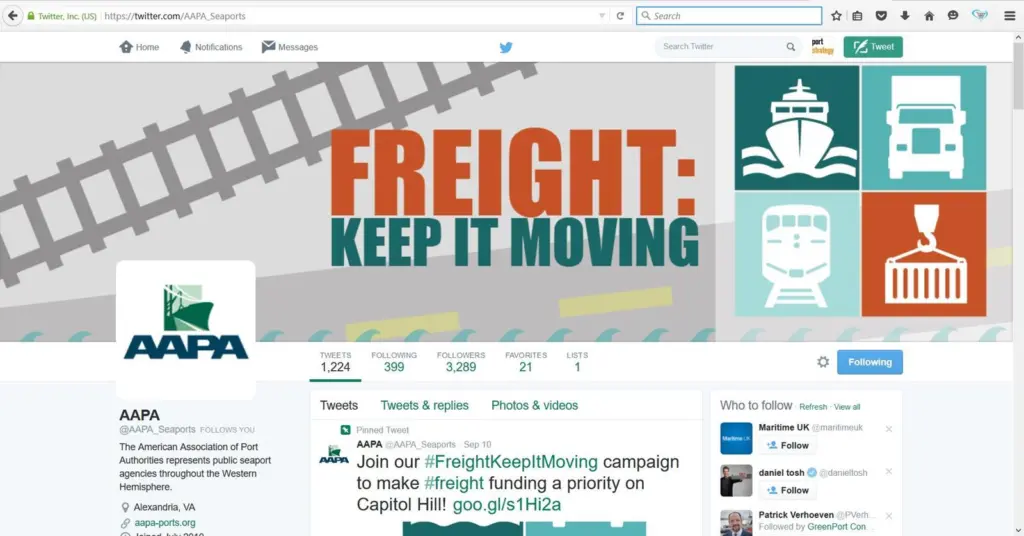
Walking around midtown, most of the folks on the street will be juggling their sometimes perilous walking with their viewing of a smartphone or a tablet device. Recently, the AAPA – the trade association for ports throughout the Americas – launched campaigns on both Twitter and Facebook, hopefully to garner some attention from those brave pedestrians in Manhattan and, importantly, from folks within Washington, DC’s “Beltway” who can influence policy, votes, and flows of money.
Raising awareness about the value of ports in keeping freight moving – the theme of the campaign – is critically important. However, in social media, context matters. There are important differences between print media and their close cousins versus true social media, where the message can move around, contextually, beyond the control of the original sender. Some creativity and media savviness is required. Social media is powerful, but getting into the social fabric requires an approach that differs from the historical ‘broadcast’ techniques of dealing with traditional media.
Consider the recent press release that came through from credit rating agency Standard & Poors (S&P), informing that CSX- the big Class I railroad, a huge player at ports Elizabeth and Newark, had received an investment grade rating (BBB+) on a proposed money raise, borrowing through “senior unsecured notes”.
The commentary from S&P, which can be referenced through a web address that, in turn, can be linked through a Twitter or Facebook post, talks about the strength of this railroad. So, imagine a post that includes the hashtag of #CSX alongside the AAPA’s #FreightKeepItMoving and the more generic #infrastructure.
A particular port served by this railroad could pick up the good news about this large carrier, put their own #hashtag on it, and blast it out. The followers of a large Class 1 railroad will likely include hundreds of analysts, financiers and policy makers – think of those 20-something Congressional aides who are tasked with following all these things. A port can now get its message in front of those folks.
The social media linkages, if done consistently and creatively, can actually mirror the real live supply chains where ports are integral components. And, with increasing numbers of views from influential eyeballs, the #votes and #money will come.
Related Articles
 INSIGHT & OPINION
 INSIGHT & OPINION
 INSIGHT & OPINION