![PortStrategy[GreenPort]](https://www.portstrategy.com/wp-content/uploads/2026/09/PortStrategyGreenPort.svg)

Its important to be part of the mix
COMMENT: Every February, the local and Norwegian and Greek Chambers of Commerce host an excellent conference along the East River waterfront (across from the long-gone industrial terminals in Long Island City and Greenpoint), writes Barry Parker.
Most of the attendees represent shipowners, and lawyers and banker types who work closely with equipment owners and operators. Themes vary from year to year,
with IMO2020 having come and gone, and the US elections looming closer, one of the big topics this year was economic sanctions.
Another topic was decarbonisation, with greenhouse gasses now on the agendas of international maritime regulators more than ever before. On the sanctions part, one observation that struck me was that “shipping” is now in the crosshairs of the US Department of State.
An observation from the regulatory session (which also applied to the discussion of decarbonisation) is that “shipping” really refers to entire supply chains. Cargo origins, and links to entities involved in their movement, are central to the State’s mission of punishing bad actors.
While we can save the politics for another article (or a chat with readers, many of whom know how to find me), suffice it to say that ports are now on a new regulatory radar screen, at least peripherally at this point.
The conference discussions on decarbonisation, a longer-term target for the maritime business (with the IMO looking 30 years out) also pointed to supply chains much broader than vessels only. Ports have already taken great initiatives towards greener operations.
I daresay the port efforts have been more effective and impactful than those from many on the vessel side. The message that was imparted during the sessions, which should be passed along to the port community, is the level of interconnection and intertwining in the cargo supply chains.
At the early Feb event, and at many others, we hear about silos, where one group in an organisation does not talk to another. Taken over a broader context, the message is clear that as data connectivity enables better networking, the ports will need to be part of the mix.
Topics such as measuring emissions from individual vessels, at various points in their voyages, and then reporting them to commercial interests, and to regulators, were the among the items discussed.
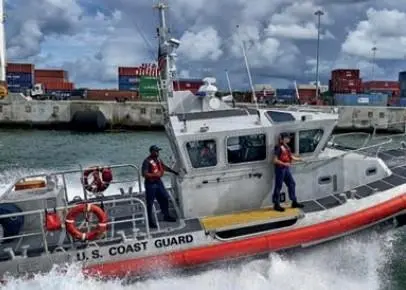
This is all coming, and the ports will need to be an integral part of such architecture. The US Coast Guard, with whom responsibility rests for Port State control of maritime matters, was certainly in attendance at the event- but attendees did not include folks running the working waterfront. Next year, if these subjects are again on the agenda, maybe they should attend.
Related Articles
 INSIGHT & OPINION
 INSIGHT & OPINION
 INSIGHT & OPINION