![PortStrategy[GreenPort]](https://www.portstrategy.com/wp-content/uploads/2026/09/PortStrategyGreenPort.svg)






NOT BUSINESS AS USUAL
COMMENT: USA infrastructure has endured yet another crisis, with the outage of the Colonial Pipeline, a major artery for moving refined products from refineries (in theUS Gulf Coast) to consumers in the Southeast and mid-Atlantic, writes Barry Parker.
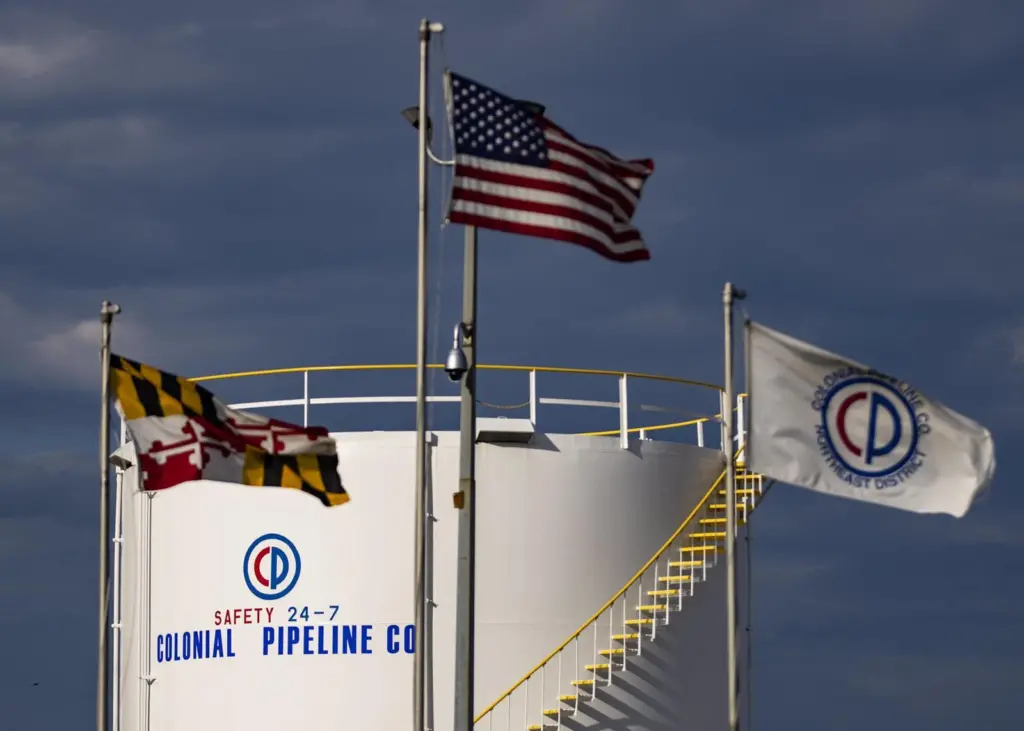
Happily, New Yorkers did not suffer too badly this time. As tankers are an alternative to the pipeline, ports were more than casual observers; indeed, a few Florida ports did indeed publicise their waterborne supply chain as bona fides.
All good on that front. But the scary part of the week-long service interruption (if you ignore all those lines of motorists at gas stations on the nightly TV news) is the cyber-hack. The good news is that supply chains, and a pipeline with its spurs is literally one big chain, proved to be resilient, but it gives me and others great pause to think about all the “what ifs” and what might have happened.
Ports have known about their centrality in supply chains, and about cyber-security for quite a while, so what’s different now? Ports, increasingly, are moving into the connectivity business. In a few cases I’ve come across, information systems are indeed a competitive differentiator. With bottlenecks at ports also making it to the TV news shows, more scrutiny than ever before is being focused on port activities.
So, with the pipeline hack (which, fortunately, did not get into systems controlling actual product flows), it goes without saying that every port needs to take a close look, and a fresh look, at its information systems – both administrative and operational, and carefully assess cyber risks.
Yet some “imagination” is required here, thinking about how a port’s supply chain might look five or 10 years out in the future. Cyber-assessments might also involve a look outside the local area, also being projected forward in time.
With connectivity, and with programming interfaces enabling one system to talk to another (which might be external, perhaps a trucking company or rail line with a wide geographical scope), it will become more important to prevent against hacker incursions and malware transmissions in data records and throughout data’s pathways.
Liner carrier information platforms, along with wide-reaching freight procurement systems, are becoming dominant (we are heading further in that direction, just my opinion, with ports becoming nodes at some point), then the geographical span would become truly worldwide.
So, with all of these interconnections in mind, it may be time for a fresh set of eyes as ports look at their information flows. This is not a time for “business as usual”.
Related Articles
 INSIGHT & OPINION
 INSIGHT & OPINION
 INSIGHT & OPINION