



The need to look ahead
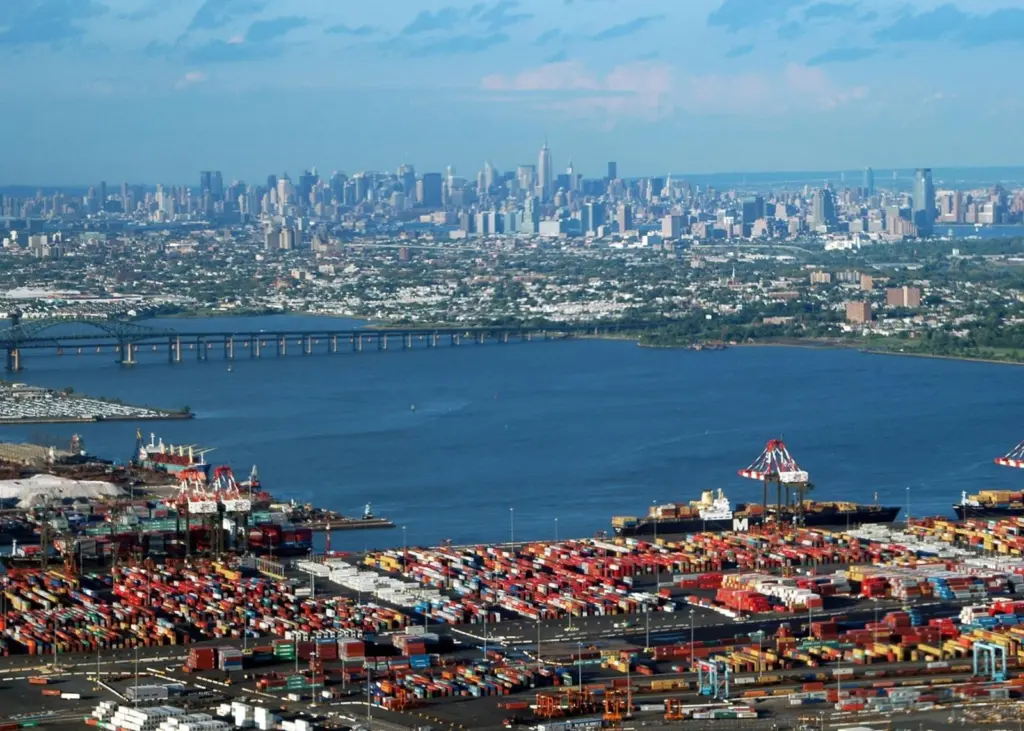
New York is all about labour actions, or so it has seemed at the beginning of 2013. At the start of the year, a possible school bus driver strike garnered more attention than the lurking dockworker strike, but by mid January – with the third “deadline” approaching – negotiations between the employers and dockworkers were dominating the minds of businesses around the region.
Mainstream media are also aware of the happenings on the docks. Conservative blogging celebrities (like Romney-supporter Michelle Malkin) who only exist online, and not in print, are now quoting that 180 year old font of news – The Journal of Commerce. Not surprisingly, these bloggers don’t come down on the side of labour. In one column, Ms Malkin cites possible disruptions to the food industry as imported meats are held back.
Post-election, I tend to side with the bloggers, this time around anyway. Productivity and the dreaded A-word, “automation”, have enabled ports to ratchet upward in the annual tables of cargo moved. Through the years, New York has continued to grow, maintaining its leading position on the US Gulf/East Coast. Containerisation has been around since the 1950s, roughly the same time that computerised information technology began its infusion into the transport business. But, just as vacuum tubes and transistors no longer inhabit computers and 500 teu vessels are not considered super-ships, things change.
What may be lost on the longshoremen is that supply chains are no longer fixed and immutable. With better information, cargo can move around, or be diverted, whether it’s just down the road to an adjacent port or fully across the country to a different coastline. The costs of supply chain disruptions to the overall economy are huge: numbers like $1bn per day have been mentioned in the trade press. But, the costs also accrue over time, to a particular port or terminal as shippers begin to re-evaluate their supply chains and sourcing strategies.
Cargo is king, but it no longer sits on one fixed throne. Picking up on the meme of technological change, the king can be connected over wireless internet links anyplace in the world. These technological inferences, bigger ships hauling more boxes, better information handling cargo handling and better communications, are not just a writer’s device; shipping is all about faster flows.
I catch myself wondering how wistfully the labor side is looking backwards to the 1950s. In a fast moving world, that’s a recipe for disaster.
Related Articles
 INSIGHT & OPINION
 INSIGHT & OPINION
 INSIGHT & OPINION