



Time for an Optimal Size Index?
COMMENT: As this issue goes to press, the Maritime Environmental Protection Committee (MEPC) of the International Maritime Organization (IMO) will be meeting in London, writes Barry Parker.
Among agenda items, the energy efficiency of vessels will be discussed, amid concern from some quarters that the present timetable for mandatory reductions in CO2 emissions might be tightened.
A few progressive ports have begun offering ‘discounts’ for vessels with the highest tier of efficiency ratings, based on the Environmental Ship Index (ESI), an easy-to-use simplification derived from complex engineering data. This is all good: reducing greenhouse gasses is a fine objective. By the way, my local Port Authority of New York and New Jersey is a proud participant in this program; more ports should participate.
Following up on recent logistical developments on the East and West US coasts, and further to recent musings from the New Yorker how the ports could better ‘manage’ carriers, it occurs to me that the port community needs to develop an index that measures a vessel’s optimality in terms of size. Maybe it would be called Optimal Size Index, or OSI for acronym lovers.
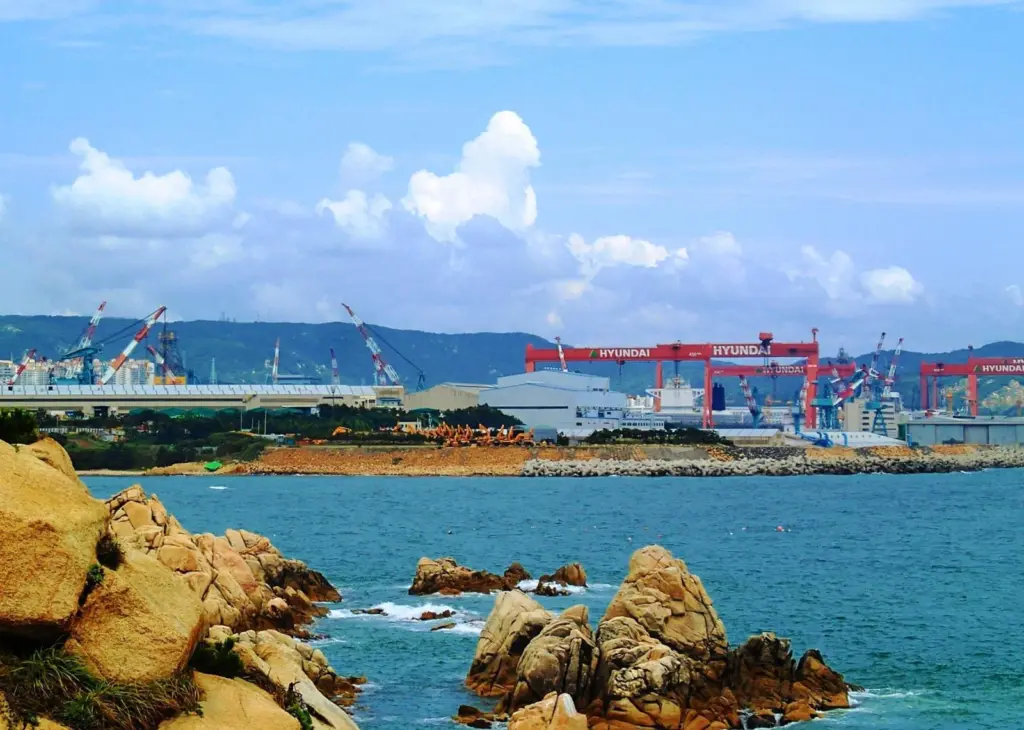
I may be shouting at the rain, but I repeat, bigger is not always better (at least as far as ports in the US are concerned). As news filters in about an order in Korea for six mega-vessels to be painted light blue, I think about the cascade of 12,000-13,000 teu ships that will find themselves calling at US ports.
It is incumbent upon the port community to develop a rating – it could use the same ‘A’ to ‘G’ scale as present measures related to energy consumption – that would identify appropriate vessels for various ports. On the US West Coast we’ve seen the devastating impact of wrong-size vessels calling at terminals that can’t handle them. Since the boxes could not make it through the ports, we can’t point definitely to other supply chain linkages about to rust out (or otherwise fracture).
The OSIs may change over time, as Federal and local efforts at bolstering infrastructure kick in. But in the meantime, adjusting charges for vessels that become spanners in the works – or as we say in New York, gum up the works – is an appropriate measure that needs to be considered by the port community.
Related Articles
 INSIGHT & OPINION
 INSIGHT & OPINION
 INSIGHT & OPINION