UKRAINE CRISIS: GLOBAL CHAOS

Initial uncertainty was focused on the impact of Russian threats on the Ukraine, we can now see that the realisation of these have far-reaching global impacts. Andrew Penfold identifes the critical factors

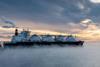
There is no going back to Russian gas – Germany is building two new LNG import terminals

Well, now we know that the worst has happened, and we have been plunged into a new era of risk. If we can get past the horrific images coming out of the country, we must try to turn our attention to the outcomes of this outrage on the port sector. These are far-reaching.


MACRO-ECONOMIC FALLOUT

Global trade is driven by economic growth. It goes without saying that a major downturn can be anticipated from the current crisis. This will not be confined to Russia following sanctions, but is likely to have a much broader impact. The degree to which the world order will change remains unclear but there will be both short term and longer-term restructuring.

According to the IMF, Russia’s invasion of the Ukraine will affect the entire global economy by slowing growth and jacking up inflation. This could fundamentally reshape the global economic order in the longer term. The war is boosting prices for food and energy, fuelling inflation, and eroding the value of incomes. Trade and supply disruption is having both local and global effects. All of these uncertainties will depress asset prices and could well result in capital outflows from emerging markets. The IMF was predicting global growth of 4.4 per cent in 2022 – this will clearly take a major hit, but the magnitude is not clear. Some analysts are predicting growth rates below 2 per cent – even if the crisis is contained.

As well as the local effects in Russia (and, of course, the Ukraine) the spill over into the EU will be severe, but the real hit will be on countries with direct trade, tourism, and financial exposure. This will focus attention on Sub-Saharan Africa and Latin America to the Caucasus and Central Asia. For Russia, a contraction in GDP of – at least – 15 per cent is on the cards. Container demand will collapse under sanctions with this impacting North European transshipment hubs.

The IMF has concluded that in the longer term “the war may fundamentally alter the global economic and geopolitical order, should energy trade shift, supply chains reconfigure, payment networks fragment, and countries rethink reserve currency holdings.”

Can we know what all of this will mean for the port industry? The answer at this stage is ‘no’ but some indications can be drawn.

The war can only sound the death knell for true commercial development of the touted Northern Maritime Corridor. This was already facing severe issues without Russia assuming Rogue Nation status. Its very difficult to see any commercial lines using this route and if LNG is embargoed then the only realistic possibility for the route is switched off.


OIL AND GAS SCRAMBLE

Web capture_22-6-2022_161748

Renewed interest in coal terminal investment is feasible

A scramble is underway to replace oil and gas imports from Russia. Given the level of humanitarian suffering unleashed in the Ukraine it seems impossible to countenance the completion of Nordstream 2. Russia’s 40 per cent share of European gas imports will have to be replaced. In the short term (much) higher prices are certain. The European benchmark TTF gas price has increased 135 per cent so far in 2022 and it reached a near-vertical spike immediately following the Russian invasion.

Interest has been renewed in North Sea gas and Germany is considering a moratorium on its shutdown of nuclear stations. There is also talk of reactivating coal powered stations. It is startling how rapidly interest has switched away from the green agenda when a real threat has emerged. It has been estimated (by Aurora Energy Research) that Europe will need to replace around 109bn cubic metres of gas over the next winter season. This can be done – but at a much higher price.

This means boosting LNG imports. Existing LNG terminals in the UK, Spain and the Netherlands will need to run at full capacity to feed European demand and Norway and the UK will need to raise production. Additional imports from North Africa and reanimation of the controversial Dutch Groningen field will be necessary. This can only be an expensive shortterm solution and would require a shift to a virtual ‘war footing’ to achieve.

If this is a permanent shift away from Russia (as seems likely) then new LNG import terminals will be required. There are established plans for new import terminals in the UK, Ireland, and Germany but the decision to accelerate construction in Brunsbüttel and Wilhelmshaven, announced three days after the invasion, underlines the perceived urgency. It is likely that further fast-tracking will be noted. Germany’s utility RWE and the Dutch state-owned energy network operator Gasunie will be part of the deal. Under the terms of the agreement, the German bank KfW will own 50 per cent the LNG terminals and Gasunie will operate the facility.

Elsewhere, construction of a new LNG terminal in Alexandroupolis, Greece is imminent. The project will include an FSRU (Floating Storage and Regasification Unit) connected to the national gas grid. The terminal will also ship gas to Bulgaria, Romania, Serbia and North Macedonia. There are also two unused facilities, within Europe, both requiring an FSRU. The first is in Kaliningrad (and therefore unusable) but the Teesport facility in the UK is undergoing upgrades and can be brought back on-line in short order.

So where will the LNG come from? The US has the capacity to lift tight gas production with higher prices and could rapidly step into the gap. Qatar also has the potential to increase exports, but terminal investment will be required. Australia has the capacity and could certainly re-route cargoes, but the impact on shipping tonne-mileage will certainly lift CIF prices even further. The major trend will be increased investment in LNG terminals – with the highly exposed Baltic States and Sweden all looking to invest to allow a non-Russian gas alternative.

There are similar issues with regard to Russian crude and products imports (especially diesel), but here alternative supplies can be sourced – at a price – on the global market and the level of port investment required is more limited. Although, once again, the rapid increase in oil tonne-mileage can only lift freight rates much higher.


OTHER ENERGY MEASURES

The loss of coal exports from the Ukraine will further upset the European energy balance. These (and Russian) coal supplies play a central role in the energy market. Substitution can only mean increased shipments of coal from the Atlantic basin – Colombia and the US – and improved viability for distant suppliers such as Australia. Import terminals are not optimised for the larger vessels involved and this will see further CIF price increases. Some renewed interest in coal terminal investment – for a long time the poor relation in the port sector – could well be the result. This will further lift tonne-mileage demand for the larger classes of bulk carriers.


GRAINS AND FOOD SECURITY

Wheat prices have also spiked since the invasion, with all shipments from the Ukraine and Russia effectively cancelled. Around 25 per cent of global wheat exports come from Russia and Ukraine. Forty percent of wheat and corn from Ukraine goes to the Middle East and Africa, which are already grappling with hunger issues and where further food shortages or price increases risk pushing millions more people into poverty.

The UN’s International Fund for Agricultural Development (IFAD) has warned that the poorest people are at the greatest risk. As prices rise, importers in Europe and the Developed World will pay the higher prices, but elsewhere this will not be possible. This can only escalate global hunger and poverty. Freight rates will also surge as more remote sources (the US, Canada, and Australia) are substituted for the Ukraine. CIF prices will increase dramatically as a result.

This is essentially a short-term problem, but it should also be noted that Russia is the world’s largest fertilizer producer. Even before the conflict, spikes in fertilizer prices last year contributed to a rise in food prices by about 30 per cent. Increased interest in alternative fertilizer suppliers will result, and this will necessitate further export terminal investments.

Greater demand for high volume terminal capacity in both the grain and fertilizer sectors can be anticipated.


CONTAINERS: IMMEDIATE AND LONG-TERM HIT

As well as the deflationary impact of lower global GDP growth on containerised trade there will be immediate and long-term impacts in this sector. Preliminary estimates indicate that total trade to/from Russia has contracted by some 60 per cent since the start of the war – according to data provider Refinitiv. Sanctions are clearly having some immediate impact in the consumer sector with feeder services from north European hubs into the Baltic withdrawn by the major operators. This will impact total container volumes in these ports, with Gdansk particularly poorly placed in this regard. St Petersburg has seen a drop in vessel calls of around 70 per cent. It is not clear when these will be restored. A drop in transshipment demand to/from Russia will have an impact of at least 12 per cent in the North Continent ports.

The major immediate problems are in the Black Sea where transit of the Bosphorus is still permitted to merchant vessels but calls at Russian ports are highly vulnerable and Ukrainian port calls have been curtailed. There has even been a significant drop-off in port calls in the Russian Far East.

In the longer run the impact of the war may well be much more widely felt. If, as seems likely, this is the start of a new Cold War then a large part of the globalisation process could be called into question. Renewed nearsourcing pressures were already being felt due to Covid but this process could well accelerate. It is far too early to be sure, but there is clear potential for much slower growth (or contraction?) in the major Transpacific and Asia-Europe trades as a result. If this is the case the shipping lines may well look back on the current period of extremely high freight rates with a sense of fond nostalgia.

Let’s hope this is the limit of our worries.