![PortStrategy[GreenPort]](https://www.portstrategy.com/wp-content/uploads/2026/09/PortStrategyGreenPort.svg)






Container volumes defy Gulf disruption
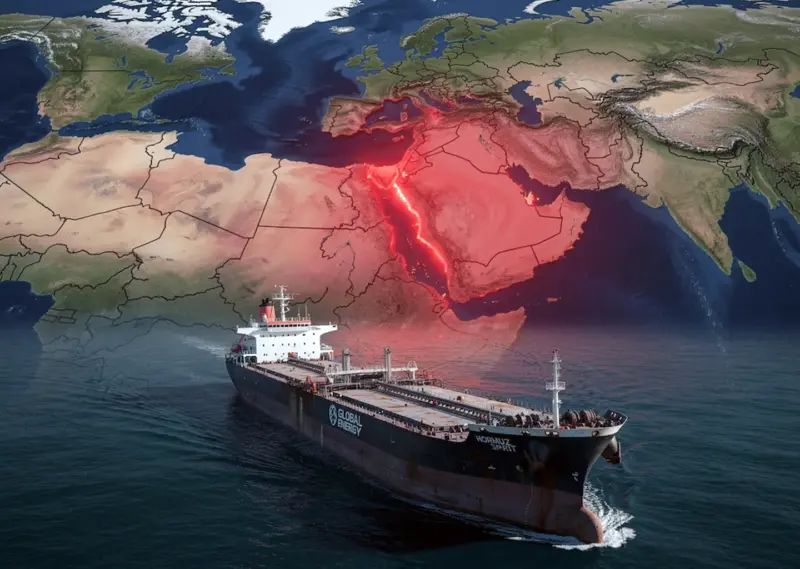
Global container volumes remained resilient in April despite the ongoing disruption caused by the Gulf crisis and the closure of the Strait of Hormuz, according to Container Trades Statistics (CTS).

April 2026 marked the first full month of trade data reflecting the impact of the crisis, which began at the end of February. Nevertheless, global container volumes reached 16.2 million teu during the month, representing a 4% increase compared with April 2025 and a 1.6% rise from March 2026.
CTS said that ‘global volumes remained remarkably resilient’ despite the significant geopolitical challenges facing international supply chains. Year-to-date volumes are also performing strongly, standing 5% above 2025 levels.
The supply chain data company noted that the figures reinforce ‘a long-standing maxim of global trade: cargo behaves much like water, finding alternative routes when traditional pathways become restricted’.
While cargo volumes have largely held up, the impact of the Gulf Crisis is becoming increasingly evident in freight pricing. The CTS Global Price Index climbed sharply to 89 points in April, up more than 12% from 79 points in March.
According to CTS, ‘it is within pricing data that the true impact of the Gulf Crisis becomes most apparent’. The organisation highlighted that the last comparable month-on-month increase occurred in June 2024 during the height of Red Sea diversions, when widespread vessel rerouting reduced available capacity.
Regionally, the Indian Sub-Continent and Middle East (ISCME) was the only import market to record a year-on-year decline in April, falling 19%. North America and ISCME were also the only regions to register export declines, down 3% and 15% respectively.
CTS said the timing and scale of the reductions in ISCME trade flows suggest they are ‘directly linked to the ongoing geopolitical tensions in the Middle East’.
Looking ahead, CTS believes the crisis is reshaping global trade patterns rather than suppressing demand. Sub-Saharan Africa continues to emerge as one of the strongest-performing regions, with year-to-date exports up 10% and imports rising 15%.
“History has shown that trade doesn’t stop altogether during periods of geopolitical disruption,” CTS said. Instead, cargo is redirected, creating opportunities for emerging markets and alternative trade routes. The key question for the industry now is whether rapidly rising freight rates will eventually begin to exert meaningful pressure on global container volumes.
Related Articles
 CONTAINER & CARGO HANDLING
 INSIGHT & OPINION
 INSIGHT & OPINION