![PortStrategy[GreenPort]](https://www.portstrategy.com/wp-content/uploads/2026/09/PortStrategyGreenPort.svg)






Looking to the future
COMMENT: Under current lockdown rules – for those of us that are under them – the future has a limited horizon, basically centring on the end of lockdown. Getting to see friends and family, socialising – basic things that are now seen for their true value, writes Mike Mundy.
Professionally, we can also expect a reappraisal of priorities and the establishment of new ways of working. Going forward the door is opening to increased home working – facilitated by recent experience, the ability of individuals to employ the I.T. tools that enable this and importantly the recognition by companies that home working does actually work as well as offer significant savings and performance benefits.
Just as things may change in the context of individuals’ work lives – as both employees and employers see the merit in home working – and wider benefits are generated such as reduced travel, congestion free streets and a major reduction in greenhouse gases – changes are also to be expected in distribution and supply chain strategy.
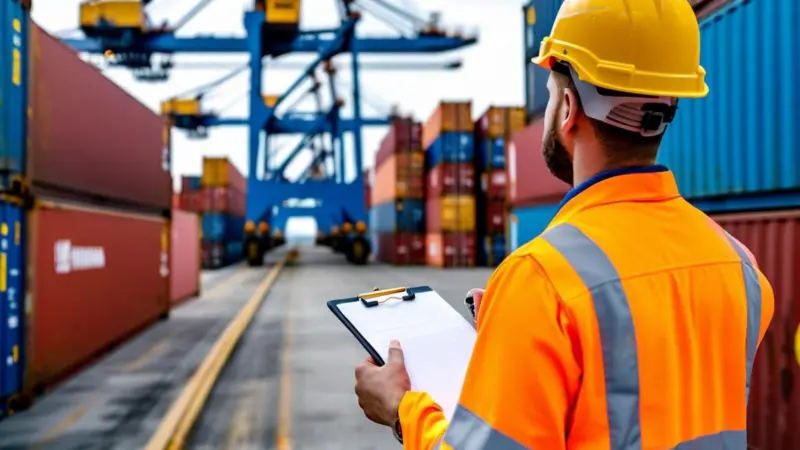
In terms of operation, there promises to be a larger automated dimension. Looking at the container terminal interface for example the following can be expected to become progressively more prevalent: data transfer in digital as opposed to physical mode, automated booking and communication systems, the remote scanning of cargo units, full or part automated handling operations depending on local circumstances and a raft of I.T. driven support systems right through from administrative, security, training and maintenance tools to a multi-faceted automated customer interfaces.
Elsewhere in the supply chain – in logistics and warehousing centres – it is reasonable to expect that we will see much wider use of robotics. There is also the distinct possibility of major changes in supply chain arrangements with the advancement of concepts such as additive manufacturing, as referenced in my Strategist column in this issue.
Additive manufacturing enables digital-physical products. Products which are designed virtually throughout the supply and value chains and only become physical in the last steps of the process. Imagine this when the concept is refined to a highly cost competitive level, the impact on traditional supply chains is potentially enormous.
In the near-term there will also be new emphasis on “near shoring” and a general diversification of supply chains entailing of course less dependency on China as a global manufacturing base. These themes, the drivers behind them and the potential consequences are explored in more detail in two interesting articles featured on page 18 and page 21 respectively.
COVID-19 promises to make its mark in a lasting way on transport and distribution strategy. The longer it lingers the greater the potential for meaningful change.
Related Articles
 OPERATIONS
 INSIGHT & OPINION