![PortStrategy[GreenPort]](https://www.portstrategy.com/wp-content/uploads/2026/09/PortStrategyGreenPort.svg)





Study urges hub-and-spoke model for Brazil
Brazil’s port sector could see significant improvements in logistics, cost efficiency and international competitiveness if it adopts a ‘hub-and-spoke’ model, according to a new technical study.
The white paper, produced by A&M Infra, Navarro Prado Advogados, and APM Terminals, outlines the potential for Brazilian ports to become key global hubs for container shipping.
The study highlights the increasing trend toward larger vessels, capable of carrying more cargo, and how Brazil is lagging in accommodating these ships due to outdated infrastructure.
While mega-ships have been operating in European ports for over a decade, Brazilian ports have struggled to accommodate them. The report suggests that if Brazil could develop hub ports whereby mega-ships serve major hub ports and distribute cargo to smaller ports, this could significantly improve the efficiency of shipping, cutting transport costs by up to 13%.
“The consolidation of one or more hub ports in Brazil would mean a potential increase of up to 4.6 million teu of transshipment in 2023 volumes, tripling volumes” said Leonardo Levy, investment director of APM Terminals for the Americas.
“This would mean raising the average transshipment incidence of Brazilian ports from the current 18 per cent to something between 30 and 40 per cent.”
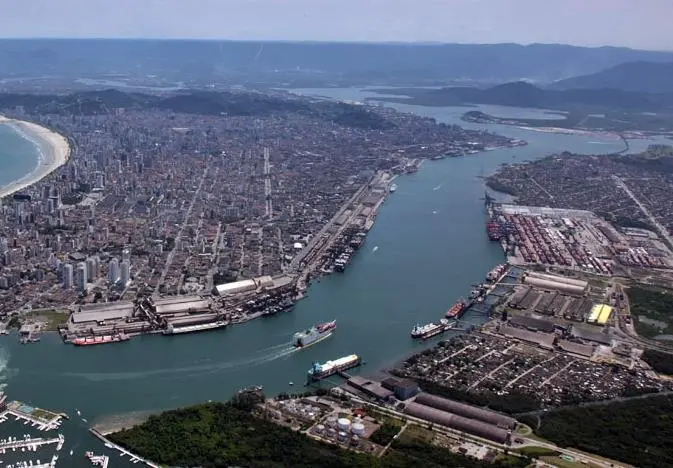
One key port identified as a strong candidate for a hub is the Port of Santos, which already handles a large portion of the country’s container traffic. Other ports like Paranaguá, Itapoá, and Pecém also show potential.
“Besides being the largest port in Latin America, accounting for about 40% of the national container movement, Santos is the only one that receives virtually all long-haul lines passing along the east coast of Latin America,” said Marcos Pinto, managing partner at A&M Infra consultancy.
The study also points to environmental benefits, noting that larger ships would reduce CO2 emissions and contribute to the use of low-carbon fuels.
Related Articles
 WORLD
WORLD
 WORLD
WORLD
 PRODUCTS & SERVICES