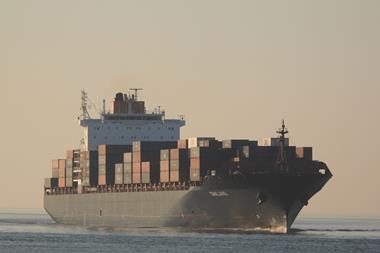
The Baltic Container Terminal (BCT), Gdynia is harnessing the powers of the EU’s COMODALECE project to deliver a major uplift in the efficiency of intermodal rail operations.
The Baltic Container Terminal (BCT), Gdynia, Poland, is presently heavily engaged, along with nine partners from other key European countries – Italy, Germany, Slovenia and Hungary - in researching and implementing the EU project COMODALCE.
The COMODALCE project, co-financed by the Interreg Central Europe Fund, takes its abbreviated name from its stated goal, namely, “Enhancing COordination in multiMODAL freight transport in Central Europe.” Specifically, it has a strong focus on the digitalisation of the procedures for rail transport at a transnational level in Central Europe with the scheme sitting under the larger umbrella of the so-called “Docks of the Future” project.
BCT is conducting pilot project work in conjunction with COMODALCE which aims at achieving an electronic data interchange platform for rail wagons and the associated unit load handling. At its core, this entails achieving integration with BCT’s Terminal Operating System (TOS), the systems of other involved players – rail carriers and intermodal operators – and the INCOS element of the Gdynia Port Community system, now under construction, that covers container rail operations.
BCT states: “A key challenge is the transfer of old-fashioned and complex processes presently conducted by using traditional paper documents, phones, faxes and mail communications into a modern electronic format able to process at speed, large volumes of data between multiple partners.”
Allied to this is the challenge of system integration and BCT points out in this regard that: “The INCOS platform offers easy, flexible, low cost connection and data interchange with its TOS and the operating systems of other stakeholders.”
Generally, the goal is said to be feeding the platform with data using electronic messages circulating from system to system. Where partners are not ready for digital data exchange then the platform will offer a web user interface able to achieve the high-volume upload and download of excel spread sheets.
COMDALCE is intended to meet and service the needs of all participants in the intermodal supply chain with diverse parties including intermodal operators, railway carriers, terminals, freight forwarders and shipping lines having access and providing their operational data. Speed, accuracy and common understanding are among the major benefits.
Data can be uploaded and downloaded without long waiting times or the requirement to re-write data. The platform will, in effect, deliver a clear and efficient operational plan with online participants having a highly accurate picture of the current situation in real time. These operational benefits will, in turn, drive cost and qualitative efficiencies across the board.
STRONG FOUNDATIONS
BCT’s current project with COMODALCE builds on earlier work designed to accommodate and promote growing intermodal rail volumes which currently account for up to 30% of its annual volume.
The terminal has seen significant investment in its on-terminal intermodal rail facility with this now featuring three rail tracks served by two rail mounted gantries which service on average 200 intermodal rail services on a monthly basis. As well as the physical development of intermodal rail infrastructure and superstructure it has also implemented comprehensive performance related remuneration schemes with its intermodal workforce as another rewarding path to consistently pushing up efficiency levels.
Following on the heels of these positive developments, COMODALCE is expected to facilitate the next major uplift in the efficiency of intermodal rail operations. Equally, BCT cites the actions of other partners in the intermodal chain as also holding significant promise in this regard.
As an example, it points to a new service operated by Freightliner PL between Brzesko (60km east of Krakow) and the ports of Gdynia and Gdansk. The service, which called at Gdynia for the first time in early October, is operated by the DRAGON modern, diesel-electric locomotive.
Its ability, BCT points out, to switch from electric traction to diesel power negates the need for the locomotive to be swapped for a smaller shunting locomotive at the Gdynia Port Station. As such, it arrives directly to BCT omitting the need for a time-consuming and costly shunting operation.
Equally, benefits are expected to accrue from Freightliner PL’s policy of equipping all locomotives in its fleet with laptops enabling the origination and printing of all necessary documentation directly in in the locomotive. GPS is also onboard which enables remote access for continuous monitoring of train journeys and much enhanced coordination with all involved parties.