![PortStrategy[GreenPort]](https://www.portstrategy.com/wp-content/uploads/2026/09/PortStrategyGreenPort.svg)



Arctic shipping: fact or fiction?
Rosatom, Russia’s nuclear agency with responsibility for Artic shipping development, has floated a figure of up to 50 million tonnes of cargo per annum over the longer term. Is this achievable or will the significant challenges system development faces combine to restrain development?
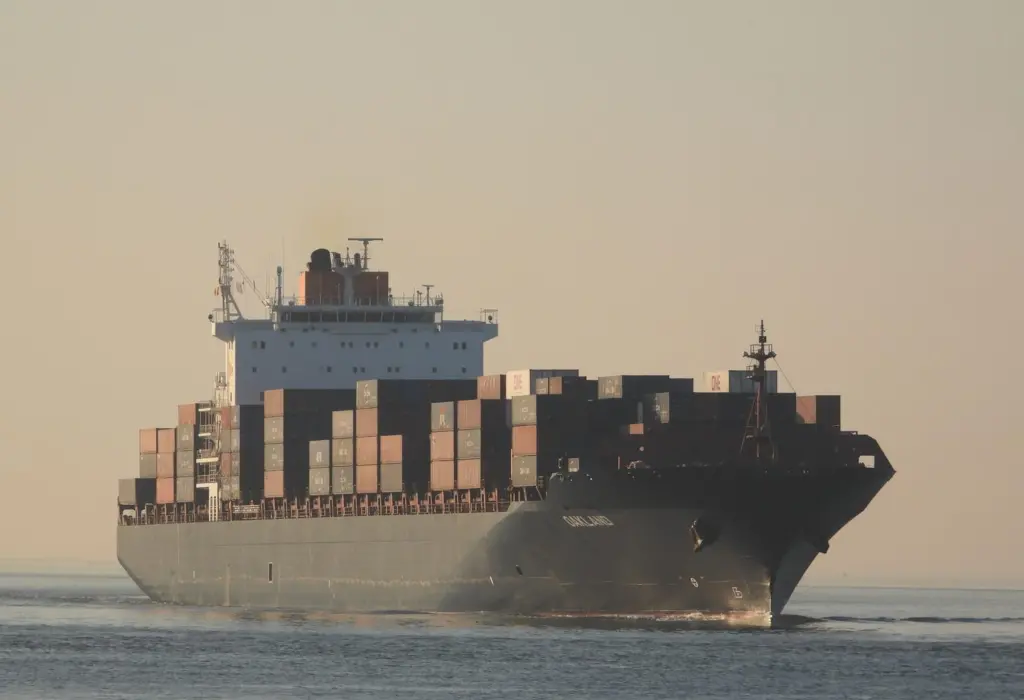
The Arctic shipping route will see the deployment of the first Panamax container vessel this year. Does this signal progress with the development of the route or is this a fallacy?
Russia is, of course, keen to progress the development of the route with its usefulness heightened in the light of Russia’s attack on the Ukraine.
The 66,781dwt, 4980TEU capacity Flying Fish 1, operated by Safetrans Line, will ply a service loop between St. Petersburg and points in China. It will also take place against a background of 2023 seeing the introduction of the first regular container service between Asia and Europe using the Artic shipping route. Plying the Northern Sea Route (NSR), one of the three Artic shipping routes, China’s NewNew Shipping Line operated four container vessels along the route between July and November 2023, completing seven voyages in total. All four of the vessels feature light to medium ice protection and offer capacities ranging from 1200 to 2800TEU. NewNew Shipping Line is also known to be actively planning the ramp-up of its service offering.
Flying Fish 1, 24-years old and an Ice-1 class vessel, is understood to be planning a round-trip voyage between August and October.
Ice class vessels are essential during winter and spring but with global warming it is feasible for non-ice class vessels to now routinely traverse the Arctic during the summer months. 2023 saw a number of interesting developments in this respect – the first Capesize bulker, the 169,159 dwt Gingo and numerous Suezmax oil tankers all used the route. Russia sent 1.5 million barrels of crude to China with much of this carried in non-ice class tankers.
Next up, potentially, is establishing an all-year round container operation. Rosatom, the Russian state nuclear agency, recently signed an agreement to this effect with Hainan Yangpu NewNew Shipping at the St. Petersburg International Economic Forum. In effect, it is a Russia-China initiative with the associated development package including building up to five Arctic-class vessels with these key to meeting the goal of all-year-round operations on the Northern Sea Route (NSR).
DP World signed a joint venture with Rosatom in 2023 related to developing and operating supporting port facilities.
Rosatom notes that it anticipates a record volume of cargo moving via the NSR this year, three million tonnes, but over the longer term it expects 50 million tonnes.
NOT PLAIN SAILING
Developing Arctic shipping, whether using the NSR, which runs along the Russian Arctic coast from the Barents Sea, to Siberia through to the Bering Strait, or the Northwest Passage (NWP), which follows the northern coast of North America and crosses the Canadian archipelago, is not without significant challenges. It is true that in a global warming scenario that the current average containership transit time could be reduced from one month to 20 days or less by 2100 but there are issues in play which could frustrate achieving this objective.
Environmental issues are to the fore:
- The extensive sea-ice loss the Artic has experienced to date is now acting as a climate change magnifying glass achieving warming nearly four times faster than the global average.
- The Arctic is an incredibly sensitive environmental zone and any increase in shipping activity will inevitably put it at greater risk from the negative effects of an accident, grounding or oil spill. The consequences of these types of event in the Arctic would be so much more severe than in other geographical locations.
- There are also those parties that have formally announced that they are against Arctic shipping and have united behind the “Arctic Shipping Corporate Pledge.” Consumer goods companies that have taken the pledge will not allow their products to be moved via Arctic routes or for their nominated agents to engage with this trade. Reportedly, approximately 50% of the world’s liner fleet has now taken the pledge.
- Also, this year will see new IMO regulations come into force that ban the use of Heavy Fuel Oil in the Arctic.
- Similarly, government actions may follow that necessitate their fleets switching to distillates for voyages to and from the Arctic.
- Additionally, there are a raft of practical considerations to confront some of which require major investments: new ice breaker capacity; ice-class vessel construction, port side facilities, establishing emergency bases etc. etc.
Surprisingly, 2023 saw greater progress on unlocking Arctic shipping than many parties had expected. There is a sense, however, that despite the impetus provided by renewed Russian efforts that the challenges, regulatory and practical, are building up which may well serve to inhibit fully-fledged system development.
Related Articles
 CONTAINER & CARGO HANDLING
 INSIGHT & OPINION
 INSIGHT & OPINION