






A collective voice
Intelligent port community systems can give hubs the edge when chasing cargo. Alex Hughes reports
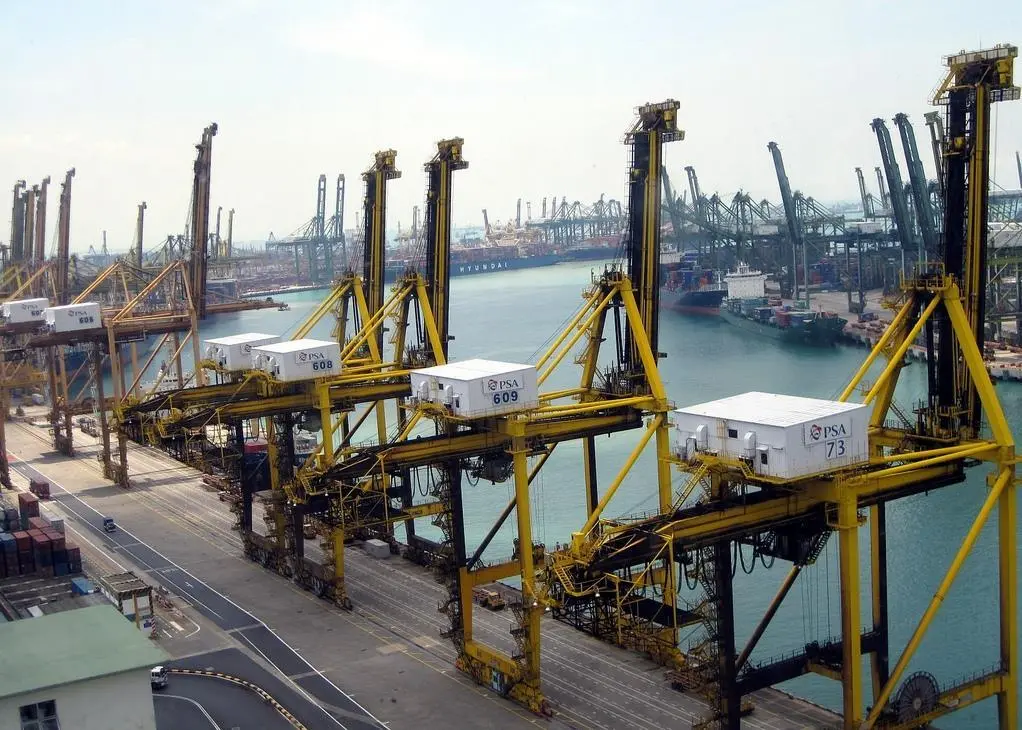
Singapore and Hong Kong, which have dominated global container throughput league tables in recent years, are renowned technological innovators.
Both were early adopters of port community systems, although Singapore, which often came second to Hong Kong in terms of overall container throughput, now has the prime spot. In 2011 it topped the list for the number of containers handled worldwide, reporting throughput of 29.37m teu.
The port concedes that speeding up the administration and information flow is one of the easiest and fastest ways to improve efficiency. Its Portnet PCS undoubtedly enables ships to enter or leave its waters that much more quickly.
While container statistics are perhaps the most visible way of benchmarking a port, arguably more prestigious is to top the World Bank’s best logistics performance index. Singapore first did this in 2007, being then displaced by Germany, only to be reinstated in first place once more in 2012.
In producing the ranking, the World Bank noted that progress in trade logistics performance has slowed over the last two years as a result of the global recession, although stressed that those countries pursuing “aggressive reforms” have continued to improve their performance.
Total transparency
Commenting on the World Bank report, the authors state that, “By asking freight forwarders to rate countries on key logistics issues – such as customs clearance efficiency, infrastructure quality, and the ability to track cargo – it captures a broad set of elements that affect perceptions of the efficiency of trade logistics in practice.”
At the time of its 2007 ranking, experts explained its dominant position by pointing to Singapore’s highly efficient and reliable supply chain, combined with competitive costs.
Part of that integration and efficiency can be attributed to the Port of Singapore Authority’s port community system, Portnet, a network portal that helps the logistics industry – from shipping lines and hauliers to freight forwarders and government agencies – manage information better.
Portnet, says PSA, uses info-communication technology to simplify, synchronise and integrate complex processes, such as the moving and tracking of cargo. It also makes the transfer of information more efficient. Partners overseas can make plans regarding the cargo in Singapore and the information is then distributed to all parties involved.
A spokesperson notes that the system has definitely helped to “transform the shipping and logistics industry into a proactive and connected hub driven by the intelligent management of information, making Singapore the world’s busiest container port”.
B2B solutions
Portnet, which was the world’s first nationwide business-to-business port community solution, now claims 8,000 integrated users, who regularly make some 130m transactions.
According to PSA, it has allowed the port to act as a catalyst to transform the industry into a proactive and connected shipping hub, driven by intelligent management of information.
Beyond Singapore, this solution extends connectivity to facilitate seamless interactions between the community and global partners. This enables efficient process and information flow from the pre-planning of cargo connectivity in Singapore to the channelling of cargo information worldwide.
“The entire shipping community (which includes shipping lines, hauliers, freight forwarders, shippers, and government agencies) is now empowered with a suite of innovative services that has resulted in significant cost savings and enhanced efficiency through the effective use of resources,” says a spokesperson.
Indeed, over a three-year period, it is calculated that Singapore’s Collaborative Port Community Solution has helped the entire port community in Singapore to save more than $81m.
“The success of this project benefits PSA and the maritime community, as well as Singapore, since the maritime industry contributes about 7% to Singapore’s GDP,” says the spokesperson.
Long tail
Portnet, which was first developed in 1984, has been under continuous development ever since, most notably moving to the Internet in 1999. In its latest incarnation, it is being redeveloped to support multiple party collaboration and integration, work flow automation and proactive exception management.
Kee Thiam, PSA’s head of Information Technology, sums up Portnet by pointing out that it best showcases how technology has had a significant impact on the maritime industry, providing a collaborative paperless platform for shipping lines, hauliers, freight forwarders and local government agencies (including customs) to better communicate with the port and with each other.
Total Soft Bank’s Chad Lee does, nevertheless, concede that one of the general disadvantages of adopting a PCS might be some loss of commercial information. For that reason, he says PCS users have to be careful and have common user agreements in place to avoid ports losing competitiveness through leaks of commercial information.
In coping with this concern, TSB’s Port Logistics Unifying System provides intensive security measures and allows only authorised users to access to the important data such as reports for the government office. The system administrator can adjust the level of authorisation in view of users’ characteristics.
Pay per view
Meanwhile, a good return on investment is possible, depending on the business model adopted. A transactional fee can be applied to use EDI or a subscription fee charged to access the whole system. Some PCS systems remain free of charge.
“To make a return, the EDI transaction fee method is probably the best,” says Mr Lee.
However, there are other benefits, too, which indirectly bring the port more business. Shippers like ports where work processes are speedy and accurate, since those impacts on service quality and sales competitiveness. A properly designed PCS, by definition, gives not only that, but also enables a comprehensive and user-oriented business environment to be established.
“A PCS can be a hub to connect various logistics parties – not only those in the port industry – as well as supporting users to create and distribute useful business information to generate new business,” he says.
He cites the BPA-NET Project initiated by Busan Port Authority, which set out to establish a ubiquitous port community system in Busan Port, the world’s fifth busiest. TSB was asked to contribute to this in the expectation that information produced by the system could be taken up by ports uses to add value across a variety of business sectors.
“A PCS is definitely a useful tool to enable ports to achieve more efficient and economic operational results,” says Mr Lee.
Related Articles
 CONTAINER & CARGO HANDLING
 TERMINAL OPERATIONS
 CONTAINER & CARGO HANDLING