![PortStrategy[GreenPort]](https://www.portstrategy.com/wp-content/uploads/2026/09/PortStrategyGreenPort.svg)


Nigeria phase one privatisation complete
Arif Mohiuddin of CPCS Transcom charts the often rugged road to realising port privatisation in Nigeria
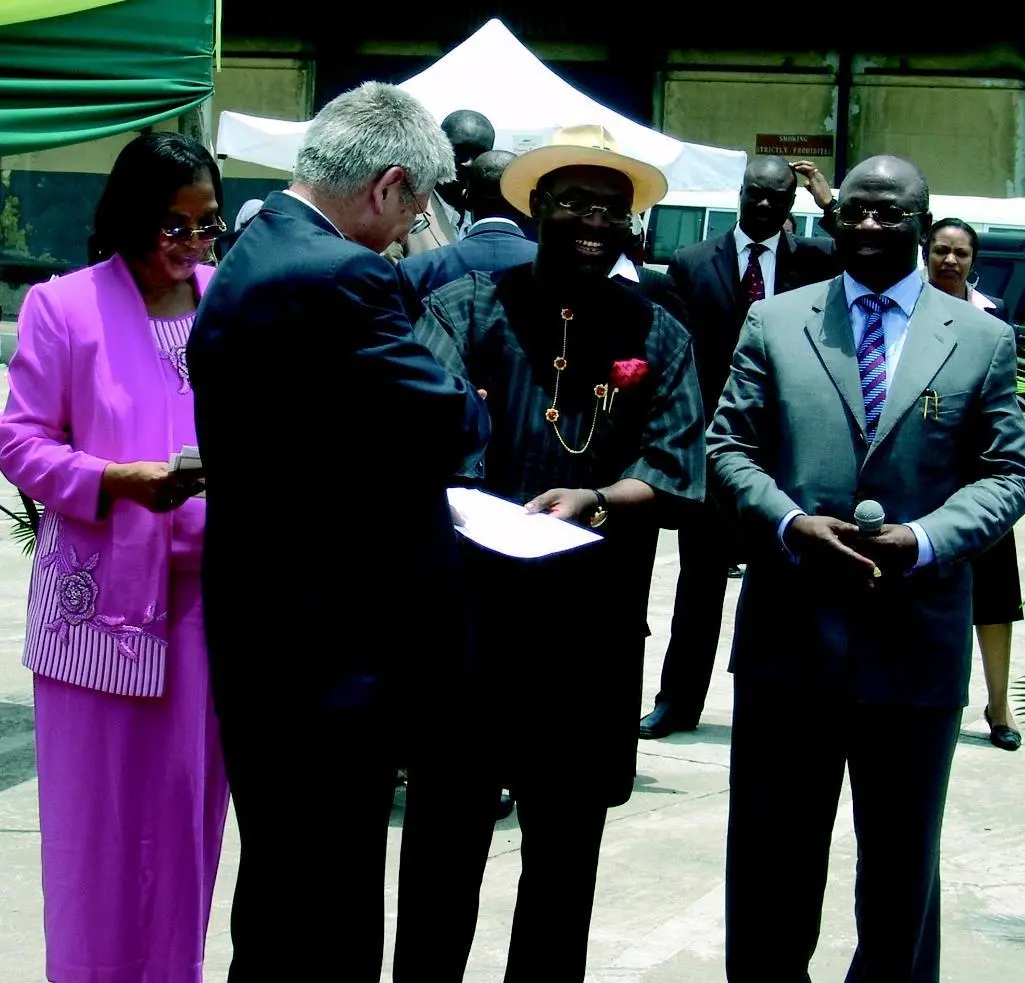
The process of port privatisation in Nigeria began over two years ago and recently the first fruits of this were highlighted in a ceremony which saw the Apapa Container Terminal and five smaller terminals formally handed over to the private sector. The Apapa Container Terminal is now managed and operated by the AP Moller Group and other international parties that are now directly involved in port operations in Nigeria or are technical partners include the Bollare Group, Bremen Ports and the Port of Dublin.
The privatisation process for the country’s ports began over two years ago and CPCS Transcom, a Candian consulting firm, was selected early on as an advisor to the country’s Bureau of Public Enterprises, the independent body charged with overseeing the port privatisation process.
In the following article, Arif Mohiuddin of CPCS Transcom takes a frank look at the often very challenging process of implementing the port privatisation process in Nigeria. He charts the major problem areas that had to be overcome and identifies a range of benefits expected to accrue as privatised port operations bed in.
THE CHALLENGES Although the formal handover ceremony marks the successful privatisation of the Nigerian Ports Authority (NPA), this success could not have been achieved without the perseverance and dedication of the Bureau of Public Enterprises (BPE) and transaction advisory team commissioned to this project.
CPCS Transcom was originally mandated to assist BPE in restructuring the Nigerian Ports Authority. The assignment included the conversion of NPA from a “Service Port” into a “Landlord Port”, the development of a concession strategy and identification and demarcation of the terminals to be concessioned under a phased approach.
From the onset, it was expected that the restructuring effort would result in significant retrenchment of staff. The perception that the NPA was a severely overstaffed organisation combined with the introduction of private operators in the port activities, left little doubt among the informed stakeholders that retrenchment was imminent.
CPCS conducted the necessary staffing due diligence and comparative analysis and recommended the Government retrench of up 75 per cent of its workforce.
The results of this due diligence report marked our first roadblock in the restructuring process. A joint communique between the Director General of BPE, the Managing Director of the NPA, Port and Labour Union leaders, had been signed stating that there would not be any retrenchment as a result of the restructuring initiative. After the retrenchment recommendations were announced, the labour union threatened the Government with a strike, which significantly hindered the private operators from having access to the port premises during the transitional period. Dedicated to pushing the project forward, the Government held a series of negotiations with the Labour Union that ended in a successful agreement on February 15, 2006.
Like many other Government agencies, undergoing significant restructuring initiatives, the NPA was a reluctant participant during the early stages of the project. As a result, during the first few months CPCS Transcom held a number of meetings to disseminate information on the process for concessioning and restructuring the ports. Due to an effective communications strategy and the unwavering support from the highest offices of the Government, the NPA became an informed supporter of the restructuring initiative – a key to the success of this project.
Contract negotiations between the Government of Nigeria and the terminal operators proved rigorous and challenging. However, the successful closure of these agreements can be attributed to the commitment of Government, the constant support from its advisers in both technical and legal issues, and the interest from the bidders.
ADDRESSING THE LABOUR ISSUES April 3, 2006 marked the resolution of the labour related issues that threatened the success of these now celebrated transactions.
Negotiation between a Presidential Task Force, the NPA and its Labour Union Leaders took place over a period of one year. The Minister of Finance, Dr. Okonjo Iwala, was the head of the Task Force. Mrs. Irene Chigbue, the then Director of Transport & Aviation (Presently the Director General), Mr. Alwell Ibeh, the then BPE Project Manager on Ports Reform (Presently the Director of Transport & Aviation), joined her. The Presidential Task Force proved to be a great success in addressing the other significant issues, such as labour retrenchments, customs reform, and the facilitation of enacting the necessary legislations. The Taskforce received ongoing assistance from CPCS Transcom.
“CONCESSION” – A NEW TERMINOLOGY!
In Nigeria the concept of privatisation is not new. After forming the Technical Committee on Privatisation and Commercialisation (TCPC) (now known as the Bureau of Public Enterprises) in the 1980’s, the Federal Government commenced its initiative to privatise hundreds of its state-owned enterprises. The term “Concession” was introduced in Nigeria in 2004 as result of the port concessioning initiative.
Before this, BPE was focussed on privatising its state-owned enterprises through “Core-Investor Sale” arrangements.
Upon being selected as the transaction advisors for this project, CPCS Transcom engaged a highly experienced team, and was able to complete the necessary due diligence work, developing new frameworks together with all the bid documents within four months of its engagement. After having participated in the success of the port concessions, BPE is considering privatising Nigeria’s utilities such as power and water supply and sanitation through similar arrangements.
TRYING TO MINIMISE COSTS Over the past decade, Nigerian ports have been considered one of the most expensive ports in the West African sub-region. The high formal rates combined with the informal charges have led to extremely high operating costs at the ports. The restructuring study has shown that high turn around times for ships at the ports negatively impacted the transport costs of moving cargo into Nigeria from other regions of the world. For example, it costs more than twice as much to transport a container to Nigeria from China than it costs to transport the container from China to Europe or North America (although the distance between China to Nigeria is much less). Similarly, large vessels have been unable to access the Nigerian ports due to the limited draught at the berth and channels leading to the ports.
Under the concession agreements, NPA is responsible for dredging the channels as well as the berths to a depth of at least 13.5 meters in low low water. If NPA fails to do its job on time, the private operators have the right to carry out the job and later get reimbursed by NPA. Private operators, like the AP Moller Group, are confident that they will be able to attract the larger vessels to their terminal berths. CPCS Transcom has also suggested that the NPA tariffs be revised, to help increase competition in the region.
By increasing efficiency in the terminal operations, increasing the water draught to accommodate bigger vessels, and adopting a more competitive tariff, Nigerian ports are embarking on a prosperous voyage. These changes will certainly help them to regain lost traffic to the neighbouring ports and perhaps attract cargo for the landlocked Niger, Chad and Mali.
LANDLORD PORTS Under the Landlord Port Model, the NPA will be divided into two Ports, the Lagos Ports and Harbour Authority (LPHA), and the Port Harcourt Ports and Harbour Authority (PHPHA). The new arrangement is expected to create competition between the port authorities and among the terminals in each authority. The National Transport Commission will be responsible for regulating the economic and safety activities of the port authorities.
LPHA will control the main Container Terminal in Lagos, five other break-bulk and bulk terminals in the Lagos Port Complex, and the Ports in Tin Can Island, which include a Container Terminal, a ro-Ro port, a break-bulk port and a bulk port.
The PHPHA will be responsible for supervising 14 smaller scale terminals located across the South East and East of Nigeria. The terminals are located in Port Harcourt, Warri, Calabar and Koko. It is expected that the second round of formal handovers, scheduled for June 2006, will include the Ports of Tin Can Island and Port Harcourt Terminals.
The terminal operators in the Ports of Lagos will be responsible for all investments in the quay apron (except the Quay wall), stacking yard, equipment, security wall, lighting etc. The landlord, on the other hand, will be responsible for the investments in the quay wall, dredging etc. The operators will carry out the cargo handling and stevedoring operations, whereas the landlord will do the dredging, mooring (in cooperation from the operators), pilotage and the overall security of the ports etc (the security within the terminal is the responsibility of the individual terminal).
Most importantly, the new arrangement is expected to substantially improve benefits to the Nigerian economy, both directly (as financial benefits) and indirectly (through increasing efficiency in the sector). Whereas previously the government had to support this sector from the Federal budget, in the coming years the ports sector is expected to generate direct revenue of more than US$5bn for the government in terms of concessions proceeds.
Related Articles
 EQUIPMENT
 PORT & TERMINAL NEWS
 PORT & TERMINAL NEWS