



Spanner in the works
One port deal has thrown off the delicate balance of New Zealand’s cargo movements.
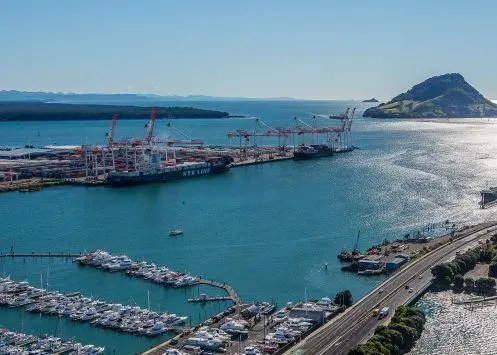
To what extent should ports be passive participants in freight movements, acting as silent gateways while their customers, principally shipping lines and shippers, define the logistics patterns that move freight to the port? Should they instead play a role in influencing a country’s supply chain? These questions are currently being asked in New Zealand.
The questions have been raised by the case of a port – Tauranga – getting into contractual situations with a major exporter and a shipping line, in a deal that has caused unforeseen changes to the country’s logistics patterns.
Port Tauranga has entered a three-way deal with Maersk and Kotahi – the logistics management arm of major dairy shipper Fonterra – which corners a huge share of the container market for Tauranga. From August 1, 2014, Kotahi committed to provide up to 1.8m teu to the Port of Tauranga over a ten-year period. Kotahi has also committed to provide up to 2.5m teu to Maersk over the same period.
From the port perspective, it is a gem of a deal. A ten-year agreement between a shipping line and a port is virtually unheard of and locks up a sizeable chunk of New Zealand’s box exports for a decade. It also guarantees a return on investment for Tauranga in making the port capable of handling 6,500 teu ships, about 25-33% larger than it handles now. As it’s also an excellent deal for Maersk, where’s the problem?
The issue is that other exporters, importers and shipping lines in New Zealand are arguing that it has caused an unforeseen amount of “empty running” around the country.
New Zealand has a traditionally-imbalanced trade with more exports than imports, and with a need for reefer boxes to be positioned empty in wait for refrigerated exports. This deal has further skewed that logistics flow. Maersk has to bring in empty boxes to carry the dairy exports to which it has committed itself for a decade. Other shipping lines are bringing in full import boxes and then having to carry empties outwards.
Those same lines are starved of the dairy loads northbound that were previously a cornerstone of their base cargo flows. By way of retaliation, they will not release empty boxes to help feed Maersk’s need for equipment. They would rather see empty boxes being repositioned back to Asia.
Empty moves
But the story cuts deeper than that. The supply chain effect is even more pronounced as there is now a flow of empty boxes internally within New Zealand, as they are positioned either to or from pack points.
And it’s not just the bluewater carriers who are being affected; the norm in New Zealand is for import boxes to be offloaded in the north of the North Island and, once devanned of their contents, to be moved south for export cargoes.
That southern move is often into the South Island, a source of both dairy and meat exports. Domestic operators have in the past taken the opportunity to use those empties for domestic freight, an arrangement which suited the mainline carriers because the box ended up where they wanted it.
Because most shipping lines are now locked out of Fonterra cargoes, domestic operators are now being deprived of the one-way free use of this equipment southbound.
Here is the conundrum: while New Zealand ports are doing record numbers of empty evacuations northbound – mainly units for the carriers who missed out on the Fonterra contract – Maersk appear to be carting empties around, and the domestic carriers are scratching for boxes.
This peculiar picture is completed when one factors in that another major dairy region, Taranaki, does not ship its dairy product out of its local port, New Plymouth.
This is because Fonterra decided several years ago to aggregate its volumes through fewer ports. So millions of dollars are spent trucking and railing cargo east to Napier and north to Tauranga, while New Plymouth now has no container service because it cannot amass enough volume to make a box call viable.
Is this all in the best interests of New Zealand?
Related Articles
 WORLD
WORLD
 PORT & TERMINAL NEWS
 PORT & TERMINAL NEWS