

Paper Mate
The deployment of supply chain expertise in the set-up and operation of the Port of Tilburys Enterprise Distribution Centre has proved a decisive factor in its success
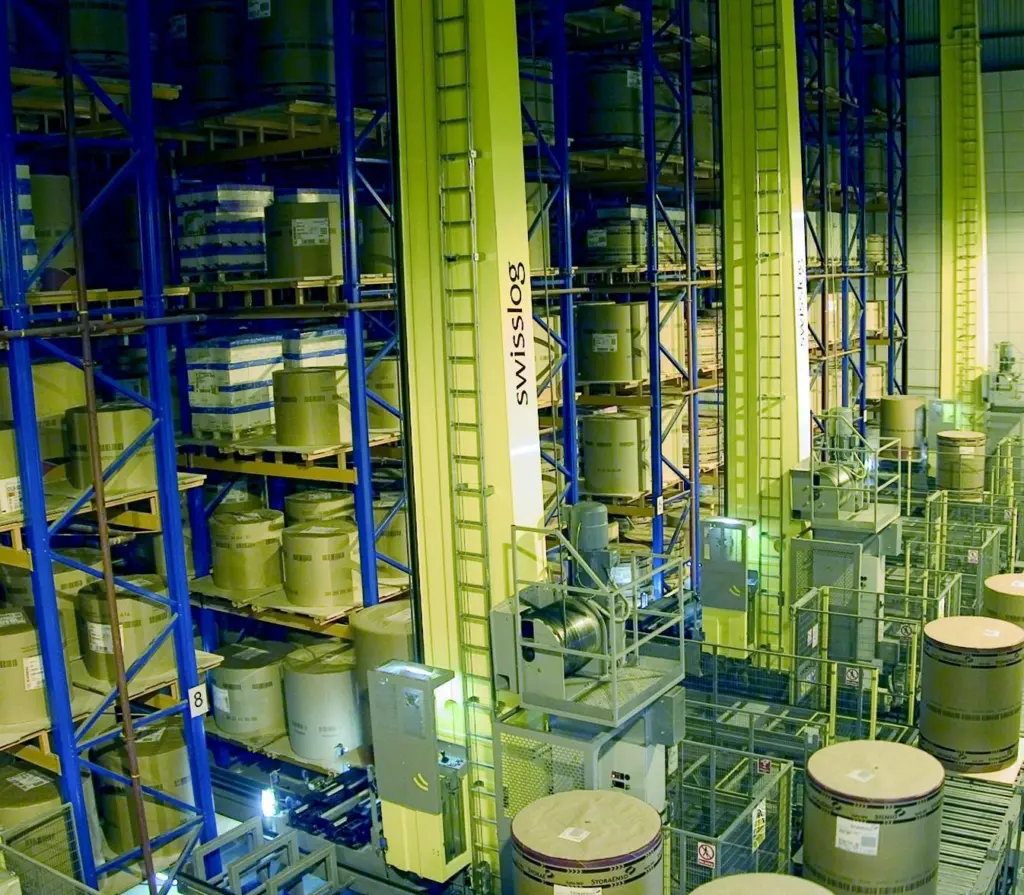
Stora Enso supplies a wide range of products to the southern UK market, including very large volumes of newsprint, magazine and fine paper. Some cargo, like copier paper, is palletised but the majority is newsprint arriving on special reels. The company has a hub and spoke operation in place for Scandinavian paper shipments based in Gothenburg and uses purpose built Stora Enso Cargo Units (SECUs) for this delicate cargo.
Dubbed Project Enterprise, the new Tilbury facility was designed to meet all operational requirements, from vessel discharge, container storage and handling through to warehousing and despatch. Plus it was geared to ensure minimal damage to product, a smooth flow of goods and optimise labour as well as be capable of handling third-party PLANNING & PROCESS 39The Port of Tilbury’s 15 year contract with Finnish paper manufacturer Stora Enso is a good example of the demands which are placed on a modern port. Tilbury needed to develop an integrated, fully intermodal cargo handling facility at a single point that could meet Stora Enso’s initial needs but also have sufficient flex to manage future growth.
cargo. It is said that “the devil is in the detail” and with such a massive single investment in the contract, £336 million to be spent over the two years needed to get the Project Enterprise off the ground, the right specification, planning, tendering and project management was crucial to ensuring success. With this in mind, Tilbury appointed supply chain consultancy specialists Total Logistics to articulate and design the processes needed to bring the project to efficient life.
Tilbury had already begun initial project development work on its Enterprise Distribution Centre (EDC), the new facility designed to service the 15 year contract with Stora Enso, when Total Logistics was brought in to begin the first of three planning stages.
Stage one required the collation and assessment of anticipated material flows through the EDC plus the development of the key specifications: the all-important user requirement specification (URS) and the selected supplier’s functional design specification (FDS). The URS, FDS and material flow plans provided the operational centrepiece of the project, the benchmarked functionality guide for the evolution of Project Enterprise through build, testing, commissioning and operation.
Ken Kirk, Business Development Manager for the Port of Tilbury points out:
“The strategic demands for Project Enterprise were simple and demanding. We wanted an improved, space efficient, intermodal service capability with fewer, faster container movements delivered at a lower operating cost and with higher margins – all backed by greater long term flexibility and fail safe backups. The best way to scope out what was needed currently and to match future growth – was to build all the processes we’d need from the ground up.”
The two Total Logistics consultants ran a series of workshops over a six week period involving Tilbury’s project management, IT, engineering and warehouse operations. The result was 37 separate process flow maps covering every cargo movement from ship’s deck to gatehouse and spanning yard management, intake as well as all automated processes, manual interfaces and the manual warehouse. Following approval of the maps by the Tilbury team and a review of initial infrastructure proposals, the maps were then issued to Stora Enso as the operational blueprint for the Enterprise Distribution Centre.
MANAGING THE TENDER The second stage of Total Logistics’ role was managing the supplier tender process, with all bids to be judged against the URS, FDS and process flow frameworks.
The bid from warehouse/container management specialists Swisslog and its crane and conveyor automation sub-contractors Accalon AB was approved: the Total Logistics frameworks formed the basis of the subsequent implementation contract for the EDC.
Swisslog’s warehouse management system would control all the different zones – manual warehouse, automated warehouse, container stack and yard – within a single system. Total Logistics also developed the technical schedules for the contracts to ensure that appropriate Standards of Performance and Tests of Completion were included.
The implementation stage of the project required on-going input from the Total Logistics team. With the project frameworks and infrastructure suppliers in place, it helped to define roles and project teams, define the product streams, revise the process flows and develop the testing procedures as the build took place. The key requirement was to ensure that the combined team had clarity at every stage: that meant specifying the deliverables and the minimum resourcing levels required from each implementation committee, IT in particular.
OPEN FOR BUSINESS Tilbury’s Enterprise Distribution Centre was opened for business in summer 2005, on time and on budget. The finished site features a 9,263 square metre automated warehouse with a 30m tall, 29,000 position High Bay served by seven automatic Accalon AB stacker cranes, each running in a 115m aisle; a 22,000 square metre manual warehouse; plus a large yard and trailer area for the SECU container stack. Around 95 SECU containers filled with paper reels arrive from Scandinavia each week in three inbound sailings: containers are stripped from the vessel automatically via the Swisslog WMS – or manually – and moved to the container stack.
They are then typically moved to the warehouse, emptied using a Loadmate and then the paper reels are removed using reel-pick gantry robots that employ an innovative suction method to avoid damaging the paper inside. From there, all storage, picking, marshalling and despatch transactions are managed by the WMS, using both automated and manual warehouses.
“The URS, FDS and the process flows formed the core of what we wanted and were critical to the long term success of the project, ” explains Kirk. “With an undertaking of this size we needed accurate performance and requirement benchmarks. Now nearly three years since the start of the project, they remain accurate and we still use them as our operational points of reference. Project Enterprise was a significant first step into fully automated container management for us and Total Logistics provided the framework, skills and disciplines to design gapless process flows. The flows could be easily understood at the tender stage – we had few queries – and easily implemented during the build.
“The result, ” he concludes, “is a strategically important, profitable distribution centre with high levels of productivity, impressive system uptime plus fast stock handling and turnaround.
Related Articles
 OPERATIONS
 OPERATIONS
 PORT & TERMINAL NEWS