

Plug and play still a way off
For all the bells and whistles that autosteering offers, one thing it can’t do is work straight out the box. But that’s not to say that set up can’t be streamlined by experienced manufacturers.
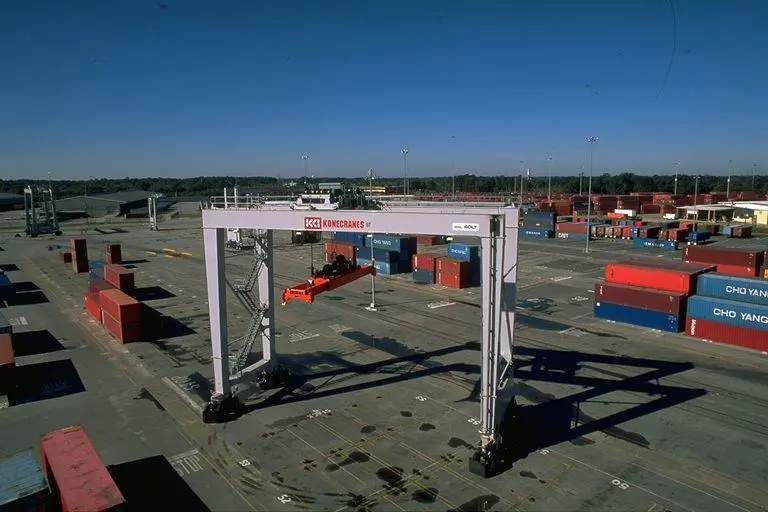
ITS, for one, has developed simple mapping techniques that allows the company to place systems in operation very quickly.
“Container terminals are harsh environments and there are several factors that can therefore impact on the operation of auto-steering systems,” says ITS spokesperson, Richard Lambert. “However, due to experience over many years, we have been able to engineer out most issues caused by this type of environment.”
The Konecranes’ system in place at Maryland Ports was put into operation by the port’s own engineers, using guidance set out in the manuals accompanying the hardware. Maintenance and repairs are also undertaken in house, with the engineers learning how to overcome problems on their own, as and when these occur. Indeed, they have only had to refer back to Konecranes when problems with broadcast frequencies occurred, but these were easily fixed.
In terms of maintenance, the Maryland Ports system presents few major problems and most of these have been linked to hardware failures. Harold McFarland, the crane electrical/mechanical supervisor at Maryland Ports notes that nowadays the system requires little in the way of maintenance intervention. Most of the time, he says, operators are unaware that it is even there; that is, until it goes down.
“The weather seems to be the main cause of problems, damaging exposed elements such as cable connections and antennas. And these can be fairly expensive to replace,” he says.
Related Articles
 CONTAINER & CARGO HANDLING
 TERMINAL OPERATIONS
 CONTAINER & CARGO HANDLING