![PortStrategy[GreenPort]](https://www.portstrategy.com/wp-content/uploads/2026/09/PortStrategyGreenPort.svg)



2. Durban truths told
Strange things can happen in concession processes – influence can be brought to bear, the result orchestrated by the timing and conditions of the process etc – but without doubt one of the strangest events is now occurring in conjunction with the concession process for Durban Container Terminal Pier 2 (DCT2).
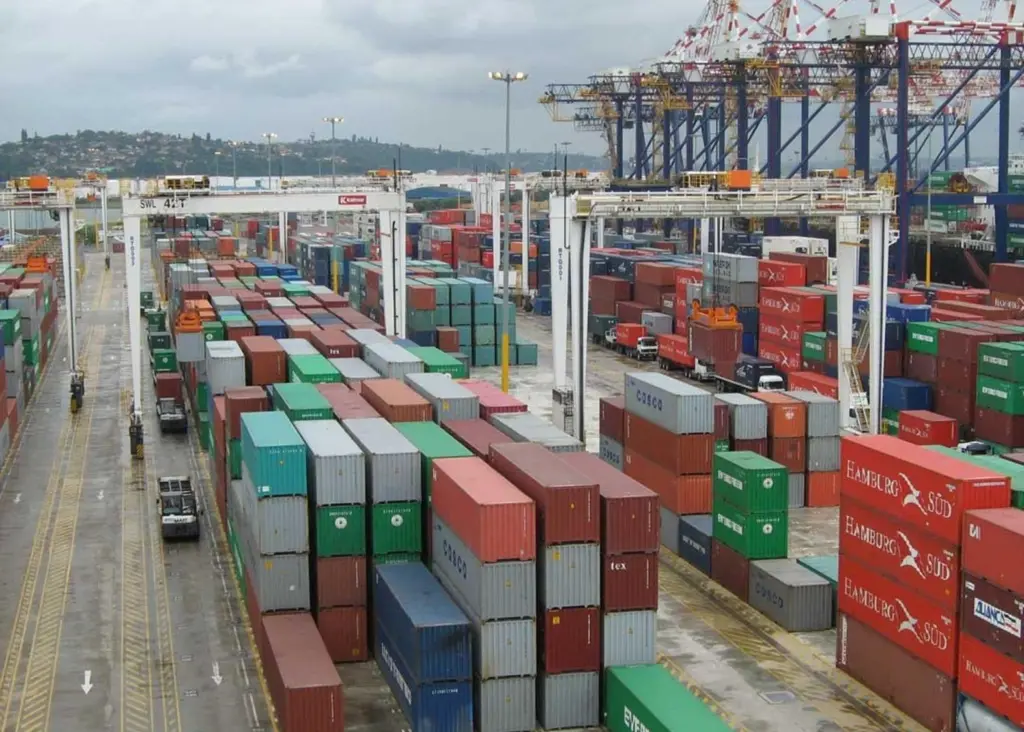
A reportedly well managed concession process was run for 49% of the terminal by Transnet, the state-run national ports authority, with Philippines headquartered International Container Terminal Services Inc. (ICTSI) being declared the Preferred Bidder in July 2023. APM Terminals (APMT), the second placed bidder and a unit of shipping company Maersk’s Transport and Logistics Division, then made initial complaints to Transnet about the selection of ICTSI as Preferred Bidder, even though its bid was in the order of US$100 million less than ICTSI’s bid.
It was not until around nine months later, however, that APMT mounted a legal challenge against the award with the centrepiece of this being the accusation that ICTSI had failed a solvency test set in the Request for Proposals, its interpretation being that this can only be looked at in one specific mathematical way.
Prior to the mounting of the legal challenge Transnet had, using the services of a qualified third party, looked at the financial capacity of ICTSI and pronounced itself satisfied that ICTSI had passed financial due diligence. At least in part this appeared to be the trigger for APMT to go legal.
The legal action – Part A of a two-part action – came to court last September and the following month the Durban High Court issued an interdict on the DCT2 process, halting it in its tracks until the legal challenge is fully ruled on.
ICTSI is known to be applying to appeal the interdict and beyond this there is Part B of the legal action to conclude. The clock is ticking and months are slipping by adding a substantial time period to a process that commenced in early 2022.
Timeline is important
In December this year it will be two years and 10 months since Transnet launched the concession process for DCT2. It was slow even before the legal challenge but with this now in play the process will easily cross the three-year mark.
The APMT challenge effectively throws the process into the long grass – halting the vital work of getting to grips with raising DCT2’s performance to the comprehensive benefit of South Africa’s economy. A point underlined recently by Enrique K. Razon, Chairman & CEO of ICTSI, who broke silence in mid-October on the APMT legal challenge highlighting what ICTSI believes to be the real facts behind it and the ensuing negative consequences.
“Maersk has dominated the South African market since it acquired Safmarine over 20 years ago and today Maersk holds a dominant position and strong pricing leverage in the market. Maersk is clearly desperate to prevent the entry of an independent common user terminal operator. In short, after failing to produce a strong bid they are instead trying to delay and stop the process by using the courts,” he underlined.
He continued: “This, of course, all suits Maersk who have just as much interest in the process failing as they do in having their far inferior bid being accepted. Either outcome would be a dramatic step backward for the government’s economic agenda but a success for Maersk’s desire for end to end to end control of South Africa’s logistics system.”
In this context, it is well known that Maersk accounts for a large proportion of the berthing slots at DCT2 and that until such a time as the terminal can operate more efficiently there is little scope for new lines to gain a foothold in Durban and offer a more competitive environment to importers and exporters. The timeline is also relevant in relation to Transnet. “Transnet, has not acted expeditiously and has dragged its feet at the highest levels,” noted Razon.
The suggestion is clear that there are parties within Transnet who are nonbelievers in a Public Private Partnership (PPP) and do not want it to proceed. In equally damming mode, Razon said on the key solvency issue: Maersk was trying to question “a non-defined metric” that even some of the world’s largest companies such as Apple would be unable to meet, as well as numerous top 40 companies listed on the Johannesburg Stock Exchange.
Certainly, there is a good deal of agreement with this position – independent financial analysts suggest that over emphasis on one mathematical formula to assess solvency is stretching the boundaries of common sense and that there are other equally, if not more, effective ways of analysing this. PS has had some insight into these from an independent source and all confirm ICTSI has more than adequate financial capacity to undertake the DCT2 project.
Hardly surprisingly, APMT has pushed back on ICTSI’s statements sticking by its view that compliance with the solvency metric can only be viewed one way. The scene is set for further engagement on this issue.
Related Articles
 CONTAINER & CARGO HANDLING
 PORT & TERMINAL NEWS
 PORT & TERMINAL NEWS