

Liebherr supports Patimban operations
Patimban Global Gateway Terminal is preparing for the next stage of its development with the delivery of a Liebherr LHM 550 mobile harbour crane, allowing container operations to commence while permanent quay equipment is progressively installed.
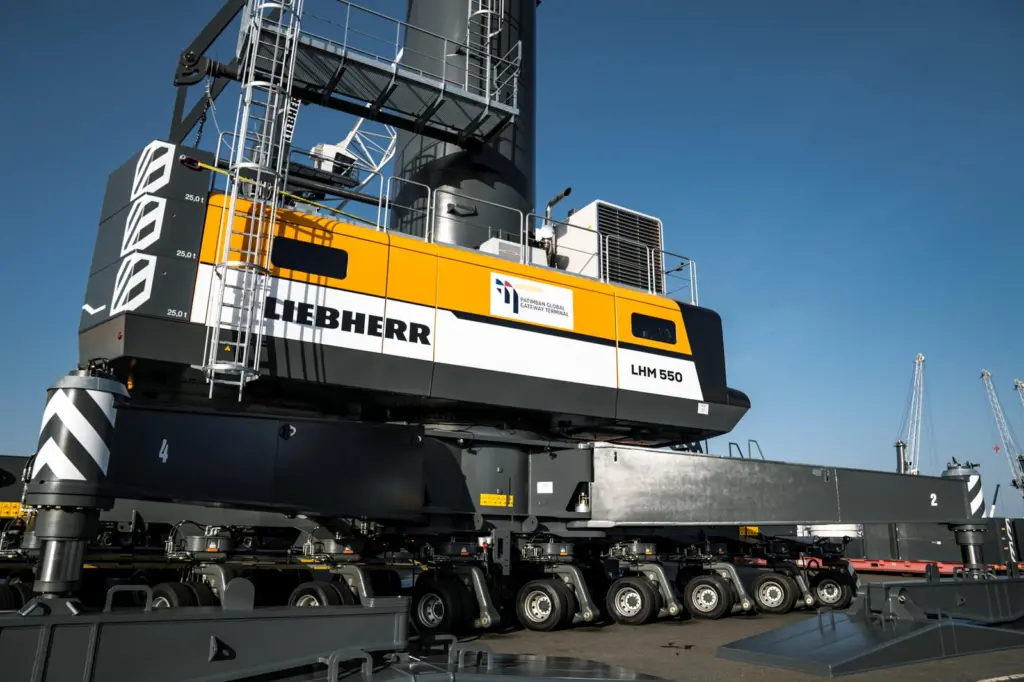
The crane has been supplied in a container-focused configuration and delivered within three months. Its mobility and flexible working ranges are intended to support vessel handling as berth layouts and terminal infrastructure develop.
The equipment will provide an interim capability while Patimban moves towards its planned multi-million-tue container capacity.
‘Projects like Patimban show how closely we work with customers to align equipment, delivery schedules and long-term support,’ said Andreas Ritschel, general manager Sales Mobile Harbour Cranes at Liebherr-Rostock.
The delivery follows Patimban’s first international container vessel trial in March 2026, when MSC’s MSC Hanisha III berthed at the terminal and completed operations the following day. The trial tested infrastructure, handling equipment, IT systems and coordination between the terminal, authorities and logistics stakeholders.
PGT is a 35-year sub-concessionaire of PT Pelabuhan Patimban Internasional and currently lists a 420m quay, 14m draft and initial annual capacity of 250,000 teu. Its shareholders are Africa Global Logistics, Toyota Tsusho and Samudera Pelabuhan Indonesia.
The wider Patimban development is a national strategic project designed to complement Jakarta’s Tanjung Priok port, helping address congestion and improve connections with West Java’s industrial centres. Construction of the port began with Japanese ODA support in 2018, while initial operations at Patimban commenced in 2020.
The new container terminal is expected to strengthen logistics capacity for Subang and the wider West Java region, improving access to international markets for manufacturers and supporting the development of surrounding industrial areas. Regional analysis has identified the port and associated transport infrastructure as potential drivers of industrial and economic development.
Related Articles
 CONTAINER & CARGO HANDLING
 TERMINAL OPERATIONS
 EXPANSION & DEVELOPMENT