



Terminal transition time
A landmark acquisition deal is on the table between TIL/Blackrock and Hutchison Ports. If the deal proceeds, expect waves to be felt in the marketplace. Mike Mundy reports

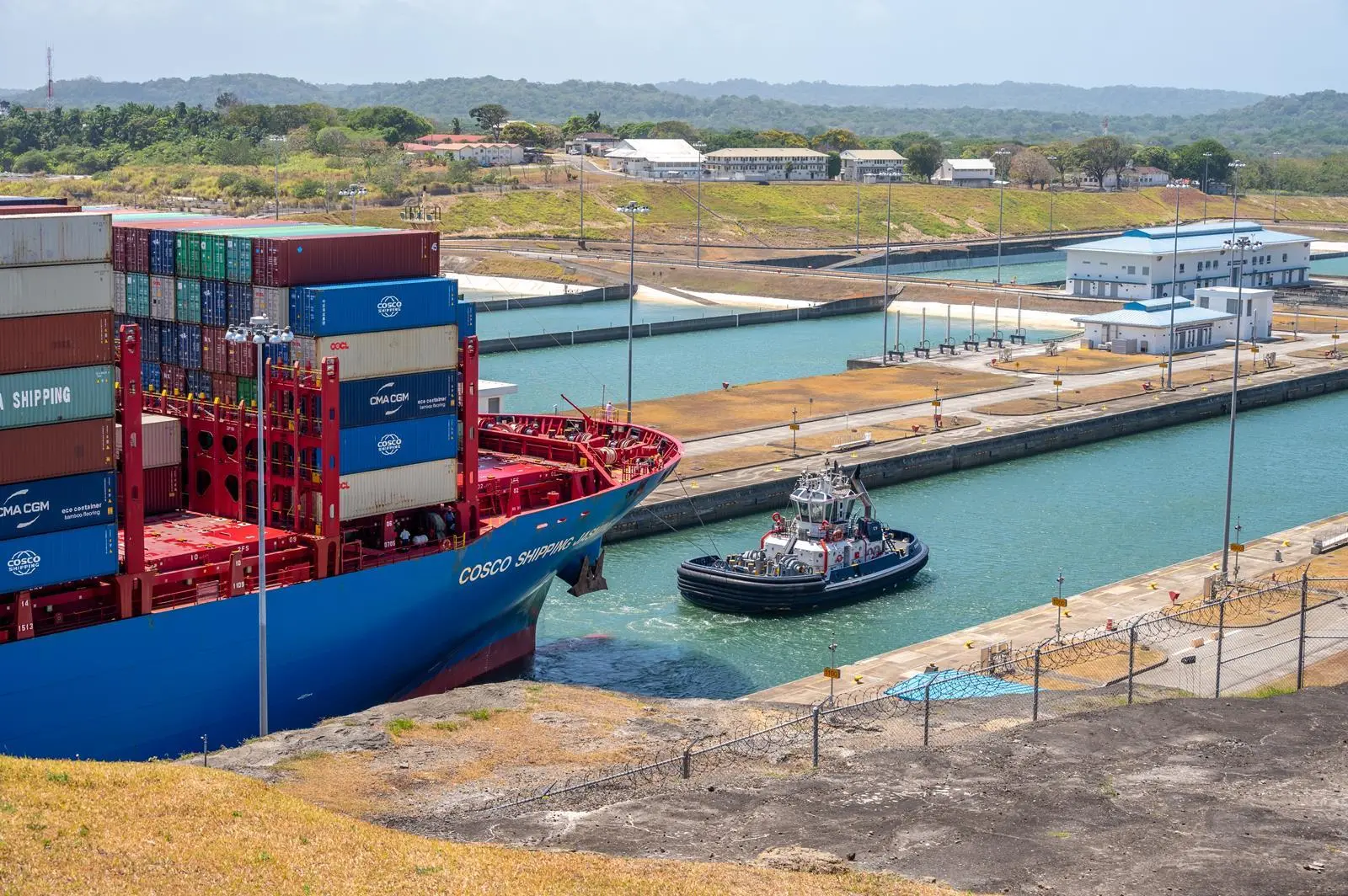
First, we heard that Blackrock/TIL, the terminal arm of MSC, was acquiring Hutchison’s two Panama Canal terminals, Balboa and Cristobal, and then, hot on the heels of this announcement, the news broke that Blackrock/TIL had reached an agreement in principle to acquire a majority interest in all the Hutchison Ports’ terminals outside of China. The deal, valued at US$22.8 billion, is for 80% ownership of CK Hutchison’s portfolio of 43 ports and, in an aligned agreement, 90% of the Panama Ports Company (PPC), the CK Hutchison subsidiary controlling Balboa and Cristobal.
As proposed, the deal is without doubt a landmark deal in more ways than one. Li-Ka-shing, the billionaire force behind CK Hutchison can be seen to be exiting his port business at a time when the negative influence of trade wars is a distinct possibility. Even more significant, it is for a cash consideration equal to the market cap’ of the holding company, while the ports business accounted for less than 10% of the group’s turnover. It is what some financial analysts have dubbed a great deal “with Chinese characteristics.”
CK Hutchison is expected to receive in excess of US$19 billion in cash after repayment of loans and minority interest. As noted above, excluded from the deal are ports in China including those covered by the HPH Trust, which operates ports in Hong Kong, Shenzhen and south China.
Equally notable, according to the Wall Street Journal, the deal – which is subject to regulatory approvals – is the largest ever infrastructure acquisition undertaken by the multinational investment company Blackrock. Its relationship with TIL/MSC comes via its 100% acquisition of Global Infrastructure Partners (GIP) in early 2024. TIL/MSC had formerly significantly grown its terminal portfolio working with GIP in what can be seen to be a highly successful collaboration.
Similarly, the emergence of TIL/MSC as the preferred bidder for Hutchison Ports reflects a close working relationship between the two entities, one that stretches back to the early days of containerisation. It has been reported that a rapid competitive bid process was implemented from which a range of expressions of interest and bids were received. In a brief comment on the Blackrock/TIL bid Frank Sixt, Co-Managing Director, CK Hutchison, called the bid “compelling” and underlined that it is in the best interest of the company’s shareholders.
Diego Aponte, Chairman of TIL and President of the MSC Group said: “We are very focused on this industry, and we know that the investment in Hutchison Ports will be a very viable investment commercially.”
The agreement as announced is nevertheless a preliminary one with this running into a period of exclusive negotiations and a non-disclosure arrangement. The target for signing definitive agreements is on or before 2 April.
BUSINESS IMPLICATIONS
Should the transaction proceed then there are potentially a number of significant implications.
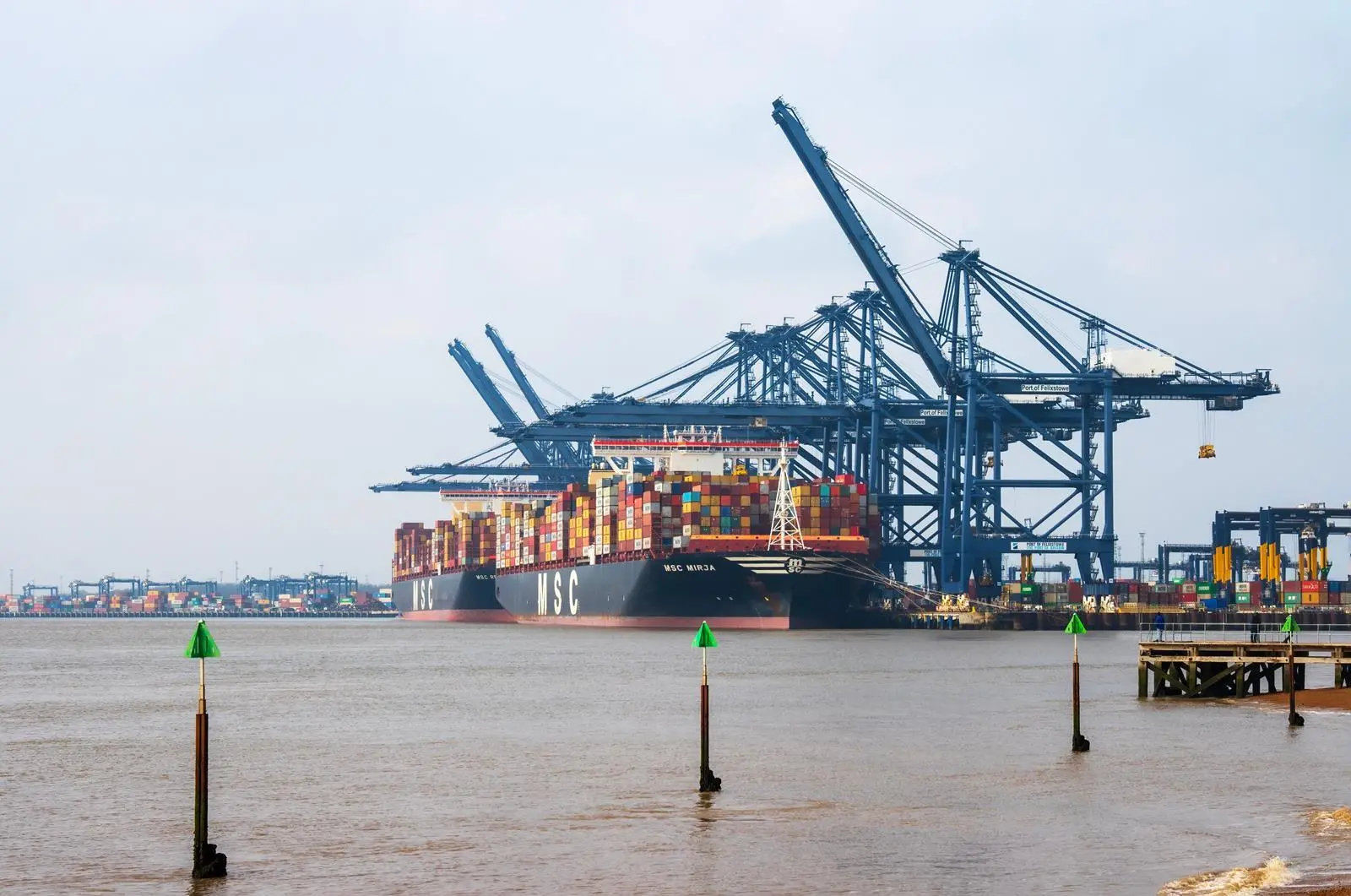
There is the question of who calls at what terminal. It is notable that following the dissolution of MSC’s partnership with Maersk under the 2M agreement that there has been some switching of terminals by both carriers due to competitive considerations. It is highly likely that this trend will repeat itself should Blackrock/TIL assume ownership of the Hutchison portfolio outside China. Maersk may choose to exit certain terminals and at the same time MSC may push business to Hutchison terminals where it now uses a competing facility. Doubtless there are various terminal managements processing such thoughts and the implications for their specific businesses. Presently, watch this space, seems to be the only logical conclusion available!
There is also the bigger picture to consider. While Hutchison Ports does enjoy certain alliances with shipping lines in some of its terminals it is essentially a privately-owned independent terminal operator. The acquisition of Hutchison Ports by TIL together with Blackrock would place it in a different category of operator, essentially a shipping line affiliate where often in such circumstances the needs of the shipping line come first. This reaps more damage on the category of the fully independent private operator – i.e. where all client lines can achieve a service package without fear of preference being given to a parent line.
International Container Terminal Services Inc. (ICTSI) is one such surviving operator, a blue-chip company. There are other companies such as Adani of India but it has recently been mired in controversy surrounding its financial dealings and other actions.
The advance of shipping lines generally into the terminal business arena also raises the question of control or to be specific excessive control. Control of terminal assets together with shipping line capacity extends control over a significant portion of the supply chain and even more so when inland movements come under this umbrella. This has implications for achieving competitive, market-based, pricing for cargo owners.
Additionally, taking a wider view there is the market dominance question – e.g. where one company has control over multiple assets in a given market area. TIL has expanded rapidly and this is an issue that may arise in certain locations. Certainly, it has a concentration of assets along the north European coast and in the port of Rotterdam alone will control roughly half the available container capacity.
On the other hand, given that the deal goes through and offers MSC a new bundle of port assets this has the potential to strengthen its multi-call strategy and through this greater control escalate the line’s reliability. Schedule reliability is already a battle ground between shipping lines and it is expected to become more so as Maersk and Hapag Lloyd crank up their transshipment hub based Gemini concept and MSC pursues its direct call strategy to multiple ports.
PANAMA SOLVED
The deal proceeding also has the potential to take the pressure off Panama as a result of Donald Trump wrongly claiming it is under Chinese ownership. Right or wrong, Trump is pursuing a threatening course of action to take back into US control the Panama Canal as result of his perception that the Canal is China-owned. The sale of Balboa and Cristobal significantly reduces the scale of the problem in favour of Panama.
According to the Wall Street Journal, Blackrock has already briefed the Trump administration and the US Congress on the planned acquisition.
When and if the deal closes then there will certainly be a number of new scenarios that have to be dealt with.
Related Articles
 EQUIPMENT
 EQUIPMENT
 PORT & TERMINAL NEWS