



USA: Comprehensive funding for clean ports
In one of the final acts of the outgoing Biden administration in the US, a total of US$3bn has been earmarked for port modernisation projects across 27 US states at 55 different locations.
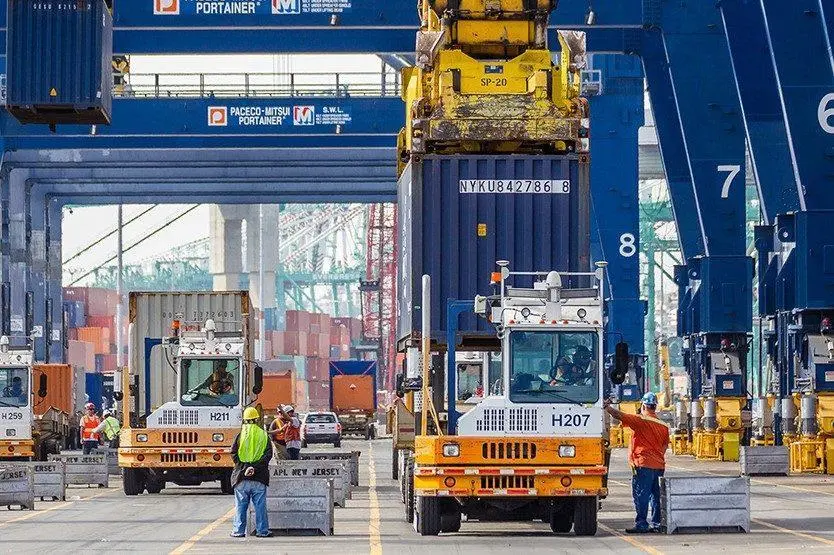
The White House announced that the upgrades will include electrification and battery-hybridisation of port equipment, in an initiative being called the Environmental Protection Agency Clean Ports grants.
“I’m proud to announce we’re delivering $3bn in funding from my Inflation Reduction Act to help clean up and modernise ports in 27 different states and territories, from Pennsylvania, Georgia, Michigan and beyond, including, yes, Puerto Rico,” said President Biden.
According to a White House statement, this initiative means new equipment for ports includes “1500 units of cargo handling equipment, 1000 drayage trucks, 10 locomotives, 20 vessels, shore power systems for ocean-going vessels, battery-electric and hydrogen vehicle charging and fuelling infrastructure and solar power generation.”
It’s a wide-ranging list of recipients but the accompanying table highlights key areas in which the money will be spent.
| Port | Amount (US$) | Examples of Where Investment to be Made |
|---|---|---|
| Source: Port Strategy research | ||
| Baltimore | $147 million | Decarbonise cargo handling operations |
| Los Angeles | $400 million | Obtain 425 pieces of battery-electric, human-operated ZE cargo handling equipment, 250 ZE drayage trucks, 300 new charging ports and auto terminal vessel shore power connections |
| New York / New Jersey | $400 million | Use of zero-emission equipment and clean power, as well as train workers for the green energy jobs of the future |
| Philadelphia | $79.7 million | Replace older, diesel-powered equipment with advanced zero-emission alternatives |
| San Diego | $59 million | Shore power systems and electric trucks |
| Vancouver USA | $22.5 million | Towards electric MHCs, shore power and supporting infrastructure |
Interestingly, the White House announcement states that the investment will “support an estimated 40,000 good-paying union jobs, manufacturing electrified cargo handling equipment” before adding that the new equipment will be “human-operated and human-maintained.” Comments clearly aimed at concerns from unions and workers who see the threat of automated handling resulting in reductions of jobs.
Related Articles
 PORT & TERMINAL NEWS
 PORT & TERMINAL NEWS
 DIGITAL