![PortStrategy[GreenPort]](https://www.portstrategy.com/wp-content/uploads/2026/09/PortStrategyGreenPort.svg)


Ports face diversification challenge
European ports are diversifying their activities but face management and funding challenges.
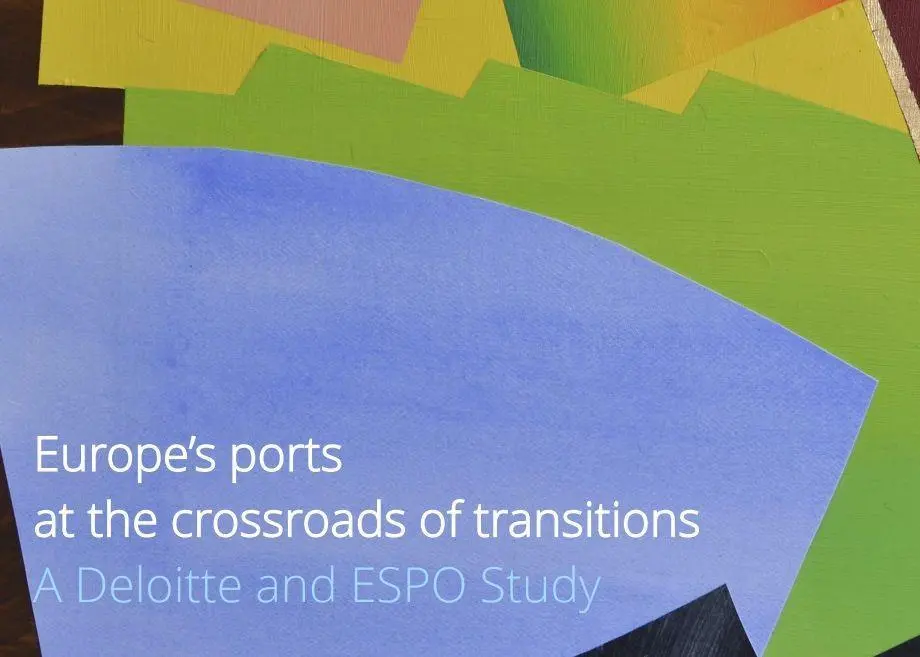
A joint Deloitte-ESPO study identifies four categories of drivers and connecting trends which are transforming the portscape: environmental, technological, geopolitical and demographic. Based on these categories, the study explains how the role of European port authorities is transforming
“The aim of the study is to get an understanding of what drives ports’ decisions today, how ports will adapt and navigate through this world in transformation and what is needed to optimise this process, so that ports in Europe can continue to be a catalyst of sustainable, smart and resilient growth,” commented Isabelle Ryckbost, secretary general at ESPO.
More complex role requires strong management
‘Europe’s ports at the crossroads of transitions’ is based on talks with 55 European port leaders. The study found that overall, port authorities in Europe are taking up new, additional roles on top of their traditional functions. These roles may encompass environmental, sustainability, blue and circular economy work.
While they have been moving towards becoming commercial developers and active strategic landlords, their public role and mission-driven activities remain as important and are even further increasing.
The wider variety of roles, responsibilities and stakeholders implies a greater complexity, which requires more than ever a strong port “manager” as neutral partner and facilitator in the value chain and the wider port ecosystem.
The diverse, increasingly complex and scale of challenges ahead, pushes ports to cooperate with other ports, from coalitions on a single project to full mergers. But cooperation with other stakeholders will also be crucial to find workable solutions for issues like greening the shipping sector or the digitalisation of the port ecosystem. By teaming up, ports can leverage an external knowledge or lower the risk of certain investments.
Revenues decreasing
The study also identifies some possible tensions. First, whereas the role of the port managing body is expanding, revenues are often decreasing. Second, ports are heavy assets and infrastructure investments have very long lead times due to public tendering, financing and authorisation procedures. This makes it particularly challenging for ports to respond and react quickly to overnight changing realities in times of a very uncertain market outlook.
The report suggests an opportunity for revitalising the port-city relationship since the new port authority’s roles, including in the field of circular economy and renewable energy, make them a very relevant partner in the greening of the city and make them attractive for different new job profiles available in the city.
Related Articles
 CONTAINER & CARGO HANDLING
 PORT & TERMINAL NEWS
 PORT & TERMINAL NEWS