


Maritime industry embraces cyber risk
A new report by DNV reveals that a majority of maritime professionals (61%) believe the industry should accept increased cyber risks if it enables technological innovation and advancements.
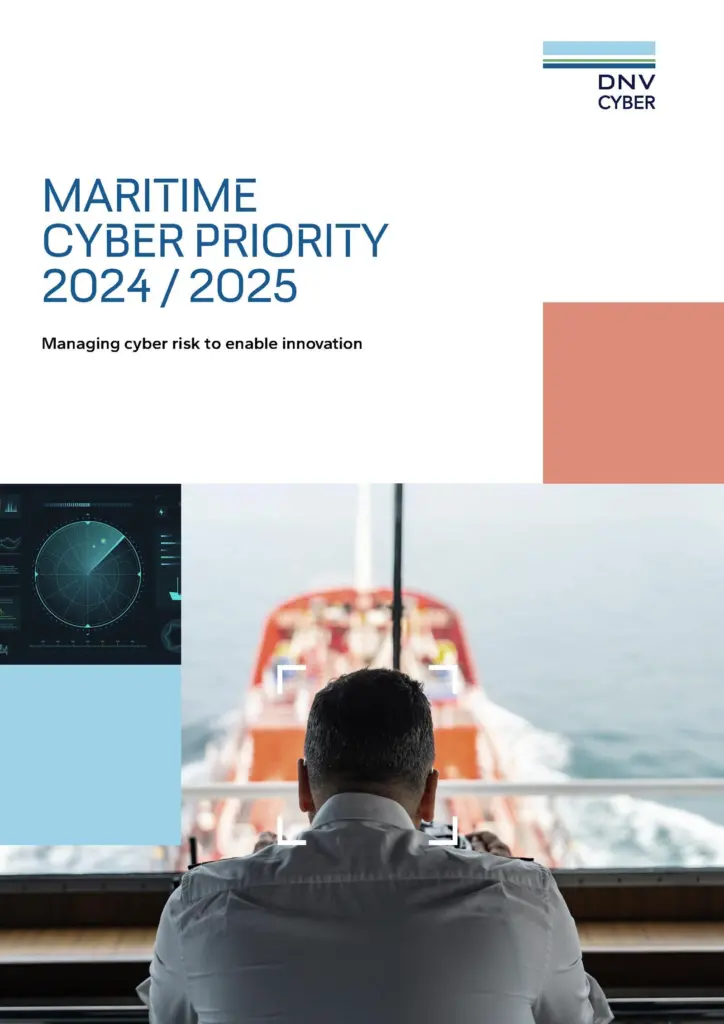
The growing reliance on digital technologies in the maritime sector, driven by advancements such as AI, data analytics, autonomous operations and high-bandwidth satellite communications, presents both significant opportunities and vulnerabilities.
“Organisations may feel they are prepared as more resources are being deployed to manage cyber risk, but the reality is more complex than that,” said Svante Einarsson, head of Maritime Cybersecurity at DNV Cyber.
“Businesses have a sophisticated adversary to contend with, which complicates the picture significantly. We need to protect both IT and OT, and be ready to respond should an attack be successful.”
Despite the industry’s increasing digitalisation, 71% of professionals surveyed said their organisations’ assets are more susceptible to cyber-attacks than ever before. Cybersecurity is considered the greatest risk facing the industry, according to 71% of respondents.
Confidence
However, maritime professionals are confident in their organisations’ ability to manage these risks. Over 80% of respondents believe their organisations have a strong cybersecurity posture, and 71% are confident in their ability to quickly recover from cyber-attacks. In response to these growing risks, nearly 73% of professionals report that their organisations have increased cybersecurity spending.
Despite this optimism, the report highlights several concerns, including a potential false sense of security. Many professionals (68%) believe their organisation’s IT security is stronger than its operational technology security and there is growing concern over criminal activity, with 79% of respondents worried about ransomware attacks targeting the maritime sector.
The report – Maritime Cyber Priority 2024/25: Managing Cyber Risk to Enable Innovation – calls for greater collaboration within the maritime industry and across critical infrastructure sectors to address challenges and ensure resilience.
“We must match our ambitions for digital transformation and decarbonisation with a steadfast commitment to securing our people, the vessels and the systems we rely on,” said Knut Ørbeck-Nilssen, chief executive, Maritime at DNV.
“We can innovate, progress and take a lead in ensuring the resilience of our businesses and societies, but only if we truly manage cyber risk.”
Related Articles
 TERMINAL OPERATIONS
 DIGITAL
 DIGITAL