![PortStrategy[GreenPort]](https://www.portstrategy.com/wp-content/uploads/2026/09/PortStrategyGreenPort.svg)

REDUCE – PRODUCE – PROCURE
How do you make the switch from diesel to electric? Drawing on UK experience, technology company Siemens highlights a proven approach to electrification and decarbonisation*
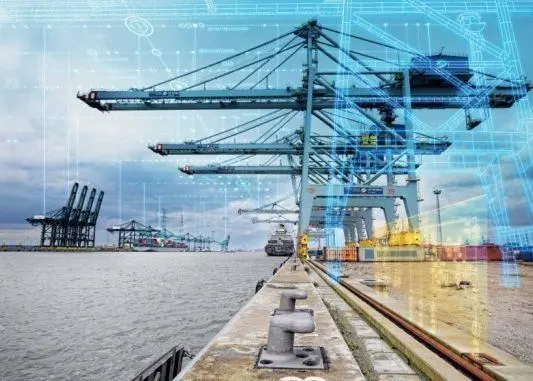
It’s time to drop diesel and go for electric – there aren’t many port operators that would disagree with that. The decarbonisation agenda is pushing a revolution in the ports and maritime sector and there are other drivers too, such as the ending of the UK’s red diesel rebate, something that will more than double the cost of the diesel traditionally used in ports.
But how best to make the switch when all your port equipment is diesel powered? As with so many challenges, if you wanted the easiest path to success, you might not have chosen to start from here.
Many ports have tended to grow in a piecemeal way over the years – extend the yard a bit, add a berth, buy a few more terminal tractors. Some ports have access to plenty of power and are unconstrained when it comes to electrification. Others may be at the end of a peninsular without the power availability to electrify everything without difficulty.
In all cases, it’s quite likely that a port’s electrical infrastructure has been added to, adapted, and modified here and there over the years. Siemens is used to coming across an eclectic mix of obsolete technology scattered throughout a facility. Nevertheless, we all have to work with what we have – and it’s important to take a step back, plan carefully and take a holistic approach.
REDUCE – PRODUCE – PROCURE
When we talk to clients about electrification and decarbonising their operations, we take them along a three-point plan: reduce, produce, procure. In an ideal world, you would look at a rubber tyred gantry crane, remove the diesel element, install a cable reel system, connect to a larger power infrastructure and be fully electric.
However, the first step can be to optimise and reduce your reliance on carbon-emitting technology. We always look at energy efficiencies that can be achieved, including through retrofitting and refurbishing to make equipment more efficient and resilient.
If you’re looking to reduce cost and carbon, the first step is to use less, so we start by optimising a port’s existing infrastructure and make the most of the assets they have. As an initial step, you can use technology to optimise a diesel engine’s performance – effectively making it a ‘smarter’ operator, reducing fuel consumption and emissions.
The creation of a digital twin can be invaluable, enabling you to model operations in the port and pinpoint where the logistics operation can be more efficient – simulating improvements and, by their nature, reducing diesel consumption.
The ending of the red diesel rebate in the UK next April means some users will face a doubling in the price of diesel. We’re talking about larger ports potentially paying out several extra million pounds a year, so finding efficiencies in existing hardware could save a lot of money.
On the journey towards electrification, another good interim measure is switching to biodiesel. Then it’s about looking at what the port can ‘produce’ onsite; does the port have space to install onshore wind turbines or solar panels and some battery storage to accompany the onsite generation?
The port will still have a connection to the grid, but this step is about considering how it can meet some of its energy requirements itself. The final stage is of course to procure the remaining energy needed, but in the greenest way possible.
With a rapidly decarbonising grid in the UK, the electricity network is definitely heading in the right direction in the next 5 to 10 years making maximum use of large-scale off-shore wind and solar generation.
Think of this like the foundations of a complicated building. These foundations can incorporate the use of renewables and other technologies such as green hydrogen and smart microgrids. Above all, Siemens would never tell a customer that one piece of technology will solve all their problems, nor would we pretend there are always easy, off-the-shelf answers.
What does the port want to achieve? The solution must be designed around that vision and those aspirations. At Siemens, we have set our own target to be net zero by 2030. We have already reduced emissions at our buildings and sites by 50 per cent, so we know it’s possible and we know it can make companies more competitive.
In a recent port project, we supported retrofitting diesel-powered RTGs with their own ‘battery pack’ which could be charged from cable or busbar, enabling diesel free operation. Once again, the holistic approach is vital. Electrify the crane, yes – but what about digital technology to provide a higher degree of safety and precision? How about ensuring that every individual piece of kit fits neatly into the most efficient broader picture possible?
It’s about knowing all parts of the operation and driving inefficiencies out – based on data and knowledge. If the unloading of a vessel is progressing faster than expected, the system should be able to adjust the size and frequency of equipment required to match. Once again, a digital twin can enable you to work out efficiency improvements.
IT CAN BE TRANSFORMATIONAL
There are some great examples of UK ports moving ahead with electrification; the Port of Tyne announced in January that it had completed a detailed modelling exercise and long-term analysis of its electricity network, enabling it to understand both current and future energy requirements as it looks to be carbon neutral by 2030 and all-electric by 2040.
The port is working through an innovative asset electrification programme involving the conversion of materials handling equipment from diesel to low-carbon electricity; this includes converting a Liebherr mobile harbour crane and Drax hoppers used for bulks from diesel to electric-powered.
The port says these two projects alone will reduce diesel consumption by 260,000 litres a year, eliminating 700 tonnes of CO2 emissions. The Port of Tyne has also invested in a new fleet of electric vehicles.
The UK’s recently announced Freeports will be all about growth, jobs and prosperity, providing low-cost manufacturing options and attracting inward investment. Such developments would normally be expected to push up energy requirements, with consequently larger carbon footprints; however, to be in line with Net Zero targets, they will have to consider smart and renewable energy.
All of this provides exciting opportunities for ports and their respective hinterlands. Our role at Siemens is to guide port clients through the complexities and often bewildering choices to be made. We continually emphasise – electrification of a port is not only possible but can be transformational. It offers opportunities across the ecosystem, such as moving to microgrid networks. It can deliver lower costs, new business opportunities and reduced emissions and noise.
While port operators know they need to head this way, they don’t always appreciate what the tech’ can do for them, making Siemens many port operators first port of call.
*This article is authored by Lynsey Jeffers, Siemens Ports & Airports Sector Lead and Graham Foster, Siemens UK, Head of Marine and Defence
In 1891, the first electric rotating crane went into operation on the Petersenkai wharf at the port in Hamburg. The crane had been built by the Hamburg firm Nagel & Kaemp, but the electrical equipment came from Siemens & Halske. It had a load-lifting capacity of two and a half metric tons and could hoist loads at a meter per second. The extremely efficient drive recovered electrical energy as heavy loads were being lowered and stored it in an accumulator battery. After some initial problems, the unit worked well for more than three decades.
Related Articles
 CONTAINER & CARGO HANDLING
 EQUIPMENT
 EQUIPMENT