



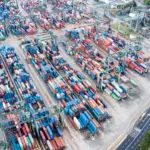


Reel versus bar debate rumbles on
When it comes to RTG conversion, a cable reel system can give flexibility of movement between stacks, but APM Terminals prefers the drive-in/drive out bus bar system.
Depending on the voltage involved and location of the terminal, individual units can be unplugged and then plugged back in, although this type of operation may call for specially trained personnel.
“If you leave an RTG in the same stacks for a long amount of time then the cable reel system is perfectly okay and there are many examples of successful operations of this type in Asia,” says Ross Clarke, director – design & operations for new terminals, for the operator. “However, APM Terminals prefers a much leaner type of operation, requiring the maximum flexibility of units, which is what the drive-in/drive out bus bar system delivers.”
Another global stevedoring company based in the Far East confirmed to Port Strategy that it had already introduced electric RTGs at a few of its terminals in Asia and found the outcome to be “promising”.
“As a result, we will be considering the introduction of more electric RTGs, either by way of new purchase or by converting existing diesel units. The main advantage is the savings we have made in diesel costs, which means that electric RTGs are most applicable in terminals where electricity is substantially cheaper than diesel,” says the spokesperson.
Nevertheless, the stevedore has also encountered disadvantages with electric RTGs, the main one being the fact that mobility is hampered. “With RTGs operating on the cable reel system, there is a lot of labour intensive plugging and unplugging of units from the mains as the machines move between stacks. Thus, for practical reasons, we envisage that even when we introduce electric RTGs at terminals in the future, these will be supplemented by diesel ones, which retains a degree of flexibility not yet possible in electric operation.”
Related Articles
 CONTAINER & CARGO HANDLING
 TERMINAL OPERATIONS
 CONTAINER & CARGO HANDLING