



Riding the Rollercoaster
Its a tumultuous, not to say precarious time to be reviewing this trade, as Nick Elliott reports.
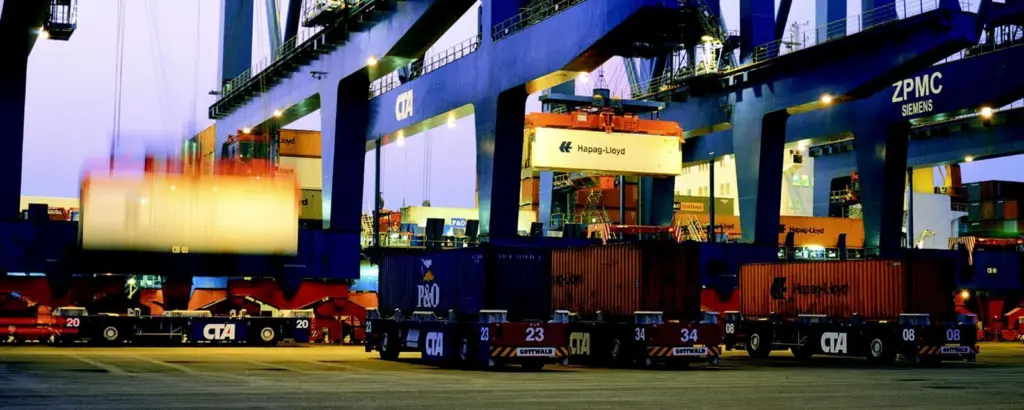
Outsourcing of manufacturing to China, India and elsewhere in Asia continues but north European and UK consumer demand is faltering. The WTO says: “The steep rise in oil prices, to their highest levels in more than two decades has negatively affected consumer and business confidence in the oil importing countries.” It notes that the full impact is still to be felt.
How long will the China boom last?
The cry for new terminal capacity is still heard yet ports seem to be getting on top of the congestion problem. What extra capacity do we need?
A 49% increase in global box ship capacity is coming over the next three years. World fleet capacity is set to rise by 12% this year followed by 14% in 2006. Two cases in point: China Shipping Container Lines will replace two 5,700TEU ships on the Asia/Europe Express (AEX1) service with ships of 8,500TEU capacity by year end, and add another two in the first quarter of next year, boosting slots on the main string service by over 50% in a little over a year.
And Paris broker/researcher BRS-Alphaliner reports that Maersk’s newbuildings, the first of which will enter service early next year, may be able to load up to 15,000TEUs. The ships under construction at AP Moller’s Odense yard may be as wide as 55 metres, providing space for as many as 22 rows. That would put their capacity at around 12,500TEUs, BRS-Alphaliner estimates. B there is talk they could be extended in length to 405 metres bringing nominal capacity to 15,000TEUs. They are likely to be deployed on the Asia/Europe trades.
Furthermore, if freight rates on the Far East/Europe trades haven’t yet slipped significantly, then charter rates certainly have, whether due to a market ‘blip’ or a fundamental shift from bull to bear, is a moot point.
Are we then facing massive over-capacity in the container ship market?
Oh, and the ADB is saying a bird flu pandemic could halt Asian growth altogether. What are we to make of it all?
P&O Ports’ cfo Nick Luff, commenting on his company’s performance said recently: “The UK market is still growing – we estimate about 3% volume growth this year – but that is less than it was last year and the peak season we are now in hasn’t come through that strongly, compared with earlier years. We believe that is a result of lower consumer spending and fewer goods being bought in.”
The Far Eastern Freight Conference predicts 17% trade growth from Asia to the whole of Europe in 2005, following 16.5% last year.
But Global Insight’s md and PS’s Economist Ben Hackett says:
“Cargo volume growth from Asia, including China, has abated to an average of 8-10% this year and possibly less if indications of lower consumption in Europe are proven over the next few months.
“The ships are getting bigger, ” he says, ” but they are replacing the smaller ones; however they are not getting much deeper than the existing fleet but they are getting wider and longer.
“And with the shifts taking place within the alliances and Maersk, CMA CGM and MSC calling the shots on port calls, we are seeing an increasing spread in terminal usage, including Amsterdam’ Ceres Paragon (Grand Alliance under pressure from NYK); Maersk focusing on their APMT facilities; MSC putting a lot of effort into Antwerp and feedering from there; and CMA CGM running trains to/from Marseilles versus the traditional Rotterdam/Hamburg trains taking cargo from those ports south.
“The terminals also learned their lessons from last year, ” he adds.
“They are better organised and have managed the interchange from terminal to gate and onwards without much problem this year, despite the cargo growth.”
Related Articles
 PORT & TERMINAL NEWS
 EXPANSION & DEVELOPMENT
 CONTAINER & CARGO HANDLING