![PortStrategy[GreenPort]](https://www.portstrategy.com/wp-content/uploads/2026/09/PortStrategyGreenPort.svg)


Sheerness flies the RMG flag
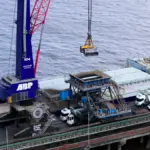
Proof that rail mounted gantry cranes (RMGs) have a significantworking life can be seen by the two currently deployed at the UK portof Sheerness.
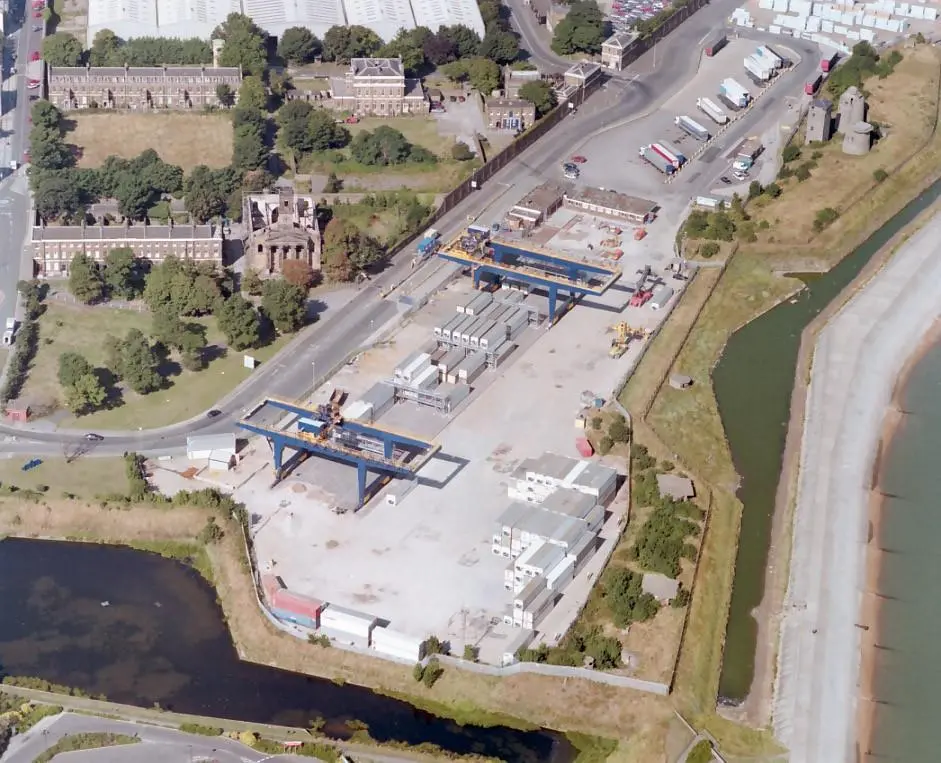
These were originally built for British Rail in the 1970s and initially shifted containers in the Port of Liverpool, before being transferred away from this major box hub to undertake easier duties in the smaller Kent port. Here, they stack three boxes high in blocks of seven across.
Asked to comment on the reliability of such ageing machines, a spokesperson for the port says that one of the RMGs was regularly serviced during its time at Liverpool and is now performing well at Sheerness. In contrast, the second unit, which was less well looked after, is not so reliable.
Given the age of the units, no after sales support is available from the original equipment manufacturer, leaving maintenance to be undertaken by local fitters. However, these occasionally struggle to source spare parts, because many of these are no longer made. Once maintenance proves too costly, the RMGs will be retired.
Explaining why Sheerness had decided to incorporate the two units, despite their advanced age, the port’s spokesperson points out that they had become surplus to requirements in Liverpool, which forms part of the same group of ports as Sheerness. It therefore made sense to pass them on, given that a rail-based solution worked well in the planned area for the port’s new box facility. The cost of new equipment would have been difficult to justify, too.
Crucially, the port is situated close to a residential area, thereby meaning that, because the RMGs use mains electricity, they produce very little noise and generate no emissions, making them a perfect fit.
Related Articles
 BULK HANDLING
 CONTAINER & CARGO HANDLING
 CONTAINER & CARGO HANDLING