



Shifting the Balance
Port of Tanjung Pelepas (PTP) is in the middle of its next stage of expansion, based around its burgeoning free trade zone. James Macpherson reports.
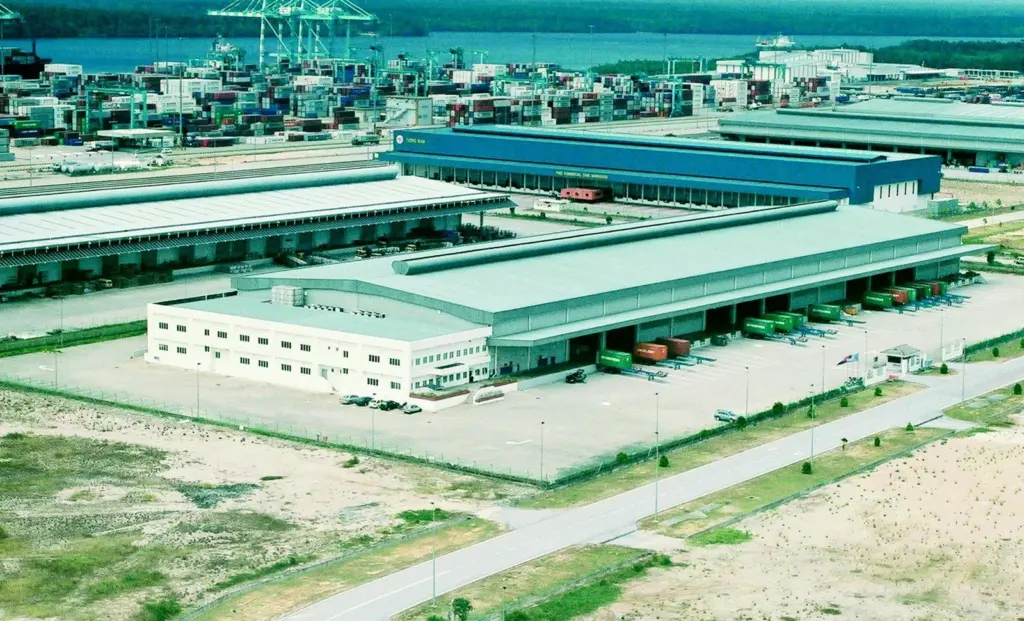
In only five years of operation, PTP has established itself as a major Southeast Asian transhipment hub. In 2004, it handled 4.02m TEUs, representing a year-on-year increase of 15.3%.
However, given the fierce local competition, PTP cannot afford to rest on its laurels. Since the port has undertaken a large expansion project costing US$200m, it has to attract new ocean carriers to its berths and new manufacturers and 3PLs to its growing free trade zone (FTZ).
This exponential growth in its container volumes has increased the need for additional capacity and under the phase two construction plans, berths 7 and 8 will be fully operational in early 2006 once three IMPSA super post-Panamax quay cranes arrive.
But whilst PTP has so far captured Maersk Sealand and Evergreen from neighbouring Singapore, it needs more customers. A port spokesman reveals: “We are working on several projects at the moment. We are in discussions with some ocean carriers and we are confident of signing a major deal in the near future. By attracting more carrier services to the port, this will help us to attract additional manufacturers and logistics companies to the free trade zone.”
SOON TO ATTRACT MAJOR MANUFACTURER The source also highlights that PTP will soon be finalising a contract with a major manufacturer to locate close to the port area. For the moment, the FTZ only has JB Cocoa within its confines, a Malaysian/US joint venture company which processes cocoa beans into cocoa butter.
Beefing up the port’s FTZ is central to PTP’s strategy of decreasing its reliance on just transhipment cargo. This can be a tenuous existence should a major customer defect to another port because of cheaper costs. But in Q1 2005, PTP’s local cargo volumes grew year-on-year by 23%, to 45,00TEUs so the strategy seems to be working to some degree.
In the medium to long term, PTP intends to capture the bulk of the local export and intra-Asian traffic handled by neighbouring Pasir Gudang port in the eastern Johor area. This is where most of the local industry is situated for the moment, although via its numerous tax incentive packages, PTP is trying to change this by attracting both local and foreign industry. In 2004, Pasir Gudang handled a not inconsiderable 800,000TEUs.
For the moment, local industry prefers to route traffic via Pasir Gudang because haulage is US$30/TEU cheaper than shipment via PTP. Nevertheless, the port still has some major disadvantages.
There are restrictions for vessels calling at Pasir Gudang during the night and draught is limited to 11metres. Additionally, seven regional ocean carriers dropped calls at Pasir Gudang throughout 2004 because of the enormous rate hikes for charter vessels. PTP officials believe there will be a natural shift of cargo away from Pasir Gudang because of the reliability and range of their liner services.
Related Articles
 NEWS
NEWS
 CONTAINER & CARGO HANDLING
 OPERATIONS