


Siemens – intermodality for sustainable solutions
In this article, Dr. Padideh Guetzkow Moini from Siemens looks at how in 2009, Siemens’ customers worldwide were able to reduce their CO2 emissions by a total of 210m tonnes using solutions from the Siemens Environmental Portfolio.
This quantity equals the annual CO2 emissions of New York, Tokyo, London and Berlin put together. The annual CO2 savings to be achieved in 2011 are projected to total at least 300m tonnes.
Siemens’ internal goal is to reduce energy consumption and CO2 emissions by 20 percent by the end of 2011. Siemens AG was rated the most sustainable company in its sector by the Dow Jones Sustainability Index (DJSI) this year.
Siemens’ green supply chain
The more effective networking of transportation systems makes the movement of goods more efficient and environmentally compatible. When selecting a supplier, Siemens does not only look for the most competitive and innovative candidate, but also sets high standards for sustainability. This is why we integrated sustainability requirements in all relevant supplier management processes in recent years and keep developing them further.
For us, sustainability in the supply chain means creating long-term value for all of our stakeholders through a network of excellent and innovative suppliers, governed unconditionally by the clear-cut guiding principles of ecologically and socially responsible business conduct.
Siemens’ green logistics concept focuses on:
- transport avoidance,
- ecological transport modes,
- freight consolidation and
- packing optimisation.
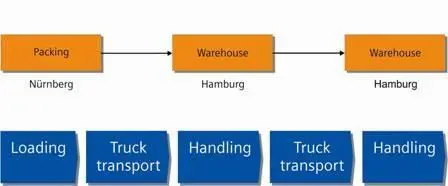
An example for optimised sustainable supply chain logistics was implemented recently when Siemens had to deliver 1440 bogies weighing about 30,000 tonnes from Graz, Austria, via Port of Hamburg to Tianjin (China).
Our concept for this project was based on the following approach:
- Use of a freight village (freight collected in containers) and transport at freight village with the port rail system
- Rail transport directly from the freight village to the Port of Hamburg and on to its container terminal and to the vessel
Shifting to environmentally friendly rail transport saves intermediate handling steps. Containers can be transferred directly from rail or barge to the vessel – without any intermediate truck transport. The usage of trimodal hubs, such as the freight village in Nuremberg, as consolidation centres in combination with intelligent logistics concepts provides the basis for sustainability. And this not only results in reduced CO2 emissions but cuts transport costs. Furthermore, there is a positive side effect – less handling generally reduces the risk of the freight being damaged.
Related Articles
 ALTERNATIVE FUELS GREENPORT