![PortStrategy[GreenPort]](https://www.portstrategy.com/wp-content/uploads/2026/09/PortStrategyGreenPort.svg)





Smart decarbonisation
Terminal energy optimisation and emissions reduction is being tackled in India.
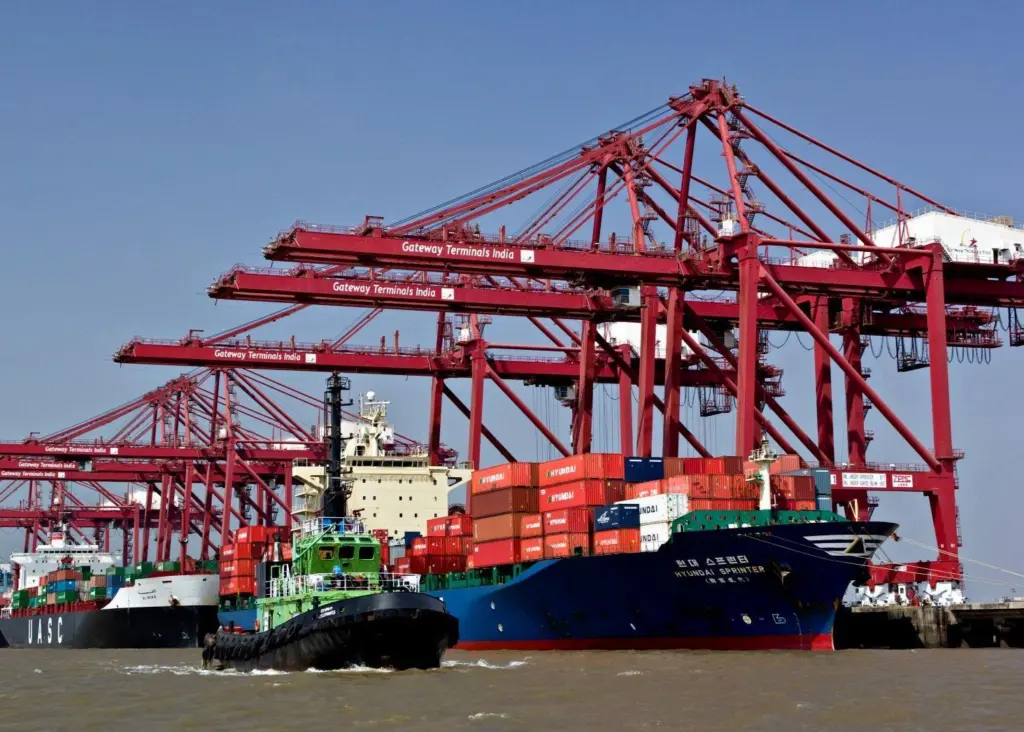
Collaboration between APM Terminals and Siemens Limited, India, has identified a potential 30-40% emissions reduction at APM Terminals Mumbai, also known as Gateway Terminals India (GTI).
“As a major logistics player in India, we are conscious of our carbon footprint, but also of our responsibility for finding all possible ways of reducing them,” said Girish Aggarwal, chief operating officer at GTI. “The partnership with Siemens allows us to successfully address this issue not only at GTI, but also convert it into a scalable solution for implementation in other terminals.”
Utilising Siemens’ technologies
GTI utilises a combination of diesel and electric powered equipment and in 2020 alone, it consumed 5.8m litres of diesel and 25GW hours of electricity, resulting in an emission of 66,847t of CO2 in Scope 1 (fuel-based) and 84,429t of CO2 in Scope 2 (emissions from the generation of purchased electricity).
To address this and find scalable and efficient solutions for reducing these emissions, GTI engaged Siemens for a pilot project aimed at establishing the baseline of GTI’s energy consumption patterns through continuous measurement of all energy consumers, as well as defining, verifying and later implementing possible energy optimisation measures. Known as Facility Improvement Measures (FIM), they entail verification of actual energy consumption, as well as emission reduction achieved.
In addition, the pilot will utilise Siemens’ digital platform solution, including integration into APM Terminals’ IT and digital architecture and compliance with IT, cyber security and data requirements. Siemens’ technologies include microgrid solution, energy efficiency analytics and integration of renewables.
Decarbonisation focus areas
The pilot identified four main FIM or focus areas for decarbonisation. Transformer optimisation will help reduce energy loss by intelligently switching the transformers. Rubber tyred gantry (RTG) will help save fuel. Optimising reefer facilities will reduce energy peek and demand, improve reliability and increase flexibility. Finally, implementing local solar photovoltaic (PV) infrastructure will provide the terminal with more clean energy, reduce grid supply and peaks, and bring additional flexibility to energy sourcing.
Based on the initial learnings, APM Terminals and Siemens estimate that proposed measures should help emission reduction of ~40% on Scope 1 emissions (fuel) and 16%-20% on Scope 2 emissions (from purchased electricity) at GTI.
The companies will now work on further energy optimisation and emission reduction programmes across APM Terminals operations globally.
Related Articles
 ASIA GREENPORT
 ASIA GREENPORT
 ASIA GREENPORT