

On the starting blocks
The United States is behind the curve when it comes to offshore wind generation – but the picture is changing, albeit gradually. Felicity Landon reports on developments off the US East Coast
When Joe Biden set the target of 30 GW of offshore wind for the United States by 2030, the scene was set for major developments. However, anyone who expected this to be straightforward would have been disappointed. The will is maybe there, but so is community pushback, exceptionally long permitting times, the tensions between state and federal control, and – of course – the Jones Act.
In a paper examining the current opportunities and challenges for offshore wind in the US, The Electricity Journal, published by Elsevier, notes that the Atlantic Coast stretching from Maine to the beginning of the Florida Keys measures 2260 miles of shoreline. “The East Coast is home to more than a third of the population of the US, which makes offshore wind energy very attractive from a population density and shoreline utilisation standpoint,” it says.
In its 2022 report, the Global Wind Energy Council notes that the effect of clear policy direction was shown in the US and 2021 was a record year for awarding offshore wind capacity. “Four states awarded 8.4 GW, reflecting a strong desire to deliver on President Biden’s target of 30 GW,” says the report. “With construction work already kicking off last November, the country’s first utility scale offshore wind project is likely to be online in 2023. 11.5 GW of offshore wind capacity is expected to be built in the next five years, making it the largest offshore wind market after China and the UK in terms of new additions.”
However, it says that offshore wind projects in the US generally require at least six years for permitting. “It took almost eight years to obtain permits for the two-turbine 12 MW Coastal Virginia offshore wind pilot project.”
Nevertheless, Carleen Lyden-Walker, Executive Director of the North American Marine Environment Protection Association (NAMEPA), says: “We are coming from behind, but there are a lot of rays of hope.”
She explains: “Until Obama [was president], we didn’t really have a blue economy focus, so we were behind the curve on that. And then we had Trump – who just stopped all of it and was not interested at all. Then Biden came in and now we are going for it.
“But there are operational challenges now – it is one thing to wave your magic wand, granting leases, etc., but we don’t have the installation vessels or equipment. Not only do we not have crew transport vessels but we don’t have the crew – we are 18,000 mariners short in the existing US fleet. And then you have got the Jones Act – that’s a sacred cow here in the US. It doesn’t always serve its intended purpose, but it is very much a factor when talking about anything to do with transporting goods or energy or people to a nearshore destination, i.e. within federal waters.”
Dominion Energy is investing US$500m in a new wind turbine installation vessel; being built at Brownsville in Texas, and due to be ready in 2023, the Charybdis will be the first such vessel to be Jones Act compliant.
Lyden-Walker says European interests could bring in their own vessels for wind farm construction but would have to demonstrate that the vessels required are not available under the US flag. “It will be fought by labour unions and Jones Act advocates,” she says.
Another problem holding back offshore projects is the lack of available land. “The east coast is heavily developed, and you need space to store the turbines,” says Lyden-Walker. As for permitting, she believes that Europe has done a better job in pulling stakeholders together.
One of the earliest offshore wind proposals, more than 20 years ago, was off Cape Cod – but the development never happened. The Cape Wind project was for 130 turbines off the Massachusetts coast but there was strong pushback from key figures, not least the Kennedy family. “They all eventually came around but by the time they did, the contracts for the energy to be produced had withered, so it never came to fruition.”
The United States’ first offshore wind farm – a tiny development of just five turbines – went ahead at Block Island, in Rhode Island state, in 2015-16. That, says Lyden-Walker, was largely down to the determination of the senator, Sheldon Whitehouse, and the development of a marine spatial plan (MSP), driven by his wife, Sandra Whitehouse, Senior Policy Advisor at the Ocean Conservancy. “This brought together all the stakeholders – fishing interests, cable interests, commercial shipping, and so on, and discussion about how the wind farm could be sited so that it didn’t impact them. Between them, the Whitehouses had political clout and they did it the right way.”
Lyden-Walker became involved in work to expand the MSP concept under Obama – designed to expand renewable energy and to bring together stakeholders so they could identify the ‘go/no-go’ areas.
“For example, there was a proposal for siting a wind farm off Virginia that was going to be right in the middle of a shipping lane – had they not done their process, there would have been a problem.”
PORT REVITALISATION
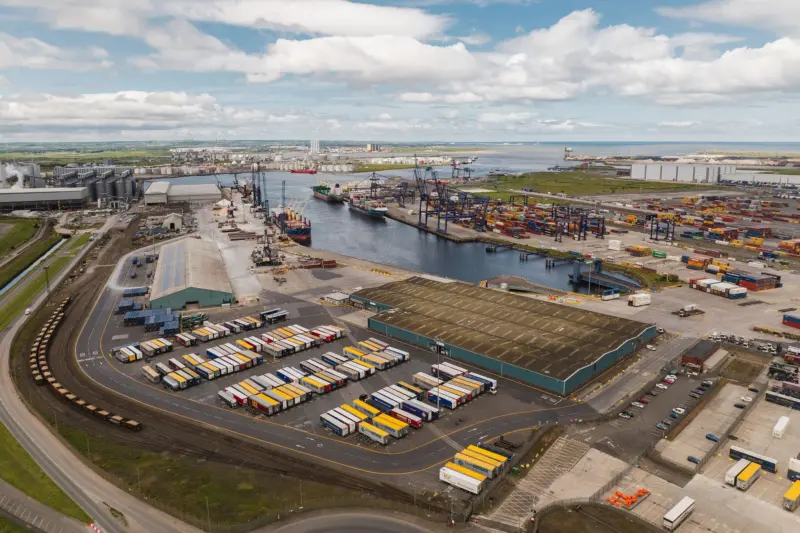
Aside from the obvious climate benefits, the development of offshore wind is having another positive impact, Lynden-Walker adds: “A lot of the secondary ports that have been shrinking in the past few years are starting to get a renewed sense of life because of offshore development. There often isn’t room for the large installation vessels at larger ports, so they are accessing the secondary ports. New London is a good example.”
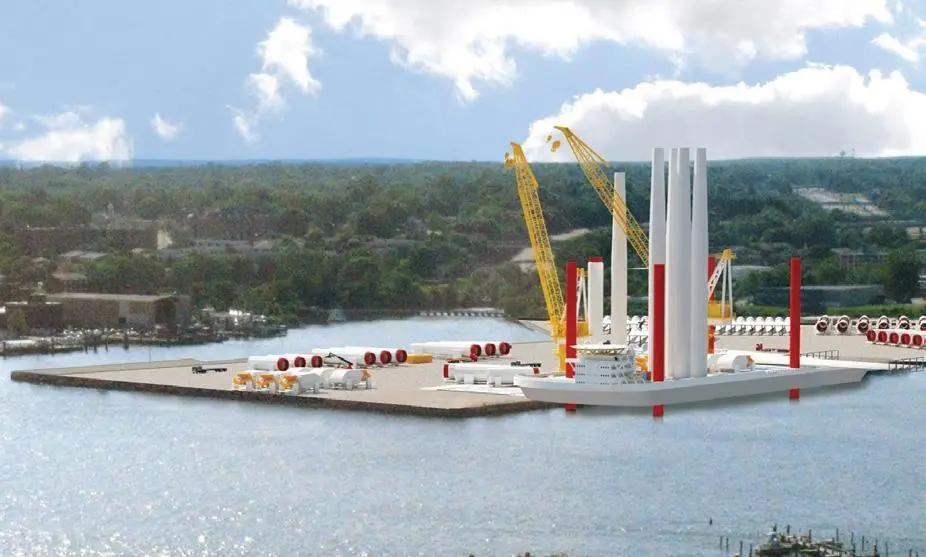
Connecticut Port Authority is investing US$250m to transform State Pier in New London into a heavy-lift capable port suitable for wind turbine staging and assembly. Its partners in the project, Ørsted and Eversource, are contributing US$75m to the work. Three offshore wind projects commissioned by Connecticut, New York and Rhode Island, totalling more than 1700 MW, are already scheduled to be delivered from State Pier.
Other notable port sector initiatives include those featured in the accompanying table.
PORT PLANS TARGETING US EAST COAST OFFSHORE WIND PROJECTS
VPA converts container facility
Virginia Port Authority (VPA) is investing US$220m to convert a former container terminal into an offshore wind base.
“Right now we are building the east coast’s primary logistics centre for offshore wind,” says VPA spokesman Joe Harris. “We are leasing the Portsmouth marine terminal, a retired container facility, to Dominion Energy and Siemens Gamesa Renewable Energy; they will do the staging and completion of components for offshore wind, for construction of the Coastal Virginia Offshore Wind (CVOW) project.”
The investment includes berth and landside remodelling and strengthening to be able to handle the heavy components; a new pier will be built, specifically designed to accommodate the large ships bringing in the components. Warehousing is being built to accommodate SGRE’s blade finishing operations.
“We expect the terminal renovations to be done in two years and the project will then take off in earnest,” says Harris. “We are leading the way. A lot of other ports are hustling to get into the game, but we have this terminal available – with deepwater access, no overhead obstructions and no bridges. There are a lot of things in our favour – natural assets, geography and manmade assets – and we are leveraging them to become the mid Atlantic’s logistics hub for offshore wind.”
Louisiana plans
A key action in the Louisiana Climate Action Plan, introduced by Governor John Bel Edwards this year, is to achieve 5 GW of offshore wind generation by 2035.
Since the plan was announced, Entergy Louisiana, Entergy New Orleans and Diamond Offshore Wind have signed an MoU for the evaluation and potential early development of wind power generation in the Gulf of Mexico, in Louisiana state waters.
New Jersey goals
In September, the New Jersey Governor signed an executive order to increase the state’s offshore wind target by almost 50 per cent, from 7500 MW to 11,000 MW, by 2040. The order also directed the New Jersey Board of Public Utilities to study the feasibility of increasing the target even more.
Georgia Port Authority
Georgia Port Authority is evaluating opportunities to use alternative energy sources such as solar, wind, hydrogen, ammonia and renewable natural gas, and is interested in piloting various technologies, says Joanne Caldwell, GPA’s director, risk management & sustainability.
The port authority has so far not been approached by offshore wind developers for any type of assistance: “GPA is open, however, to discussing this fast-developing sector with its stakeholders,” says Caldwell.
New York hub
In March this year, New York City Mayor Eric Adams announced an agreement to transform the city-owned South Brooklyn Marine Terminal into one of the largest offshore wind port facilities in the US.
The terminal will be upgraded and expanded as an operations and maintenance base in a deal between New York City Economic Development Corporation, Equinor, BP and SSBMT (Sustainable South Brooklyn Marine Terminal).
It will provide a power interconnection site for the Empire Wind 1 project, heavy lift staging and installation facilities for Equinor and other developers, and support hub for the Empire Wind and Beacon Wind offshore wind farms.
Related Articles
 TERMINAL OPERATIONS
 DIGITAL
 DIGITAL