



Overcoming digital Fragmentation
Bruce Mills, Business Development Lead, Ports, Wärtsilä, highlights how overcoming digital fragmentation can optimise vessel arrivals and raise the bar across a broad spectrum of port activities
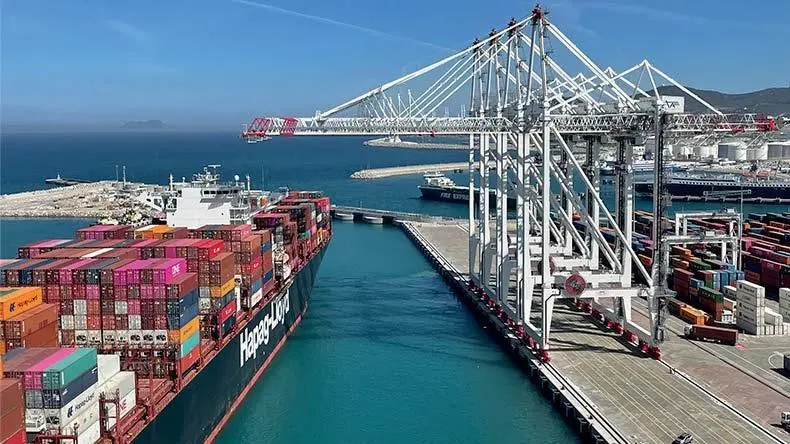
Ports are complex parts of the supply chain. Caught between the requirement to remain commercially successful in a competitive market and implement all the latest rules and regulations, whilst maintaining the safety and security of some of the world’s largest man-made objects, these hubs are the key interfaces between land and sea trade.
Despite the monumental role they play in the global supply chain, some of the world’s most advanced ports still rely on systems that were implemented in the 1990s and continue to run traditional, manual processes – both of which are no longer fit for purpose to tackle today’s challenges.
A number of global events over recent years – the challenges of the pandemic, the Ukraine conflict and the Ever Given grounding in the Suez Canal – have all contributed to major disruptions in the global supply chain and severely impacted port operations. This has caused ports around the world to strategically rethink how technology can be used to mitigate the consequences of such events and also improve port operations when not in times of crisis.
Many senior managers are now reflecting on how digital transformation can help them improve safety, reduce emissions, and increase efficiency, competitiveness and resilience. Technology can be used to break down ‘silos’ and ensure the supply chain can communicate more efficiently, as all stakeholders are operating from the same data. However, it is important that any solutions deployed are holistic and interoperable to avoid creating a fragmented digital ecosystem, which can lead to duplication and inefficiencies.
OVER COMING DATA FRAGMENTATION
Ports are part of the maritime industry’s increasingly complex digital ecosystem. There is a plethora of solutions out there and a lack of standardisation, meaning different stakeholders across the supply chain could each be using a different product – many of which are not interoperable or capable of sharing relevant voyage data with each other. Ports then attempt to overcome this fragmentation through costly manual processing, which is open to human error and often results in duplicated, incorrect or incomplete data being shared.
Data must be seen as a strategic asset and key component of port digitisation, so that all actors in the supply chain benefit from information sharing. Investing in a holistic data and digitalisation strategy is key, as is harnessing digital solutions that can be integrated across the entire port ecosystem.
With dismantled data silos, if a vessel is set to be delayed for any reason, information can be shared with the port at which the ship is set to dock and changes can be made to ensure everything is ready for the vessel to be loaded or unloaded at the right time.

JUST-IN-TIME BENEFITS
Taking a holistic approach can be transformational from a supply chain perspective. With greater supply chain connectivity and data-sharing comes the potential for Just- In-Time (JIT) operations and the associated benefits. So, what are the benefits to JIT arrivals?
Looking at the maritime industry as a whole, saving fuel is critical to achieving emission reduction targets. Fuel consumption is the biggest contributor to the maritime industry’s 940 million tonnes of annual CO2 emissions. Therefore, anything ports can do to improve fuel efficiency is hugely valuable to the wider maritime supply chain. A study conducted by MarineTraffic and Energy and Environmental Research Associates (EERA) found JIT arrivals can lower fuel consumption and carbon dioxide emissions by 14 per cent in conjunction with every journey. In turn, port workers and coastal residents benefit from these reduced local emissions and better air quality overall.
Looking beyond carbon to costs, the Wärtsilä team has identified that fuel comprises 43 per cent of total voyage costs and about 40 percent of a ship’s annual operating expenditure (OPEX). Therefore, ports that work with ship operators on JIT arrivals and help them improve the efficiency of their operations will certainly see more business and benefit from an improved reputation.
JIT arrivals can also reduce congestion and delays in ports – improving the safety, competitiveness and resilience of maritime operations. Congestion and confusion in busy port areas can significantly increase the risk of collisions; so clearly and effectively planning port calls ensures that both workers and valuable port assets are protected.
Increased efficiency and punctuality underpins competitiveness, not only compared to other ports, but also compared to other forms of transport such as air freight – which has been known to take business from ports in highly congested periods. In times when resilient and punctual supply chains are challenging to achieve, yet as important as ever, trying to achieve consistent JIT arrivals is a ‘no brainer.’
While the concept of JIT arrivals has been around for decades, the reality is that they have not yet been consistently achieved across the maritime industry and there has been no established procedure to share the benefits of JIT operations among all the stakeholders involved in a voyage – until now.
IT’S PMIS O’CLOCK
From the ports’ perspective, an advanced Port Management Information System (PMIS) is a key piece of the optimisation puzzle. It is used for planning, managing, monitoring and reporting all operations and related business processes. It is fundamentally a single source of information and data that can be made available, with the necessary security permissions, to any of the port’s stakeholders – whether internal staff, other organisations or even service providers (such as tugboat operators and marine pilots) and their customers.
Take TangerMed port in Morocco, for example. It is the largest port in Africa in terms of containerised cargo transiting through its facilities. It shares many of the same challenges as any modern port, but in addition it had lots of legacy solutions that wouldn’t talk to each other. In 2018 the owners of TangerMed set the Board of Directors the goal of becoming one of the top 10 most efficient ports in the world.
To achieve this, they adopted Wärtsilä’s PMIS solution, which incorporates Vessel Traffic Services and JIT solutions, alongside business intelligence and data analytics tools. As a result, TangerMed Port Authority succeeded in its goal earlier this year and was ranked sixth in a key global container port performance index.

LAYING THE GROUNDWORK
The future of optimised port operations involves the uptake of more autonomous functions, which promises even greater supply chain safety and efficiency. When talking about autonomy, it’s important to remember that it enhances people’s roles and augments their day-to-day work. It can provide support with laborious and repetitive tasks to free up staff to focus on more complex challenges.
Digitalisation will expand further to support autonomy with those who adopt PMIS and enable JIT arrivals today, establishing the foundations for even more impactful future technologies. While the benefits ports are currently gaining from AI, machine learning and effective data use are substantial, this is only the tip of the digital iceberg.
In the future, a smart port’s systems could proactively and pre-emptively identify collision risks and prevent ships from getting into such situations, enhancing safety standards even further. Using the anticipated advancements in AI, machine learning, data and even more ground-breaking technologies, smart ports will be able to manage all of their resources optimally, making true efficiency and resilience a reality across their operations and for the wider supply chain.
To summarise, the digital journey is already underway at sea and onshore, and it can bring about much coveted safety improvements, efficient operations and enhanced resilience. To achieve this, it is critical that digital solutions are holistic and that data silos are broken down. When interoperable solutions, such as advanced PMIS, are used, ports – and the maritime industry more broadly – remain ahead of the curve and ready to embrace supply chain modernisation with operations that are future-proofed and underpinned by data.
Related Articles
 DIGITAL
 OPERATIONS
 PORT & TERMINAL NEWS