
Although car manufacturers in Mexico are deeply worried about the “invasion” of mostly smaller and cheap automobiles from China, port operators with ro-ro facilities are making hay while the Far East sun continues to shine on them. Rob Ward assesses the situation
Mexico is home to a number of vehicle manufacturers – including GM, Ford, Volkswagen, Nissan, Honda, Fiat, Kia, Toyota and Audi – and exports some 90 per cent of the units produced on its home soil (mostly to the United States and Canada). This makes Mexican-based manufacturers and government decision makers wary of Chinese car makers taking over the domestic market; especially if they have no plans to open up a plant in the Central American country.
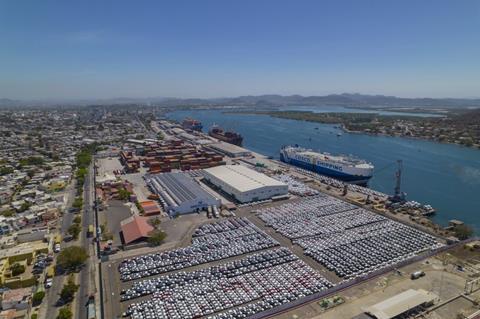
One of the main beneficiaries of the Chinese “invasion” is the Mazatlan Maritime Terminal (TMAZ) which, during 2023, saw its auto handling jump a mammoth 1200 per cent, from 13,054 units in 2022 up to 166,304 units, according to official figures from the Mexican Navy.
“And we are going for even more this year,” said Mauricio Ortiz, CEO, TMAZ.
Ortiz, his commercial staff and TMAZ in general, have been cultivating close ties with Chinese interests, namely the Chirey Motor Company (which is one of four state owned auto makers) and the Chinese port of Anhui (which has a ro-ro terminal that can handle up to 450,000 vehicles per annum). Building this relationship has been taking place for several years and over the past 12 months it has paid off Big Time. In fact, TMAZ has signed a “collaboration agreement” with the Anhui Provincial Port and Shipping Group.
“Between both companies we have the common future of developing and continuing to pursue co-operation opportunities with the goal of mutual benefit and win-win results to develop the Port of Mazatlan as a distribution centre for Chinese automotive companies in Mexico,” he says on LinkedIn. Anhui Province is, of course, the home of Chery, which trades as Chirey in Mexico due to “US brand issues” and it only just started exporting to Mexico in 2022. Nissan was the first manufacturer to use TMAZ, back in 2015, and is still a mainstay, but Ford, regulars from 2016 to 2021, hasn’t been seen for the past two years. GM and MC have been added, however.
Among the regular car carriers calling TMAZ are Cosco and EUKOR.
Magdiel Lopez Tirado, Commercial Manager for TMAZ, explains that the massive jump in auto movements through the port – located around 400km north of Guadalajara, and 800km south of the US border (via Highway 15) on the Pacific Coast of Mexico – was partly due to a huge increase in demand but also as part of a recovery from the doldrums of the Pandemic and post-Pandemic period.
“Obviously we have very good business with China and it has been growing ever since we moved into ro-ro in 2015,” she tells Port Strategy. “In fact, we closed 2019 with around 89,000 vehicles moved but then Covid hit us very badly.”
But now business is booming once again and both Lopez (correct surname) and Ortiz are forecasting that TMAZ will burst through the 200,000 units barrier by the end of this year.
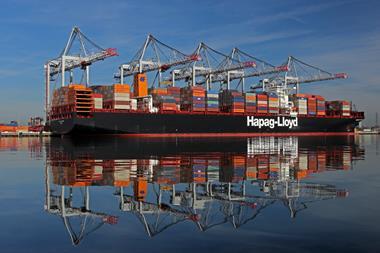
TMAZ is currently owned by global carrier Hapag Lloyd, who bought the operation from Chilean port operator SAAM (spun off from Chile’s national flag carrier Compania Sudamericana de Vapores, or CSAV, back in 2012) in August of last year.
LAZARO CARDENAS NO 1
Although Mazatlan showed the largest growth of automobile movement in Mexico, in 2023 it still ranked only second in movement along the West Coast of Mexico. The port of Lazaro Cardenas – some 970km to the south of Mazatlan but better placed for the Mexico City market – came in first with 584, 559 cars up to the end of October (the latest figures available from the local port authority), and this entailed a 9.9 per cent increase over the same period in 2022. One Mexico watcher reports, however, that Lazaro Cardenas was suffering from congestion on the ro-ro front, and this was playing into the hands of TMAZ.
One interesting development for TMAZ over the past year, according to Lopez, is the use of container frames to import a growing proportion of the cars, especially from China. She says that four units can be fitted into each frame and that this method of transportation now makes up some 10 per cent of all imports.
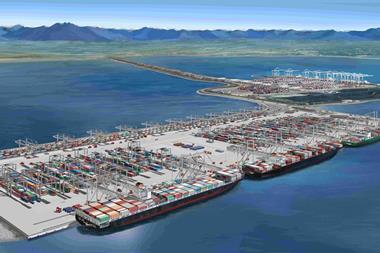
TMAZ operates with three Gottwald Mobile Harbour Cranes, with 1.3km of pier and a draught of 11 metres. The port also handles break bulk (especially steel coils and equipment for the mining industry) and containers, where MSC and Hapag Lloyd make regular calls via a feeder service from Manzanillo, which also connects to Long Beach, in California.