![PortStrategy[GreenPort]](https://www.portstrategy.com/wp-content/uploads/2026/09/PortStrategyGreenPort.svg)


South Africa: handbrake on?
The focal point of southern African port operations has always been South Africa but stagnant development and uncertainties with regard to management and – especially – the tortuous privatisation saga suggests opportunities for other regional players. AJ Keyes takes a look
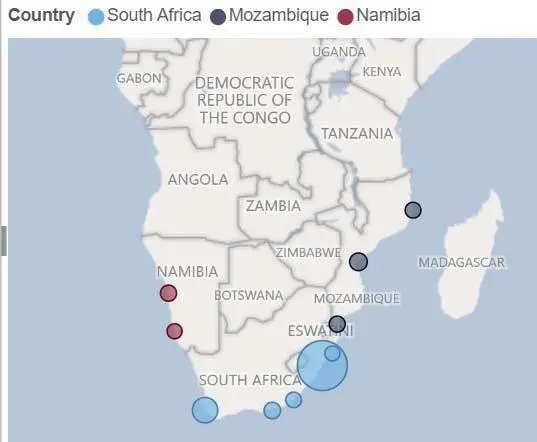
South Africa’s ports appear to have many of the necessary reasons needed for success – established infrastructure, large population to serve, landlocked countries within reach and limited maritime competition. Yet the truth is vastly different, with the port and shipping industry in South Africa continuing to face many problems, including:
- The failed rail privatisation and whether the Durban process will happen, with vested interests seemingly against it.
- The focus of demand remaining Gauteng and threat posed by Maputo, even with border issues.
- Long history of effort at Ngqura but little progress.
- Rationale of developing a new port when the focus will remain on Durban, balancing theory and reality.
The other southern African countries of Namibia and Mozambique are much smaller, but are their ports able to take advantage of South Africa’s years of inefficiencies or does that represent a step too far?
As Figure 1 shows, there are a number of ports in all three countries handling containers, with these three countries having a combined 2020 population of 93.2 million people. Add further inland markets of Botswana (2.5 million) and Zimbabwe (14.9 million) and this gives a southern Africa total of more than 110.5 million people. Ports and inland transport infrastructure need to be up to the task.
PROMISED ACTION, LITTLE TRACTION
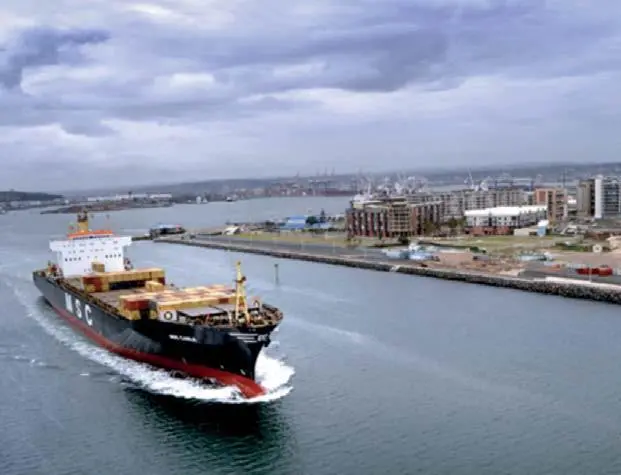
Privatisation has long been a theme in South Africa, albeit with little traction gained in the ports and rail industry in the past 20 years, despite numerous instances of promised action. In June 2021, Cyril Ramaphosa, State President, announced structural reforms to smooth the process with Transnet National Ports Authority (Transnet), which manages all eight commercial ports in the country, to be converted into an independent commercial company and revenues from port activities invested back into infrastructure. He said Transnet would seek proposals from the private sector for the ports of Durban, which handles 65 per cent of total South African port volumes of over four million TEU, and Ngqura. However, at the start of 2023, little tangible traction has occurred.
David Maynier, Finance and Economic Opportunities MEC has since called for Cape Town to be privatised because the port is a “disaster zone.”
Despite many obvious challenges, there continues to be no shortage of interest in South African ports from the private sector. Transnet confirmed that 10 companies made the shortlist for Durban Pier 2, which includes the likes of APM Terminals, Cosco Shipping Ports, DP World, HHLA, ICTSI, Red Sea Gateway/MMC Port Holdings and Abu Dhabi Ports.
Similarly, for Ngqura Container Terminals respondents invited to proceed were APM Terminals, Red Sea Gateway Terminals/MMC Port Holdings, Abu Dhabi Ports and TiL – again, all heavy hitters in the terminal operating industry.
Transnet announced in mid-2022 that 25-year special purpose vehicles would be created, yet unsurprisingly the preferred bidder deadline appointments slated for February 2023 looks certain to be missed, albeit that Transnet is maintaining a positive spin: “The improvement in port efficiencies will support South Africa’s competitiveness and our ability to grow jobs in the manufacturing and export economy. Partnering with global port terminal operators and shipping lines offers the opportunity to attract much-needed investment, instil best-practice management and enhanced technological capability to rapidly improve the performance and volume throughput at the Ports of Durban and Ngqura,” it states.
It is no surprise that the pro-private lobby regard privatisation as the panacea to problems of inefficiencies at major ports like Durban, especially when strike action causes havoc across the industry, as it did in the latter part of 2022. Strikes by members of the South African Transport and Allied Workers Union and the United National Transport Union in October 2022 caused significant supply-chain disruption and wider economic chaos.
South African exporters pointed out the damage caused by the strikes. The Minerals Council of South Africa reported that the ports for mineral exports were operating at under 30 percent of their daily averages and in some cases as low as 12 per cent of normal volumes. As a result, estimates were put forward suggesting the strike cost South African miners US$44 million a day.
POOR TRACK RECORD – STUMBLING BLOCKS
This privatisation of the port industry is following on the heels of a very uninspired process involving rail in South Africa and that does not bode well, especially with an overall sense that Transnet’s process was set up for failure. The government auctioned slots on its rail network, albeit only short-term contracts for two years, and thereby making it highly unlikely that any concessionaires would invest sufficient sums due to an inability to achieve financial payback.
Yet despite the ailing rail infrastructure there were still 19 interested parties chasing 16 slots. However, only one bidder ultimately proved successful and while the Kroonstad to East London line was made available to private freight operator, Traxtion, it does not qualify as a premier link in the national freight system.
The need for private investment clearly remains. The African Rail Industry Association (ARIA) states that at least R27bn (US$1.6bn) of underspending on maintenance by Transnet over the past decade occurred, evidenced by general freight line efficiency falling by 38 per cent during the past five years because of faulty infrastructure. ARIA currently estimates that the rail share of cargo could fall as low as 10 per cent.
One shipper who wished to remain nameless summed up the problem: “Absolutely what the government always does, exhibit willingness to let the private sector in, and then either put so many stumbling blocks in the way that little comes of the initiative except frustration, or not keep its part of the bargain by providing decent infrastructure.”
Given its performance, it is hard to imagine that the desire of Transnet to increase its tariffs by up to 24 per cent in the 2022/2023 fiscal year simply would be possible in a privatised environment.
“PLANNED “MEGA-PROJECTS
Yet despite the issues over privatisation and operating challenges, Transnet continues to stress its largescale expansion plans, most notably in Durban, which will see 11.3 million TEU of capacity available, plus an entire range of investment in the East Cape area. It is difficult to see traction being gained without private sector involvement, at least to the scale desired by Transnet, with the 10-year build out cost for Durban alone put at R100 bn (US$5.8bn), which compares to Transnet’s 2022 fiscal year revenues of R68.5 billion (US$4.1bn).
OPPORTUNITIES TO TAKE ADVANTAGE?
So, with the year-on-year malaise continuing to manifest itself in South African ports, the obvious question is whether ports can take advantage in either Mozambique or Namibia? In Mozambique, the principal port is Maputo, which is operated by Maputo Port Development Company (MPDC), owned by Dubai Port World. The port is well-positioned to serve the province of Gaza, Swaziland, Zimbabwe, Botswana and the Transvaal region of South Africa, although unlocking the landlocked regions of the Mpumalanga, Gauteng, and Limpopo Provinces is crucial and the Maputo Development Corridor has been established to complete the task. The key area here is Gauteng, the “Place of Gold” which generates 40 per cent of South Africa’s GDP offering the highest concentration of manufacturing and industrial production in the country.
MPDC has confirmed that the Corridor has the support of both the governments of Mozambique and South Africa, but still needs further private sector help, plus improvements to border procedures and operating hours and more capacity, competitive transport rates and greater service efficiencies in the inland supply chain. Without this support, the corridor will not gain “full optimisation” the organisation states.
DP World stepped up its support with a dedicated container train service connecting Maputo (Mozambique) and Harare (Zimbabwe), but it is the ability to serve the greater Johannesburg area that must be targeted. DP World is landing container imports in Maputo destined for South Africa and moving them under bond to Komatipoort for full customs clearance and onward delivery, but this is still over 450km from Johannesburg.
CMA CGM has followed DP World’s lead by starting an intermodal weekly service of 108TEU to serve Harare province in Zimbabwe, while complementing existing links via the Port of Beira in Mozambique (and connections via Durban).
While, however, both services represent good examples of better logistics services, they are clearly insufficient to see cargo transfer away from South African ports. The pressure here will remain because shipping lines are building capacity, for example, Ocean Network Express (ONE) upgraded its Maputo/Mombasa India Middle East service (MIM) from fortnightly to weekly from January 2023.
DESIRE VERSUS REALITY
The position is similar in Namibia. The government has known plans to scale-up transport infrastructure to meet its Fourth National Development Plan (NDP4) and Vision 2030 aims.
New berthing and cranes have recently been added at the Port of Walvis Bay to raise annual capacity from 350,000 to 750,000TEU, to serve ships up to 8500TEU, but its last fiscal year results confirmed volumes of just 168,278TEU, representing a low utilisation level. This could change, however, with MSC’s terminal investment arm, TiL, being named as operator of the port’s container terminal. Andrew Kanime, CEO, Namibia Port Authority (Namport), expects a deal to be done soon: “We envisage to finalise the negotiation and handover process by the first quarter of 2023.” It is a decision that could help boost container port volumes handled.
Namibia has favourable geographic positioning, bordering Angola, Botswana, South Africa, Zambia and Zimbabwe and there is spare port capacity with modern infrastructure, so pressure remains on the efficiency and quality of inland connectivity. The NDP4 plan targets upgrading 1480km of roads, but the border to South Africa, at Keepmanstoop, is 545km from the port, the distances, time and costs can be substantial, especially for rail and when compared to the closer Maputo option.
Ports in South Africa remain the logical focus for local, regional and transit demand, but the continuous issues effecting ports represent a handbrake on achieving progress. Decisions taken in South Africa and bordering countries in the next five years will determine the outcome, but experience shows it may not be wise to anticipate rapid development in South Africa
Related Articles
 EQUIPMENT
 PORT & TERMINAL NEWS
 PORT & TERMINAL NEWS