

THE SPOTLIGHT IS ON THE PRIVATISATION PROCESS
Why is the Nigerian port concessioning process so important for Africa? Because whatever the outcome, its success or failure will affect the international markets perception of privatisation projects in Africa in general. Furthermore, it will provide a benchmark that will influence Nigerias own future privatisation process. Steve Cameron reports on this and other initiatives throughout the region.
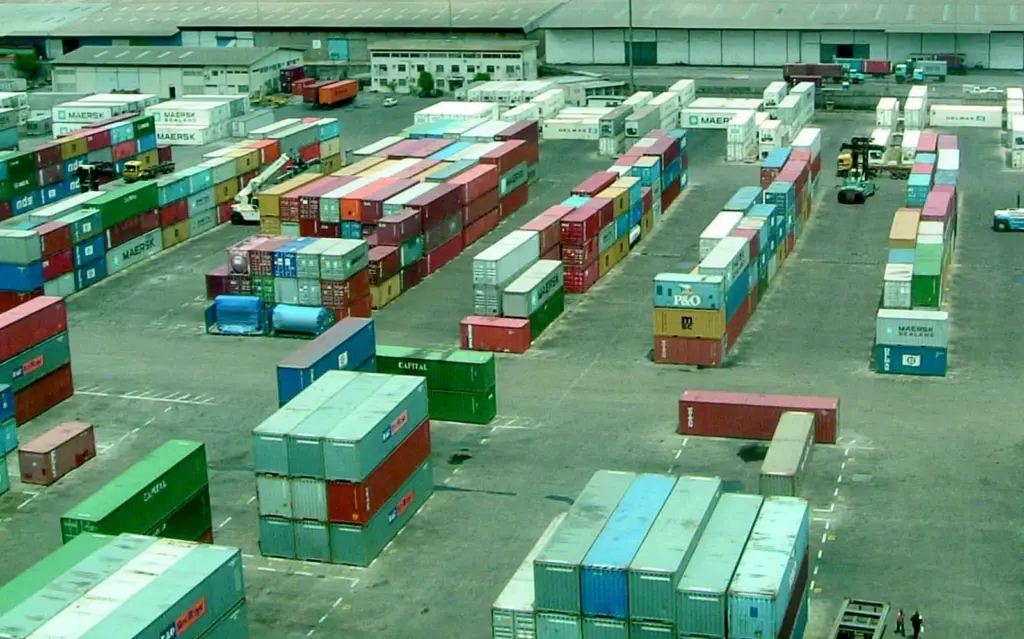
After getting off to a good start the Nigerian port privatisation process has slowed down to what appears to be almost a complete stop. This is perhaps not surprising given the mammoth size of the project and the complexities involved.
Around 86 of the 94 pre-qualified concessionaires have filed 213 applications for the available 24 seaport terminals in the country.
They include well-known contenders in the international markets such as Hutchison Port Holdings, PSA Corp, ICTSI and Mersey Docks and Harbour Board and perhaps through a local company, CMA-CGM.
Also believed to be on the list are regional specialists Bollore Group (owners of Delmas, OT Africa Line and Setramar), APM Terminals, Panalpina and the cargo inspection group SGS. The South Africans have also expressed an interest which is curious given that after nearly a decade of deliberating, they have yet to complete the privatisation process at their own ports.
STRENGTH AND IMPORTANCE OF LOCAL NIGERIAN COMPANIES Surprisingly it appears that Dubai Ports International did not prequalify. An African ports observer involved in the process explained that this may have been due to their lack of a suitable local partner. He also explained that Africa, and Nigeria in particular, are changing now.
There are a large number of extremely successful Nigerian companies that have access to sufficient funds to bid for privatisation projects in their own right and are forming alliances with their preferred technical partners from the international port operating community.
One such example of the strength of local Nigerian companies is the Dangote group that has seen phenomenal growth with its property development, commodity trading, and imports and exports involving large volumes of cement, rice, sugar and flour. It is believed to have a turnover equivalent to more than $1billion.
Consortium groupings that have a high Nigerian content in their ownership linked to technical partners with a good international reputation in the ports industry must be particularly strong contenders. Equally those smaller companies that have a long track record of providing good service within the Nigerian ports community should not be discounted. In this respect Grimaldi has been linked to the ro-ro terminal operation tender for Tin Can Island.
Dr. Julius Bala, director general of the Bureau of Public Enterprise (BPE) responsible for the privatisation, recently explained that due to the large number of applications received, the concession of the terminals will be phased with the concessions facing low and medium encumbrances first, and that very soon the bidding documents for the first phases will be dispatched to firms that have expressed interest. The transaction process for phase 1 was expected to commence in the first week of October. Bala said a concession fee expected to be paid up front as part of the assurance that concessionaires will maintain equipment and infrastructure in areas of operations, has been proposed. Under the structure, each terminal operator will pay between $5m to $100m depending on the terminal.
In the meantime, whilst the commercial process of tendering and selection has made initial progress, it’s the legal structure that needs to be fast-tracked. During a recent discussion with Nigerian Ambassador to the UK, Dr Kolade, he explained to PS that changes still need to be made to the legal framework to support the privatisation process. This is obviously needed to clarify the responsibilities and relationship between the concessionaires, port authority and government.
Clearly it must be difficult for concession bidders to submit a properly defined bid before the legal framework is in place. Without this framework it is likely that bidders need to increase the operating margins to give sufficient economic comfort that they have covered their exposure and can still perform. Equally rumours that Maersk with an Asian grouping have already been given a concession for an new export processing zone that includes a full licence for terminal operation, leads one to question the value of the concession of the nearby Apapa container terminal, when there is a risk that a proportion of the traffic may move to this new concession next door at Lekkei.
Although there are uncertainties for bidders and authorities alike, what is clear is that a complex process involving 24 terminals is likely to involve considerable time and cost for all involved. One wonders if it might not have been better to run a pilot programme first and examine the results before committing to such a large and complex undertaking.
TRANSPARENCY CONCERNS IN GHANA In Ghana concern has been expressed that the concessioning process has not been open and transparent. What seems to be clear is that the original large and unwieldy consortium that won the container concession for the two ports of Tema and Takoradi, has to some extent consolidated. An observer close to the process advised that the grouping now consists of APM Terminals, Bouygues Travaux Publics and SDV Ghana Limited (Bollore Group), and interestingly with the Ghana Ports and Harbours Authority retaining what is believed to be a 30% share.
The consortium, known as the ‘Ghana Ports Service Consortium’ (GPSC), will be awarded a concession to manage the ports with the Ghanaian government acting as landlords. The plan to privatise is aimed at increasing traffic through the ports headed for landlocked countries in West Africa and is part of the ongoing ‘Ghana Gateway Project’.
It is believed that the commercial agreements are now in place for the Tema container terminal concession and the final contracts may be signed in October. The project at Tema involves the extension and development of Quay Two into a modern container terminal. The initial investment in Tema is expected to include three container gantry cranes and four RTGs. This will give a huge boost to the port which has already seen a massive increase of 300% in hinterland traffic for the landlocked countries of Burkina Faso, Mali and Niger, at the expense of the Vridi Container Terminal next door in the Cote d’Ivoire port of Abidjan and is largely due to the still unresolved attempted coup two years ago in Cote d’Ivoire.
Meanwhile Takoradi port has started repair work on the lee breakwater that separates the sea from the port itself to protect it from collapsing. The project, costing approximately $1.75m, is part of the efforts to transform Takoradi into a competitive port and includes the modernisation of Wharf 6. On the cargo handling side a, joint venture, Combined Bulk Services (CBS), between Unicontrol Commodity Ghana Ltd and Van Dijke, will handle bulk cargo.
The Japan International Corporation Agency (JICA) has already drawn a master plan to transform Takoradi port. The execution of such would see the port functioning as the main export outlet for commodities produced in the western Ashanti, Brong-Ahafo and northern parts of the country such as manganese, bauxite, cocoa and timber. The master plan would also see the port supporting industrial development and agriculture by providing the necessary facilities for import of materials and export of crops and manufactured goods.
COTE D’IVOIRE’S DIVISION BLIGHTS ECONOMY The attempted coup of two years ago remains unresolved and continues to bisect the country with the rebels holding the northern half and the government the south that includes the two main ports of Abidjan, the important regional hub, and San Pedro. The protracted negotiations between the two sides continue to blight the economy.
They also affect a high proportion of the important hinterland traffic essential for the survival of the landlocked countries of Mali, Burkina Faso and Niger, which now flow through other West African ports in Senegal, Togo, Benin and Ghana.
In the March issue of PS we reported on the attempt by the Bollore Group (owners of Delmas, OT Africa Line and Setramar) to conclude its bid for the concession to operate the Vridi Container Terminal in Abidjan, outside the usual tendering process. A letter by the outspoken Minister of Infrastructure, Patrick Achi, to the Bollore Group explaining that as neither his ministry nor the government had sanctioned the deal and it was therefore effectively illegal, lead to his suspension by the President. Subsequent to this the Bollore Group’s renewal of its operating licence was refused. A local observer explained that Bollore have since gone to the highest court in Cote d’Ivoire which has denied the Ministry of Transport the right to refuse Bollore their stevedoring licence. SETV, a Bollore company registered in November 2003, apparently now has a licence that enables it to operate for up to 15 years officially without any other partner. It seems an offer of a 7% share by Bollore to the local independent liner agency Sivom, may have been turned down.
Whilst most of the other major operators and lines have protested vigorously at the overall outcome, it is interesting to note that Maersk has remained quiet. Local observers speculate that since the two companies are cooperating in Ghana, they may have formed a gentlemen’s hands-off agreement that has allowed Maersk to bid and win the concession in Douala Cameroon in return for tacit support of Bollore in Abidjan.
With, until recently, the Vridi Container Terminal operating at close to capacity, the Le Deco project was designed to double Abidjan’s capacity and strengthen its position as the leading transhipment hub in the region. Sadly it seems that after more than five years of hard work and an investment by consortium members that included P&ONedlloyd and the regional specialist TCI Infrastructures, of in excess of $5m, the project to provide state of the art container facilities has at the very least been postponed with more focus going to Vridi. Emile Hoogsteden, director of terminal development at P&ONedlloyd in Rotterdam, said that it was difficult to continue to follow the project without official feedback from the government on the direction they want to take, and since withdrawal of support by the World Bank.
It is difficult to see how any prospective investor in a project such as this would put his money into Cote d’Ivoire until the political situation is resolved and the economy starts to improve. In the meantime, with the downturn in the economy coupled with the transfer of most of the hinterland cargo to other ports, spare capacity exists at the Vridi. Furthermore, an independent study that the writer was involved in last year identified that changes to operating practices and tiered investment in container handling capacity would provide a 50-60% capacity increase.
MEANWHILE IN ANGOLA It is more than one year since PS reported on the outcome of the tendering process in Luanda yet the situation remains that the new concessions still haven’t been signed. At the moment the discussions are focused on the issue of who will pay the necessary investment in handling equipment, etc. A representative of a local maritime agency noted: “It’s almost 100% sure that the final concessions will be concluded as follows:
Maersk – the container terminal NDS* – the general cargo terminal Unicargas (state control) the multipurpose terminal (*NDS are the regional specialist Nile Dutch Africa Line) The hope is that if sufficient progress is made, a conclusion can be reached by the end of the year.
Tom Falknor of ICTSI whose company was instrumental in the successful privatisation of Dar es Salaam and who scored the highest technical points for Angola summed up all the issues effectively for us before this article was written. He stated: “The usual issues are the of lack of government commitment at the very top to the privatisation programme, followed by the bureaucracy of implementation which results in the non-delivery of a viable and completable product. This is a frustration and ultimately becomes very costly to all interested parties who are capable of ensuring the process will succeed for the citizens of each country.”
Whilst it is easy to criticise, considerable progress has been made all around Africa in the last twelve months. If the two big projects, Nigerian and South Africa, make progress then in two years time we could well find all the original major deals in Africa have been done.
For more information on African Ports, please contact: steve@ cmrsupport. com or see www. cmrsupport. com Tom Falknor of ICTSI whose company was instrumental in the successful privatisation of Dar es Salaam and who scored the highest technical points for Angola summed up all the issues effectively for us before this article was written. He stated: “The usual issues are the of lack of government commitment at the very top to the privatisation programme, followed by the bureaucracy of implementation which results in the non-delivery of a viable and completable product.
This is a frustration and ultimately becomes very costly to all interested parties who are capable of ensuring the process will succeed for the citizens of each country.”
Whilst it is easy to criticise, considerable progress has been made all around Africa in the last twelve months. If the two big projects, Nigerian and South Africa, make progress then in two years time we could well find all the original major deals in Africa have been done.
Related Articles
 PORT & TERMINAL NEWS
 PORT & TERMINAL NEWS
 PRODUCTS & SERVICES