![PortStrategy[GreenPort]](https://www.portstrategy.com/wp-content/uploads/2026/09/PortStrategyGreenPort.svg)


THINKING BIG
In the first of a two-part global assessment, Felicity Landon reports on some of the largest port investment projects in North America and Europe.
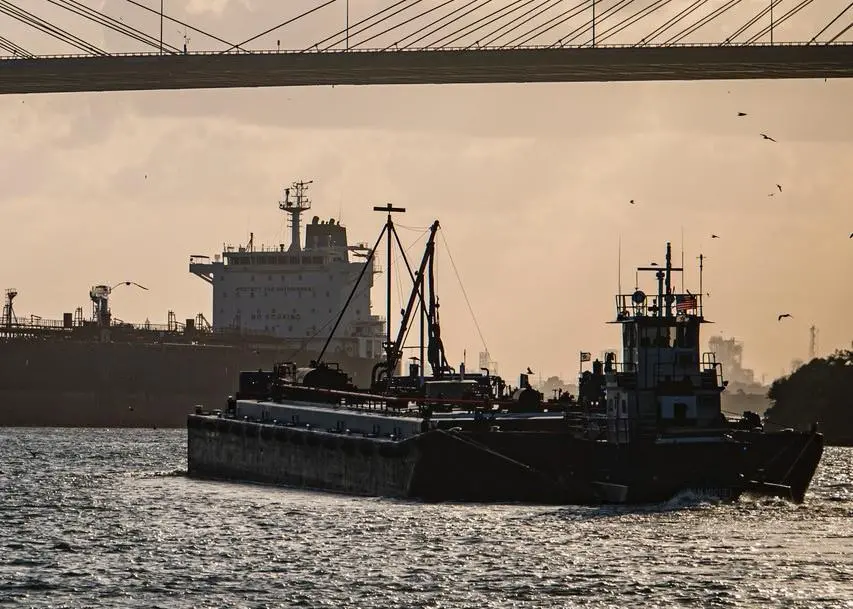
Ports have been on the frontline when it comes to the COVID-19 response – continuing to operate despite the challenges and dealing with extreme volatility, including the spike in demand for all manner of lockdown-related cargoes.
And now? The talk is of investment post-pandemic. In the USA, Biden has described his US$2 trillion “American Jobs Plan” as a once-in-a generation investment for improving the country’s infrastructure and shifting to greener energy. Within US$621 billion for transportation infrastructure and resilience, US$17 billion is earmarked for inland waterways, ports and ferries.
In Europe, the EU’s Recovery and Resilience Facility is seeking to implement a green, digital and resilience recovery of the economy. The European Sea Ports Organisation (ESPO) has called on EU member states to take port projects onboard in these plans. To continue to play their role, Europe’s ports must remain resilient and fit for the future, it says.
Policy, of course, is only one part of the picture. Port investment, development and expansion projects are not dreamt up overnight, and they continue around the world. The influence of political decisions post-COVID-19 remains to be seen.
The following is a summary of major port projects in North America and Europe.
USA
South Carolina
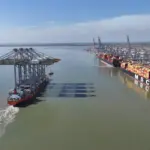
South Carolina Ports Authority (SC Ports) opened the new Hugh K. Leatherman Terminal in April, saying that the first container terminal to open in the US since 2009 would spur economic development, add much-needed capacity and further the state’s position as an international business destination for years to come.
Phase one, price tag of US$1 billion and capacity for 700,000TEU, has provided 1,400ft (426 metre) of berth, capable of handling a 20,000TEU vessel, with five ship-to-shore cranes said to be among the tallest on the US East Coast, supported by a 47-acre container yard with 25 hybrid RTG cranes and a six-acre refrigerated cargo area with sixhigh container racks, enabling handling of more fresh, refrigerated and frozen goods.
The opening of the terminal came at just the right time, states Jim Newsome, CEO, SC Ports, as many container ports in the country continue to handle unprecedented cargo volumes amid strong consumer demand. SC Ports had an all-time cargo record in March 2021, with a 50 per cent year-on-year increase in loaded imports.
When completed, the US$2 billion Leatherman Terminal will provide three berths, adding 2.4 million TEU of annual throughput capacity and doubling the current capacity at the Port of Charleston.
Houston
The Houston Ship Channel Expansion will widen and deepen access for vessels calling at the port’s eight public terminals and more than 200 private facilities operating along the channel. In January 2021, the Port of Houston received notification from the US Army Corps of Engineers (USACE) that it was awarded a ‘new start’ designation and US$19.5 million in federal funds to begin the project.
Lisa Ashley, Public Relations Director, Port of Houston notes: “We are pleased that the Houston Ship Channel Expansion programme – known as Project 11 – is moving from the planning and design phase to ‘moving dirt’. We expect oyster mitigation and the first channel dredging projects to start in the fourth quarter of this year.”
Work to prepare the first dredged material placement area is expected to start as early as the second quarter after a contract award in April 2021. The mitigation and first dredging contracts are to be issued in the third quarter. The schedule allows for three to four years to complete priority segments, which cover most of the length of the channel, with remaining segments to follow.
In November 2020, USACE ranked the Houston Ship Channel as the number one USA port in terms of total waterborne tonnage – the waterway handles an average 50 deep-draft vessel transits every day. The widening and deepening will provide a safer and more efficient waterway and accommodate the larger vessels carrying container and petrochemical products, says Ashley.
Roger Guenther, Executive Director, Port of Houston points out: “Import and export container trade through Houston continues to be very strong and we are aggressively making the capital investments to stay in front of the demand we expect in the near and long term. We have several upgrades and improvements planned, especially for our container terminals.”
Three new ship-to-shore cranes should be operational in the Bayport Container Terminal by the autumn; three STS cranes are being moved from Bayport to Barbours Cut container terminals, where quays are being refurbished to accommodate them.
“We are also providing new and more yard capacity at both terminals. Later this year, we are expecting to award a design contract for Yard 2 at Bayport,” said Guenther. In addition, a US$42 million upgrade is expected to double truck gate capacity at Barbours Cut.
CANADA
Roberts Bank Terminal 2
Vancouver Fraser Port Authority’s Roberts Bank Terminal 2 project has been undergoing a federal environmental review since 2013. The proposals are for three container berths, a widened causeway to the mainland to accommodate road and rail, and an expanded tug basin.
After a three-year review of the environmental assessment, the review panel submitted its report to the environment and climate change minister in 2020 but more information was requested in August 2020. The port authority will provide this by summer 2021 and is hoping that a decision by the federal government can be made soon after, explains Duncan Wilson, Vice President, Environment, Community and Government Affairs for the Vancouver Fraser Port Authority.
“Ultimately, the construction start date depends on many things outside of our control, such as COVID-19, the timing of the federal government’s decision on the project and approval of the required permits,” he said.
Current thinking is that the earliest that construction can begin is 2024, with the project in operation by the early 2030s. Roberts Bank Terminal 2 is more important now than ever before to meet Canada’s trade aspirations with Asia, underlines Duncan Wilson, Vice President, Environment, Community and Government Affairs for the Vancouver Fraser Port Authority. The port’s container volumes increased by two per cent last year to reach a record 3.5m TEU, despite the pandemic and global economic uncertainty.
“Since 2001, ports on the west coast of Canada have, on average, handled more than seven per cent growth annually in the container sector, quickly recovering from temporary downturns such as the effects associated with the 2008 global financial crisis or the slowdown in 2016 related to US port labour disruptions in 2015.
“Forecasts continue to confirm that Canada’s west coast ports will run out of space to handle container traffic by the mid to late 2020s, years before Roberts Bank Terminal 2 is operational. Once space runs out, Canadian farmers, producers, and businesses will have difficulties sending and receiving their commodities and goods to and from overseas markets,” he says.
“The port authority continues to advance the project as quickly as possible to provide much-needed capacity to support Canadian businesses in this time of economic recovery.”
EUROPE
Netherlands: Rotterdam
Expansion at Maasvlakte II continues this year.
In February 2021, the Port of Rotterdam Authority awarded to the HOCHTIEF, Ballast Nedam and Van Oord contractor consortium the contract for constructing 1825 metres of deepsea quay, 160m of inland shipping quay and 360m of soil-retaining walls at the Princess Amalia Harbour, a project which will add four million TEU of annual capacity in Rotterdam.
APM Terminals and Rotterdam World Gateway already operate 1500m and 1700m of quay, respectively, in the harbour and both have signed relevant options to develop further. The project will also provide a 160m waiting area for general use by inland shipping vessels.
The completion of the first 500m of quay wall is expected in late 2022, with the final part of the project to be be completed within 18 months.
Poland: Gdansk, Gdynia, Swinoujscie
Gdansk The Port of Gdansk is reaching the conclusion of a €36.6 million investment in road and rail infrastructure which has included 10km of roads, 7km of rail tracks, numerous junctions, four flyovers and other facilities.
The work ties in with the A1 motorway project linking the Czech Republic with Poland’s Baltic Sea coast and Gdansk, which is already 85 per cent complete. In 2022, it will be possible to drive directly and without traffic lights from the Port of Gdansk to Ostrava, Brno, Prague and Bratislava, said Lukasz Greinke, President of the Port of Gdansk Authority.
The port is also moving ahead with a project to upgrade and develop quays and deepen the access to the inner port.
Gdynia
The Port of Gdynia’s plans for a new outer port involve the construction of an artificial peninsula and the creation of a new deepwater container terminal with 2.5 million TEU annual capacity, capable of handling vessels up to 430m in length, 60m wide and 16m draft, the largest vessels that can enter the Baltic Sea.
The project also includes dredging of basins and approach channel, and new road and rail connections. The current timetable is based on obtaining a permit for phase one by 2024.
Swinoujscie
Szczecin and Swinoujscie Seaports Authority has plans for a series of development projects, including dredging the channel to 12.5m the entire length, now underway, and dredging the access route from the Baltic to Swinoujscie to 14.5m first, and later to 16.7m.
This will serve a planned external port in Swinoujscie with 17m depth, to provide a container terminal able to handle the largest container ships in the Baltic as well as feeders, general cargo terminals and an LNG terminal. The plans also include modernising and rebuilding road, rail and waterway infrastructure and providing new connections with the Oder and Danube for inland shipping.
Related Articles
 CONTAINER & CARGO HANDLING
 CONTAINER & CARGO HANDLING
 CONTAINER & CARGO HANDLING