

Trade wars unlikely to stop container growth
Tariff and trade wars are a concern but the medium-term outlook for global container port demand growth is positive thanks to strong underlying economic momentum across the world’s major economies, according to Drewry.
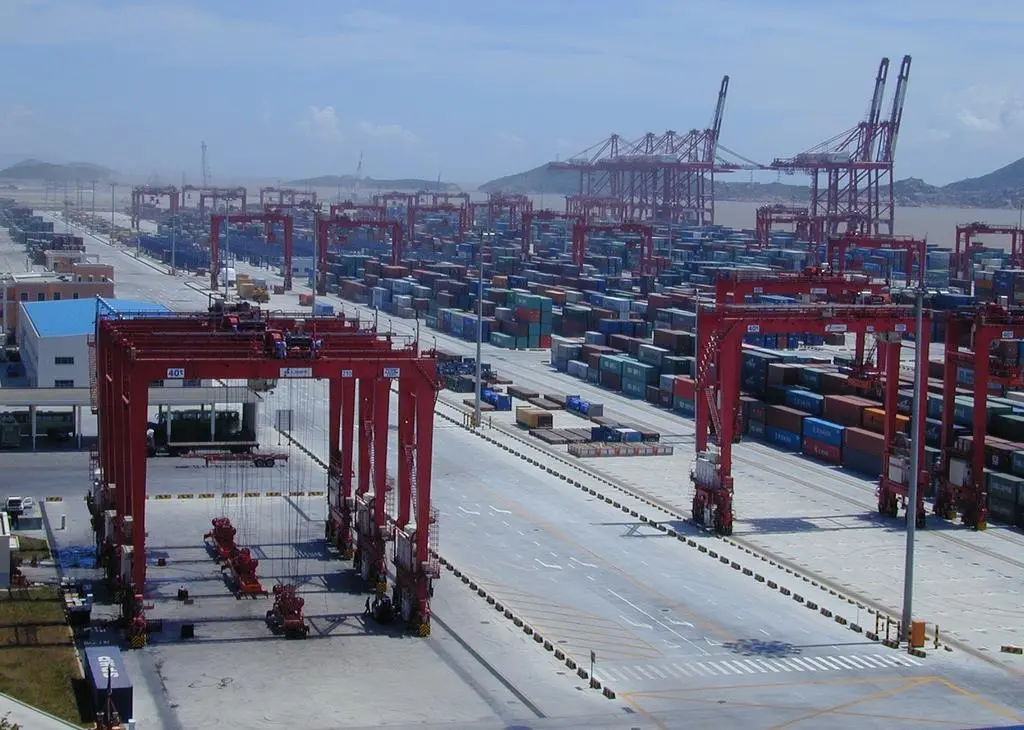
The shipping consultancy’s newly published ‘Global Container Terminal Operators Annual Review and Forecast 2018’ stated that economic fundamentals are likely to win-out in the long-term, however, near-term container port capacity expansion will remain relatively subdued following several years of under investment, particularly in greenfield projects. Consequently, average utilisation levels are expected to rise markedly across almost all regions of the world by 2022.
“Assuming our demand projections are well founded, and the threat of trade wars dissipates, we expect many terminal operators and investors to review and potentially increase their activity levels in terms of new capacity additions,” said Neil Davidson, Drewry’s senior analyst for ports and terminals.
6% growth
Drewry’s latest five-year container port demand forecast is based on average global growth of just under 6% per annum, lifting world container port throughput in this period by almost 240m teu. The consultancy said the global container port industry is now of such a scale that 6% annual growth equates to around 45m additional teu each year, broadly equivalent to the size of the world’s largest container port, Shanghai.
Bottom-up capacity projections on a terminal-by-terminal basis present a more conservative picture, with global container port capacity projected to increase by around 125m teu by 2022, a growth rate of just over 2% per annum. This is well below projected demand and reflects the cautious investor sentiment towards greenfield projects over the last few years, said Drewry.
Utilisation to rise
Consequently, average utilisation at the global level is forecast to increase significantly from 68% in 2017 to around 80% by 2022. Average regional utilisation levels are projected to increase most sharply in Greater China, North Asia, Southeast Asia and West Coast South America.
“Crucially however, all capacity is not the same,” added Mr Davidson. “Indeed for certain port markets, individual ports and specific terminals, the need for additional capacity may be even greater. Rapid growth in ship sizes has increased the segmentation of terminal capacity, such that today, all ‘deep-sea’ capacity simply cannot handle all ‘deep-sea’ vessels. It is often the case that berths with the infrastructure to handle the largest ships are the most highly utilised and in short supply, while older deep-water berths are under-utilised.”
Related Articles
 BULK HANDLING
 BULK HANDLING
 PORT & TERMINAL NEWS