



Used but not abused
Second hand equipment has its attractions, but dont be caught out by rogue resellers in a buyers market. John Bensalhia reports
When we think of buying something second hand, what do we think of? The traditional charity shop, full of items that people no longer need or want, from the well worn rocking chair through to the jumper that was too big. The car boot sale, bursting at the seams with people’s used odds and ends. Even TV channels have capitalised on the second hand market, with programmes attempting to find value on used artefacts.
On the surface, you could argue that second hand goods could be a potential problem for ports and harbours. What if the second hand equipment doesn’t last or doesn’t work? For example, a recent report has alleged that aged equipment has caused congestion at Dar es Salaam Port. Another has alleged that port operators along the Yangtze River have faced a number of challenges, one of which is “obsolete” port equipment.
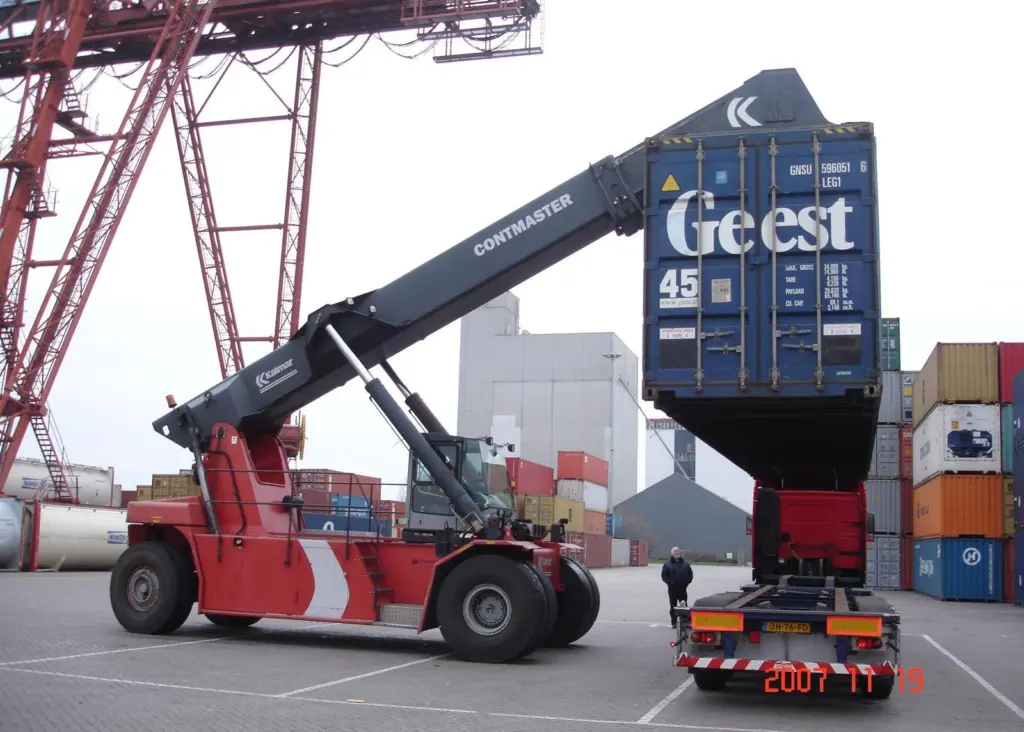
But in fact, the second hand market is a much more complex matter for ports. For one thing, it certainly is proving to be a popular way of buying vital equipment at an affordable price. “There is a solid demand for pre-owned equipment,” says Arno van Gils, director of fleet management at Cargotec. “Cargotec’s second-hand equipment business has grown substantially in the past years and there is a growing demand for all kinds of used machines.”
Mr van Gils explains that pre-owned equipment can be a good solution for port operators who are in the market for extending or replacing their fleet capacity – and furthermore, the price is a definite advantage. “Logically the purchase price of a pre-owned unit is substantially lower in comparison to a new. That can be financially attractive, especially in cases where the operation needs to cover a relatively short capacity peak.” Cargotec offers both pre-owned machines and short-term rentals. “With these flexible Fleet Management products, port operators can still use premium Kalmar equipment and benefit from their proven reliability and service,” says Mr van Gils. “At the same time, they can avoid large capital outlays or long-term commitments.”
Both Patrick Pichler of Liebherr and Roy Tito of Tito Lifttrucks identify two clear beneficial factors for buying pre-owned equipment: the price and delivery time. “Delivery time is usually very short once the decision to buy the machine on the second hand market has been made,” says Mr Pichler. “If the crane is not available immediately, the buyer of the second hand equipment has generally not to wait more than a few months.”
Mr Tito adds: “The price for new equipment is of course always higher and in general the delivery time for new equipment could take 16 to 18 weeks (for some models even 25 weeks) after order.” However, Mr Tito adds that Tito Lifttrucks always has a lot of brand new equipment in stock as well, such as big forklifts, container handlers and reachstackers – meaning that the company can supply new machines in fast time.
However, while the price tag and the delivery time are attractive propositions for a buyer, the purchase still requires attention in a number of ways. As with any second hand purchase, along with the cheaper price tag comes that feeling of uncertainty as to whether the item will function properly. “The risk that a second hand machine has a failure is higher than with a new machine,” says Marco Levermann of Hinrichs Forklifts. “The machine will be delivered without guarantee and so the probability that the machine has a failure is more likely than with a new one.
“The more working hours, the bigger the risk to face problems in the future,” adds Mr Tito. “You could compare it with buying a new car or a used car with several miles/kilometers on the clock.” However, Mr Tito says that even the purchase of new equipment can bring problems – the uncertainty issue is not exclusive to used goods.
There are a number of things that the port operator can do to make sure that the purchase of second hand equipment is as smooth and as open as possible. As Arno van Gils comments: “Purchasing pre-owned equipment requires specialist technical experience and knowledge. It starts with finding the best suitable machine to fulfil the job. When this is found, the next step is having a full condition report. Warranties, terms and conditions as well as presence for services may vary a lot depending on the pre-owned equipment supplier.”
Cargotec has a system in place that provides the customer with all the information that they require. On the company’s Fleet Management website (www.kalmarusedequipment.com), the machines displayed will come with a condition rating such as Gold, Silver or Bronze. Gold rated machines, for example, have a one-year unlimited warranty. A full technical condition report also comes as a standard on each machine.
An issue to bear in mind is where the second hand item is purchased from and a general rule of thumb is to buy the item from the manufacturer. Nowadays, the manufacturer can, in addition to brand new goods, sell used equipment too. Mr Tito advises that port operators should “buy from a renowned supplier, and inspect the equipment or have the equipment checked by a professional before buying it.
“Buying used machines from non-manufacturers always involves the risk of buying a pig in a poke,” adds Mr Pichler. “Only the manufacturer can assure that the machine is properly checked and overhauled beside other improvements. Therefore it is highly recommended to buy used equipment directly from the manufacturer.”
Mr Pichler says that when second hand equipment is bought from a manufacturer, any potential problems are already sorted out – indeed, the market for Liebherr mobile harbour cranes is very successful, and still rising.
If the port operator chooses to buy a second hand piece of equipment, then he or she must make sure that it is properly maintained on a regular basis. “Key for the condition of any piece of equipment, new or used, is maintenance,” says Mr van Gils. “Following the manufacturers’ prescriptions and performed by specialists, proper maintenance will guarantee the uptime, safety and re-sale value of the machine.”
Mr Tito agrees. “After purchasing, the equipment needs to be checked as often as any other equipment, daily inspections/maintenance and periodic maintenance every 500 working hours.”
The purchase of second hand equipment needs a careful eye and a dedicated specialist company to make sure that the port operator gets returns on both value and function. However, if the port operator chooses the right equipment from the right company with the right attention to care and maintenance, then this will result in a sound purchase. And given the economical climate, the second hand market is, at the moment, enjoying a very healthy spell.
“The demand for rental equipment follows the ups and downs of the economy,” confirms Cargotec’s Mr van Gils.
Liebherr’s Mr Pichler adds a further interesting point, saying that the second hand market wins in both prosperous and cooler economical climates: “In a booming economic environment used equipment is in demand, mainly thanks to short delivery times which often cannot be met by new machines. On the other hand, in a cool economic environment a lower price is usually the main motive to buy second hand machines. Generally an upward trend is noticeable.”
Related Articles
 NEWS
NEWS
 CONTAINER & CARGO HANDLING
 OPERATIONS