A new concession agreement which will lead to a massive expansion at the Port of Calais is expected to be in place by the start of 2014.
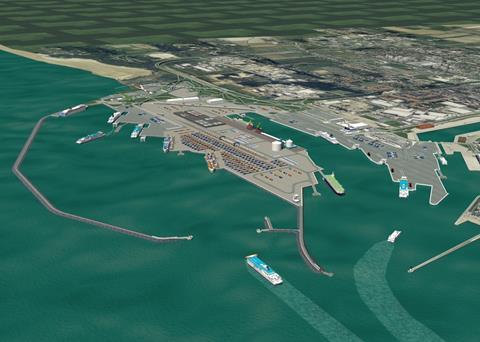
Calais Port 2015 will include the construction of a new 2,000 metres breakwater and a series of new ro-ro berths, to be built on existing and reclaimed land. The estimated overall cost of the expansion, to be built in phases, is €600m; the first berth should be operational by 2019, says Franck-Edouard Tiberghien, of Calais’ port development and strategy department.
Until now, the ports of Calais and Boulogne, both owned by the Nord Pas de Calais regional council, have been operated under separate concessions by the Chamber of Commerce. The new agreement will bring them both into one joint concession, likely to be for 50 years, says Mr Tiberghien. Eurotunnel was involved in the earlier stages of the bidding process but in the final stages the only bid was from the Chamber of Commerce.
“Further discussions are ongoing between the two parties and a concession for the management of the two ports as a single entity should be in place on January 1,” he says. “The concept is to build a new breakwater and new ferry berths. Later on we could develop more ro-ro berths and even container berths; these would not be deepsea, but to handle shortsea containers. However, we are very specialised in trade between England and the Continent and the focus remains on ferries and ro-ro – it isn’t to compete with the giant container ports.”
The expansion is needed for more capacity and also to handle larger vessels, says Mr Tiberghien. “We are limited on the marine infrastructure side; we have only five berths in operation and only two of them can handle ferries up to 210 metres. So we have limited capacity for the latest generation of P&O ferries. We need more capacity for 240 metres and more landside capacity too.”
The plans also include accommodating an increasing modal shift, providing a rail hub which could handle trailers transported by rail, as well as space for 45-ft containers and other intermodal units.
The first phase will provide two to three ferry berths and new freight control and check-in facilities. The entrance channel will be dredged to 13 metres and 90 hectares will be reclaimed.