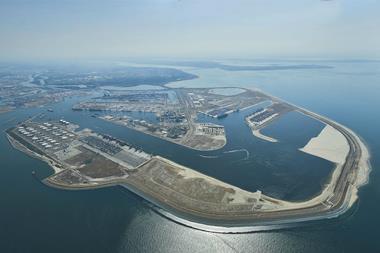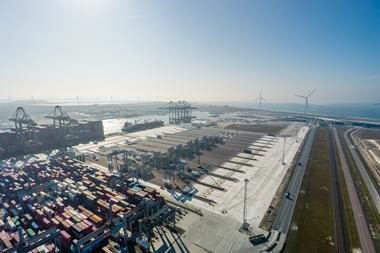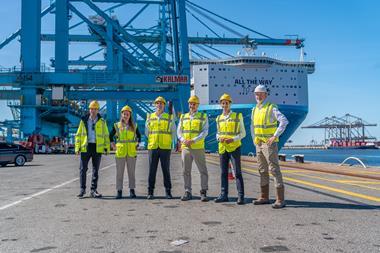

Things are off to a rocky start at the Port of Rotterdam’s new Rotterdam Gateway (RWG) terminal as dockers protest over the lack of a collective bargaining agreement.
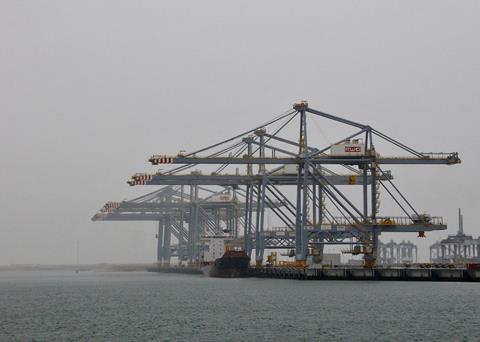
Earlier in the week, Alsvin was loaded at RWG with a number of containers as part of a test operation and sent to ECT where dockers refused to unload the vessel because RWG does not have a collective bargaining agreement. Unlike other companies at the port, RWG refuses to negotiate a collective bargaining agreement with port workers, who are represented by the FNV Havens union.
Now, the International Transport Workers’ Federation (ITF) is calling for all-party talks on the future of the Port of Rotterdam – “a giant among the world’s ports”. ITF president and chair of the ITF dockers’ action, Paddy Crumlin, says the port “should be a model of good industrial relations” and it’s “notable that all the operators there bar one have signed agreements with the union representing its workers”, despite “widespread concern” about the port’s future.
Sjaak Poppe, spokesperson for the Port of Rotterdam, told Port Strategy: “RWG has made it clear from the start it does not want to work with a collective agreement. As a port authority we do not intend to interfere with this kind of internal company policy.”
“We deplore this action, but since RWG is still just starting up its terminal this does not affect operations at Rotterdam at all at the moment,” he added.
So the dispute does not escalate, Mr Crumlin is urging “all parties, and that includes not just all operators and port authorities, but also the shipping lines, to get together to defuse this situation and reach an agreed settlement”.