


Oslo cuts emissions with shore power facility
The Port of Oslo has opened a new shore power facility enabling ferries operated by DFDS and Stena Line to lower their emissions by connecting to power while at berth at the port and further promote development of green technology.
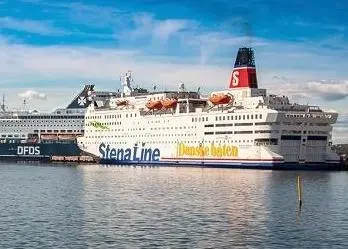
Part of Oslo’s ambition to become a zero emissions port, the facility uses electrical power from the power station at Vippetangen, which ferries connect to with the help of a cable crane. The crane is equipped with an 11kV high voltage cable to meet the 2-3MW onshore power requirement of the ferries, allowing them to shut down their diesel-powered auxiliary engines onboard.
“The CO2 reduction from this initiative is equivalent to emissions from more than 1300 cars annually,” said the port, which aims to reduce its CO emissions 85% by 2030.
“Shore power saves the ferries about 1,420 tons of fuel annually,” it added, explaining that ferries use between 5000 000 – 6 000 000kWh annually, when they are connected to shore power, meaning that the onshore electrical power grid supply has to be reliable.
Stena greens power
Stena Line is the first ferry company to connect to the onshore power supply connection. Stena Saga will now be connecting to the electricity grid during calls into port.
“We have a really close and good cooperation with the Port of Oslo and we are delighted that we have our onshore power supply up and running. We are of course also glad that we by this can support the city of Oslo in their aim to reduce CO2 emissions in the city and the port,” said Johan Edelman, Stena Lines trade director for Region Norway.
The shore power station has a cost of approximately 17m Nkr.
Related Articles
 ALTERNATIVE FUELS GREENPORT
 ENERGY & TECHNOLOGY GREENPORT
 ENERGY & TECHNOLOGY GREENPORT