






First electric workboat will use Corvus ESS
Corvus Energy will supply a 550kWh Energy Storage System (ESS) for the world’s first all-electric skimmer workboat for zero-emission harbour rubbish collection, to be used at the Port of Oslo.
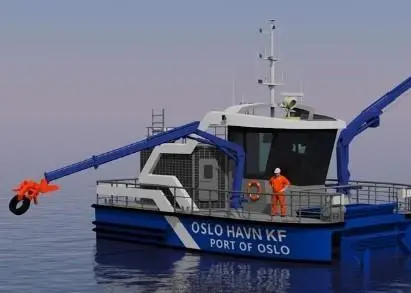
The ESS will allow the 12m long aluminium vessel, to be delivered in December, to be in full working mode for four to five hours, while a full battery charge will take just two hours. Due to be built by Grovfjord Mek. Verksted (GMV), the vessel will also feature solar panels.
Roger Rosvold, vice president of sales at Corvus Energy, stated: “Electrifying workboats in harbours has only just begun. For example, the Navtek ZeeTUG zero-emissions all-electric tug will take to the water this spring to operate in Istanbul harbour.
“We are confident that we will see a massive shift from diesel to battery on all kinds of harbour-going vessels due to substantial benefits. Battery power reduces emissions, which are increasingly regulated in many ports and harbours. Moreover, batteries are safer and quieter for the crew, and save both fuel and maintenance costs for the owners.”
All-electric propulsion
The deck of the vessel will be equipped with a hydraulic front-loading basket in the bow and a crane on each side. The boat will be powered by two electric propulsion engines and four electric side thrusters, allowing it to easily manoeuvre throughout the harbour and alongside quays to collect surface rubbish.
Its combination of deck equipment, manoeuverability and energy storage is expected to make it more effective and efficient than the current litter skimmer boat.
During the last 30 years, Pelikan has picked up about 1,500t of trash from the Oslo harbour water surface.
GMV specialises in aluminium workboats and previously built the world’s first fully-electric fish farm boat.
Related Articles
 ALTERNATIVE FUELS GREENPORT
 ENERGY & TECHNOLOGY GREENPORT
 ENERGY & TECHNOLOGY GREENPORT