![PortStrategy[GreenPort]](https://www.portstrategy.com/wp-content/uploads/2026/09/PortStrategyGreenPort.svg)




Exploiting the opportunities in short sea shipping
The Port of Antwerp is adding another string to its bow – it’s increasing its short sea shipping offering to attract new cargo streams, offer an end-to-end multimodal solution for customers and shield itself from negative market impacts.
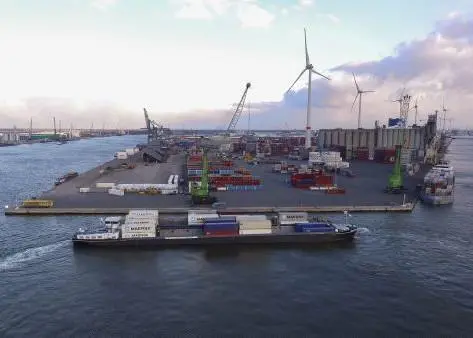
As the second largest port in Europe, Antwerp has been working hard to preserve its competitiveness and maintain its edge in the market. But at present it only offers weekly fixed shortsea and feeder services, no dedicated daily fixed short sea routes.
“A couple of years ago short sea shipping was not a focus point,” said Dries Van Gheluwe, Short sea Shipping, Port of Antwerp.
“But this aspect has been missing from our commercial strategy until now, despite the fact that the building blocks are already there for us to take advantage of the market.”
Targeted focus
Mr Van Gheluwe told Port Strategy that the port now has three specific key target areas for short sea – Spain and Portugal (Iberia), the UK and Ireland and Norway.
So, it is working to attract new business from the lines that service these locations.
In doing this it will be expanding its multimodal offering as a hub by using short sea as part of its integrated port plan alongside barge and rail.
“We see short sea as part of the overall mobility connection, creating a full multimodal transport solution for our customers,” he said.
Mitigation
In the current economic climate, there are two other positive motives for getting into short sea.
To counteract any possible negative impact to business resulting from the UK’s exit from Europe and to offer customers an alternative to trucking their goods to the above locations.
It’s a solution that helps protect the port from issues that the truck industry is currently facing – namely costly delays due to congestion and the well documented shortage of truck drivers.
Creating these strong short sea shipping routes also helps mitigate losing business to other ports. For example, at the moment some cargo has to be trucked to other ports including Rotterdam, before it can then be shipped out on short sea routes.
The port having its own routes means keeping a cargo contract for its whole lifetime and preventing needless movements.
Mr Van Gheluwe adds: “Antwerp has an excellent inland location and is home of the largest European chemical hub. Next to all the warehousing capacity that we have, it has a huge potential for short sea cargo in its own right.”
Development
To develop the new short sea routes, the port authority has been working with three terminal operators, two on the right bank and one on the left of the Schelde.
The port itself has been playing a guiding role with these three operators, helping build case studies for them and starting up business connections with carriers.
“The most important thing for stakeholders is reliability on an operational but also on a commercial point of view,” says Mr Van Gheluwe.
“Start-up is the most difficult and that is where the carriers ask most support. Who to go to, what to get and what to expect, these are certainties that companies always seek when they do an investment, so this what we are working on with them.”
Antwerp has already lowered its port dues for short sea to make it a more attractive prospect for these carriers.
It has also been helping with performing macro-economic analysis and facilitating the necessary infrastructure needed at the terminals.
Market research
One case study the port is conducting is looking at the creation of a short sea route between Antwerp and Hull/Immingham in the north of the UK.
Involving 80 different companies around the Port of Antwerp (including both destination ports and the carriers), the study revealed that the creation of this direct route could potentially transfer 50,000 teu of cargo per year from the road to short sea.
If you were to factor in all of Antwerp’s prospected new short sea destinations (Norway, Portugal, Spain, the UK and Ireland), this could equate to a road/sea transfer of 250,000 teu per year.
“By consolidating this information, you can draw a business case for short sea together with the carriers and the terminals,” says Mr Van Gheluwe.
Next steps
There are still some obstacles to overcome in terms of driving down costs and making short sea an even more attractive prospect.
At present Antwerp is not the cheapest maritime connection by way of the port’s inward location, this is because Hinterland transport is more expensive than maritime transport.
So, one of Antwerp’s main obstacles going forward is convincing shippers and forwarders to look at the entire cost of the supply chain, not only compare the cost of maritime transport.
To this end, Mr Van Gheluwe says that the next steps are to “Find and create the right partnerships” for the new routes.
“There are so many opportunities for us in this sector and for strengthening multimodal transport in Europe on a wider scale. We’d be foolish if we didn’t take full advantage of this market.”
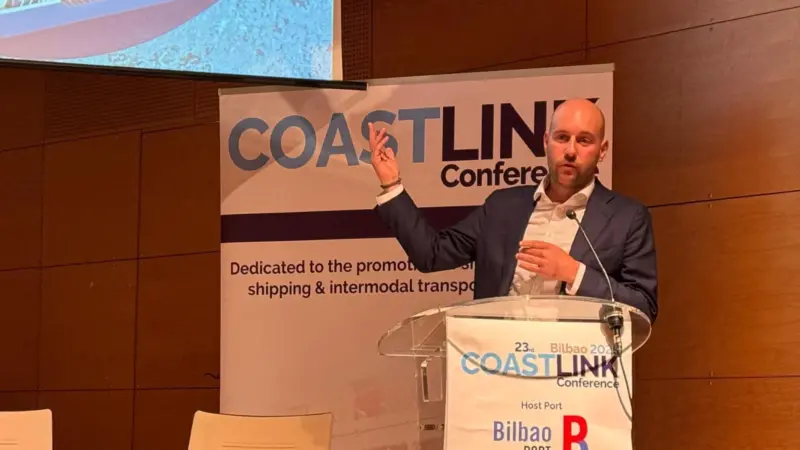
Coastlink
The Port of Antwerp is hosting the annual Coastlink conference which will run from 13 to 14 May 2020 where Dries Van Gheluwe will share his expertise on this issue. More information from www.coastlink.co.uk