


Electric ASV enables zero-emission operations
A German port has deployed its first autonomous surface vehicle (ASV) for water measurement with electric propulsion for zero-emission operation.
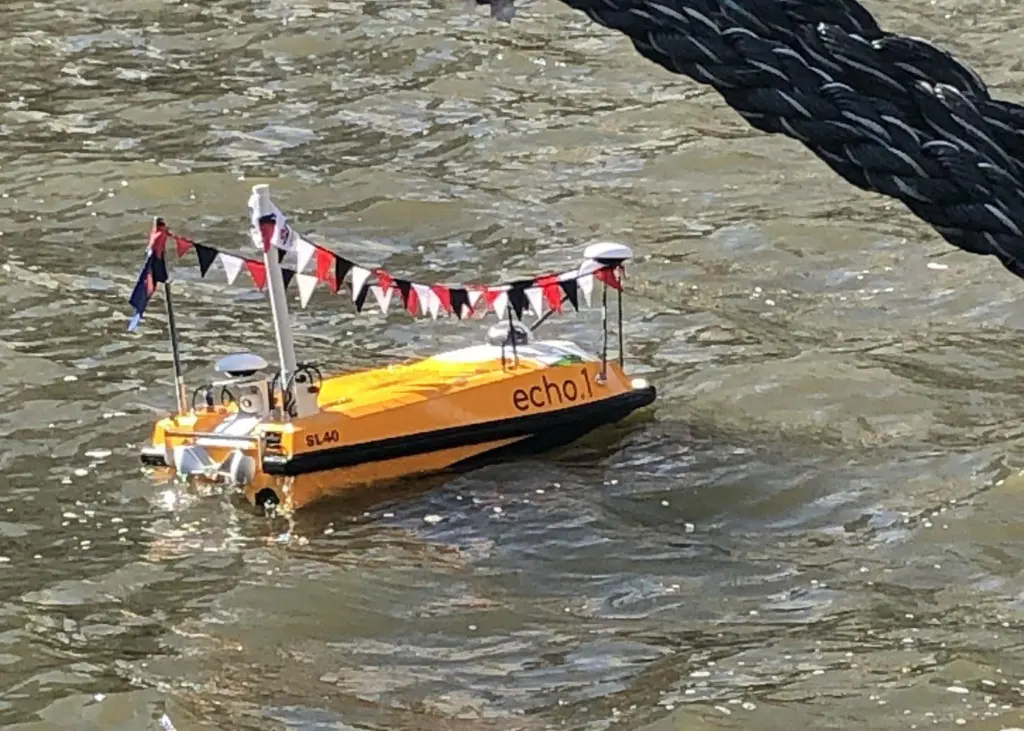
The Port of Hamburg’s 1.65m long Echo.1 is equipped with two 33v batteries to enable it to operate non-stop for up to six hours.
Those present at the launch of the carbon fibre ASV included Senator Michael Westhagemann, who said: “Drones have rapidly developed into highly complex technical systems that will take on many useful tasks in the near future – in the air and here as well on the water.
“Unmanned drones have become increasingly important due to their wide range of uses – both for commercial and private use. The technology offers a lot of potential for Hamburg as a location for innovation.”
Compact sensors
The drone’s compact high-performance sensors will help to further improve the data on the depths of water in the Port of Hamburg by, among other things, exploring areas that are very shallow to inland depths and which are difficult to access using the port’s vessels.
With a maximum speed of 5m/s, Echo.1’s small size and high manoeuvrability means it is suitable for mobile and portable use and thus offers a useful extension to the existing direction finders.
The autonomous use of Echo.1 was preceded by a workshop in August last year with representatives from various international hydrographic institutions and subsequent extensive tests.
“We put the ‘echo.1’ through its paces. I am sure that this, perhaps still unfamiliar, sight of an autonomous vehicle in the port of Hamburg will soon become normal and ‘echo.1.’ will not remain alone for long,” said port captain, Jörg Pollmann.
Related Articles
 ALTERNATIVE FUELS GREENPORT
 ENERGY & TECHNOLOGY GREENPORT
 ENERGY & TECHNOLOGY GREENPORT