![PortStrategy[GreenPort]](https://www.portstrategy.com/wp-content/uploads/2026/09/PortStrategyGreenPort.svg)





NEW RULES, PAPERWORK, BARRIERS AND ROUTES
A steady series of headlines makes one thing clear – BREXIT most certainly isn’t “done”!Felicity Landon considers the fallout for some of the key UK ports involved.
Those who campaigned for the UK’s departure from the European Union promised a freedom from EU red tape. The reality? Since January 1, bureaucracy has hit cross-border trade, and there is more to come. Fish, silk, trees, cheese, wine, wool, electrical hot plates, confectionary – the stories of imports and exports entangled in, or prevented entirely by, new regulations and restrictions are easy to find.
For UK ports, the BREXIT drama began early with the pre-Christmas logjam on the way to Dover; the result of France’s COVID-19-related border closure combined with a surge of stockpiling by UK importers anxious to build inventories before the end of the transition.
And now? There has been upheaval on the Irish Sea, with a shift of volumes from the UK-Dublin to Northern Ireland route and a significant expansion of services directly from France to Ireland, which cut out altogether the UK landbridge route with its hassles – perceived or real. According to Freight Transport Association Ireland (FTAI), import cargo from the UK to southern Ireland declined 50 per cent in January. At the Irish Sea ro-ro port of Holyhead, owned by Stena, volumes have been cut in half.
TRAILER SPIKES IN LIVERPOOL AND HEYSHAM
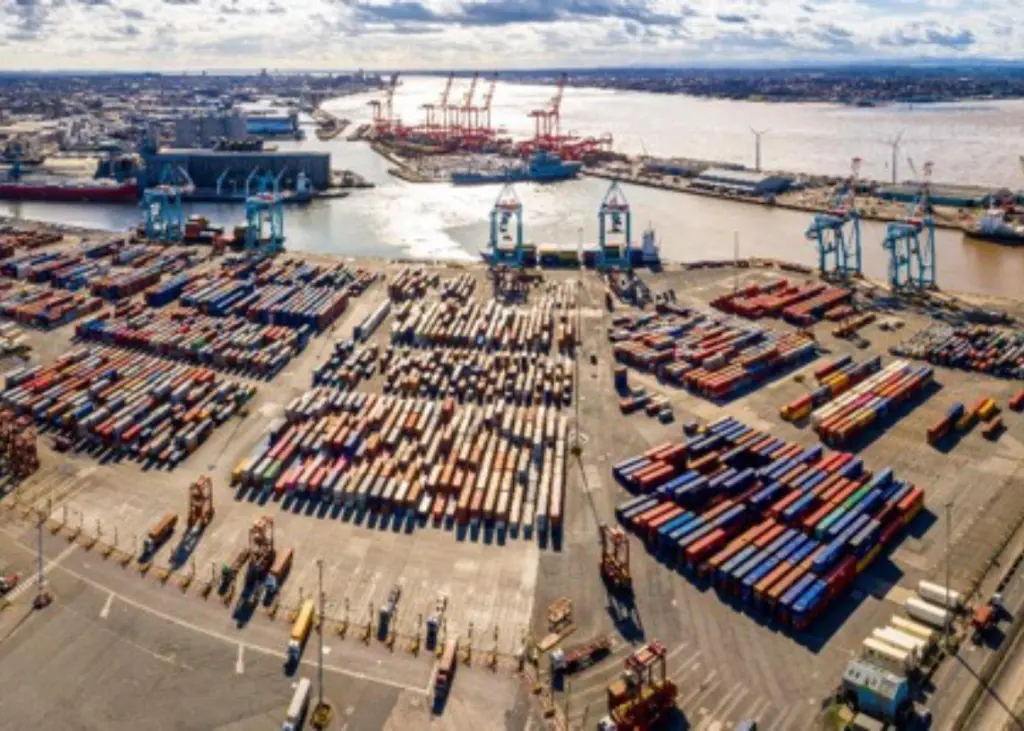
The ports of Liverpool and Heysham saw a spike in trailer demand from autumn 2020 and throughout the Christmas and New Year period, says Stephen Carr, Group Commercial Director, Peel Ports. Indications are that freight volumes on the Irish Sea overall fell in January year-on-year as stockpiles were used, he says – but this affected central corridor routes rather than Northern Ireland journeys.
“We [Peel] are seeing larger than normal volumes on the Northern Ireland route and lower volumes on the Dublin route. Traders perceive it is easier to move goods into Ireland by travelling through Northern Ireland rather than directly travelling from the UK to the Republic of Ireland.”
He adds: “We have yet to establish whether the changes we are seeing in Irish Sea ro-ro/container services are short or long-term and whether these are caused by BREXIT or COVID-19 challenges, or a combination of both.”
Peel has not seen any physical delays at the ports, Carr explains. “Prior to January 1 we, along with the shipping lines, informed customers they would not be able to wait if they had incorrect paperwork – and by turning away trucks that did not have the correct documentation, we prevented any issues. Of course, that does not mean traders did not have issues, just that they did not manifest themselves at the ports.”
There has been plenty of publicity about the increase in volumes of direct ro-ro shipments between Ireland and mainland Europe. Carr notes that there were previously about three such services a week – now (at the time of writing), he says, there are 15, as well as a steadily increasing number of additional container services over the past two or three years.
“Our ports are less affected by this transition as they are biased more towards the unaccompanied flows, whereas much of the ‘land bridge’ volume is accompanied. One of our notions pre-BREXIT was that there would be a shift away from accompanied freight to unaccompanied – which is happening. The combination of COVID-19 and the introduction of testing of drivers at Dover has had an equally distorting effect on the market.”
DOVER – CENTRE OF THE STORM
The Port of Dover was at the centre of the storm when France closed its borders for two days before Christmas, leading to queues on the motorway and the diversion of 4000 trucks to Manston airfield.
Once borders were reopened and COVID-19 testing was up and running, processes worked well and traffic started to clear, says Doug Bannister, Chief Executive, Port of Dover. “It comes down to our capacity through Dover – the frequency of sailings means that when there is disruption, we can clear the congestion and get back up to normal very swiftly.”
When January 1 arrived, all was OK, as Bannister explains. “We saw tremendous stock build-up take place at the back end of November and through December. People were preparing for a possible no-deal BREXIT. That meant we were anticipating lighter than seasonal freight volumes in January and into February and that turned out to be the case.”
In the quiet early weeks of 2021, those who were trading were getting prepared and accustomed to new processes and getting the right documents in place, he says. “We were expanding the core of well-prepared traders and, as new traders came in, we saw that core of well-prepared people growing. We have a very low percentage of people being turned away either for incorrect paperwork or because they have not got their negative COVID-19 test.”
Volumes through Dover rebuilt, to reach about 90 per cent of normal levels by the end of the first week in February, he says. The ‘Kent Access Permit’ system, which requires EU-bound trucks to have the right paperwork before they enter the county, is operating – but Bannister would like to see some improvements.
“For example, trucks coming down the M20 are stopped at junction 8. If they are destined for the port, they are sent back to junction 7, to Manston, whether they have had a negative COVID-19 test or not. They are then fast-tracked through Manston. This means a driver might have deviated 20 miles already to get his test earlier but still has to go to Manston. There is a green lane set up on the M20, but the trucks are not granted access to it.” He would like to see a system where drivers can show their negative test at junction 8 and head straight into the green lane to the port.
The overall trade imbalance means that typically 30-40 per cent of trailers are empty when they depart Dover for Calais. The port did see higher empty ratios in January, although this has been towards more usual levels, says Bannister.
However, the real test for imports has yet to come. So far, the main documentation challenges have applied to exports to the EU. The UK has been applying a ‘light touch’ in terms of import regulations and inspections – but the full set of import rules and declaration processes will apply from July.
CONSTANT DIALOGUE TO PREPARE FOR JULY 1
“The important thing right now is that we have a few months to go before we hit the main import rules,” says Bannister. “We are in constant dialogue with government departments. Questions really need to be answered, plans need to be put in place, we need assurances around milestones. Getting some attention on these areas will mean July 1 will happen much more smoothly than it might otherwise.”
As for transit traffic, Bannister says about 40 per cent of Irish exports to mainland Europe take the land bridge route via Dover or the short straits. “The reason why they take that route is that it is the most economical and they can be in the market 14 hours after setting out from Dublin, whereas the direct [sea] routes mean a long time commitment, tying up the driver and truck, and longer getting things to market.
“The other point is that if you miss a long sailing, you might be waiting 36 to 48 hours for the next. Here, we have another sailing in about an hour. Dover is popular because it offers multiple options and the closest time to market.”
VOLUMES DOWN ON THE FRONT LINE
The port of Holyhead, owned by Stena Line, is truly in the front line. Overall, volumes are down 50 per cent, year on year, says Simon Palmer, spokesperson. “Everyone thought post-BREXIT there would be congestion at the ports and our message was, don’t come if you don’t have your correct reference and customs declaration. However, the big issue is not the trucks that are coming to the port – it is the trucks that are not coming.”
Historically, one-third of the freight carried on the Dublin route was destined for Northern Ireland. That trade is now moving via Belfast, taking advantage of the differences in paperwork. At the same time, large volumes of freight to and from the Republic have shifted to the ‘back door route’ via Belfast because it offers unfettered access, says Palmer, and Stena knows from hauliers that a lot of the trucks going into the Republic (Holyhead-Dublin) are empty.
“Also, we had eight weeks of very high freight levels pre-Christmas. Three of the weeks we actually broke record levels on the Irish Sea – so there are still stockpiles,” states Palmer. He also emphasises that more rules are on the way. Britain had a six-month deadline to bring in the rest of the rules; it is almost a second Brexit coming in July, he warns. “There are a lot of issues coming up that have not been thought of – at present, food and groupage are the big issues.”
Stena has seen volumes tumble on its Fishguard-Rosslare service – but volumes have more than doubled on its Cherbourg-Rosslare link, which bypasses the UK altogether. “Last year we ran a service every other day on that route. Now we are going every day. It was just us and Irish Ferries leaving alternate days – now you have DFDS and Brittanny Ferries operating too. There is a lot of demand for Rosslare.”
However, Palmer says that transit traffic via the UK land bridge is in fact working well. “Customers are demanding direct routes because they do not have to fill in the paperwork – even though each load is costing €300-€400 more and adding five or more hours to the journey.”
Describing the entire post-Brexit port scene, one customs consultant says: “It will get worse before it gets better. On July 1, the UK will enforce the new border and full declarations. So far, lockdowns have also helped because volumes are lower than normal. As things get back to normal and everything starts flowing, that is when we will really find the issues. Add in the return of passengers at a port like Dover, and if there is a hold-up for trucks, it will create huge congestion.”
Related Articles
 PORT & TERMINAL NEWS
 EXPANSION & DEVELOPMENT
 PORT & TERMINAL NEWS