




Electrification gets closer
Hydrogen and lithium-ion power may move ports closer to total electrification.
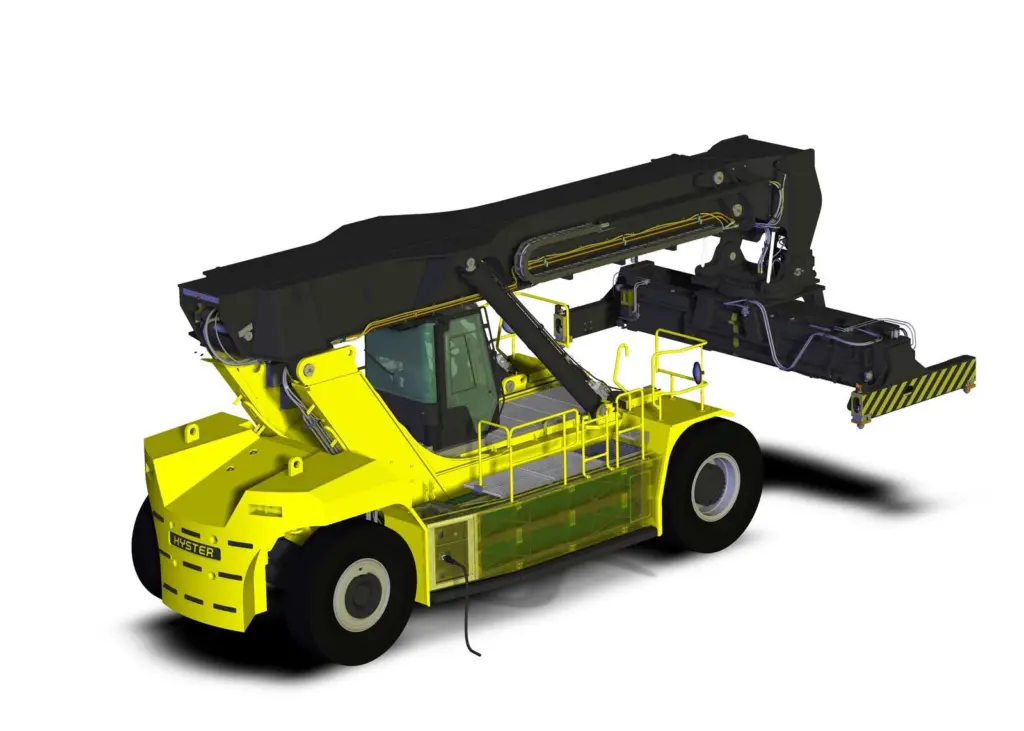
This is the message from Hyster Europe, as it prepares to update on its zero-emission container handler and reachstacker projects at the TOC Global Showcase.
“For several years, Hyster has been working on unique zero-emissions container handling equipment for ports that incorporate lithium-ion battery and fuel cell technology,” said Willem Nieuwland, Big Truck Program Manager for Hyster. “However, we are now ‘extending the family’ and bringing these benefits to more equipment types to support total green operations from ship to store.”
Innovative partnership
Hyster recently revealed it was entering a partnership with Capacity Trucks to jointly develop electric, hydrogen, and automation-ready terminal tractors.
The collaboration brings together Capacity’s terminal truck platform with Hyster’s lift truck electric powertrain technology and hydrogen fuel cells. The Hyster solution in development has lithium-ion batteries and hydrogen fuel cell power integral to the design, rather than as a retrofit option.
“Importantly, the opportunities for hydrogen fuel cells are a key factor in this development, as this is a particularly interesting area for ports and something we’ve been progressing since 2017,” said Mr Nieuwland.
Lithium-ion power
Hyster continues to develop container handlers and reachstackers powered by lithium-ion batteries, either alone or combined with a fuel-cell range extender, as part of a several funded projects for end users in the Port of Los Angeles and Port of Valencia.
The company has also recently launched several products to support zero-emissions handling with high productivity portside.
The Hyster J7.0–9.0XNL electric forklift series with fully integrated lithium-ion batteries, carries up to 9t and offers rapid opportunity charging. The Hyster PC1.5 ultra-compact lithium-ion pallet truck offers efficiency without complex maintenance requirements. When the lithium-ion battery needs replacing, operators get a recharge alert and, in just six seconds, can exchange it, keeping the operation running with minimal interruption.
Related Articles
 ALTERNATIVE FUELS GREENPORT
 ENERGY & TECHNOLOGY GREENPORT
 ENERGY & TECHNOLOGY GREENPORT