![PortStrategy[GreenPort]](https://www.portstrategy.com/wp-content/uploads/2026/09/PortStrategyGreenPort.svg)





VALENCIA: BALANCE SECURED
New container terminal development in Valencia appears to have struck the right balance in a challenging environmental situation.
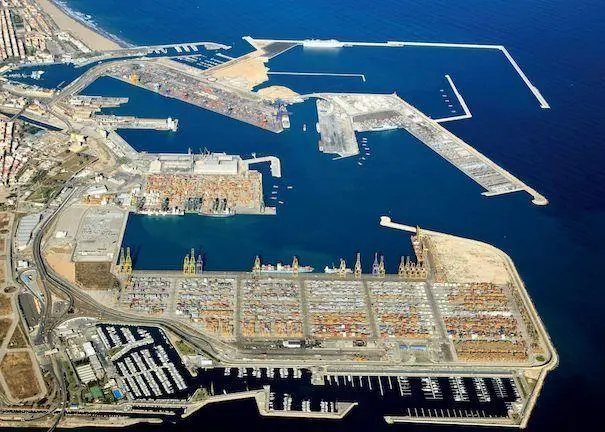
New container terminal development in an area near to a metropolitan environment has to strike the right balance between enabling the new facility to effectively fulfil its business function, operating in an environmentally-friendly and sustainable way, and making a positive economic impact.
Even with this sort of balance achieved there will be doubting voices and push-back especially with large developments like the one proposed under the North Expansion of the Port of Valencia, the centrepiece of which is a major new high-capacity terminal for Terminal Investments Limited (TIL), the terminal operating arm of liner operator Mediterranean Shipping Company (MSC).
Following comprehensive reviews and studies undertaken by a range of parties including the EU, Puertos del Estado, Spanish government agencies and the Institute of Transport and Territory (ITRAT)/ Polytechnic University of Valencia (UPV), the Port Authority of Valencia (PAV) has released highlights of the various findings which it believes confirm that the project strikes the best development balance available with a project of this scale.
Throughout the planning of the project concerted efforts have been made to minimise the impact on the surrounding metropolitan area, an aspect of port planning which generally is higher up the agenda nowadays. In this regard, the study undertaken by ITRAT under the direction of UPV particularly records that the construction of a new northern access to the port will:
- Generate savings in vehicle operating costs as a result of the diversion of traffic of up to €53.3 million per year and of €18.8 million a year due to decongestion.
- Reduce polluting emissions by 40,195 tons of CO2.
ITRAT further notes that: “Very important improvements in transport costs and benefits for environmental sustainability will result from the construction or improvement of new works and services, both in the road, rail and logistics fields, that accompany the start-up of the new container terminal of the North Extension.” It is further notable that TIL within its terminal development plan has made a commitment to develop a six track, purpose designed, intermodal rail terminal. This will possess a rated capacity of 305,000TEU/yr.
A BENCHMARK IN SUSTAINABILITY
The container terminal project overall has been tagged as a ‘benchmark in sustainability” by the Port Authority of Valencia which goes so far as to describe it as, “the most environmentally advanced in the world.”.
Key features of the terminal design include:
- Electrical power supplied to ships while in port.
- Electricity to power ship-to-shore cranes and yard machinery.
- 100 per cent of the electricity to come from renewable sources.
- Automation in the cargo handling process.
Full environmental approvals are in place for the project which will be implemented over the short-term. These were in fact tested recently by a private citizen lodging an objection to the project with the EU.
The European Parliament’s Committee on Petitions responded by noting: “the Commission has not been able to identify any indication of possible infringement of EU environmental legislation” and that “the Commission considers that the relevant review procedures provided for by the Spanish legal system under the EIA Directive and/or Directive 2003/4/EC are the most effective mechanism to seek redress and satisfactorily deal with any possible cases of misapplication of EU law.”
Puertos del Estado and Spain’s Ministry for Ecological Transition have also affirmed their respective beliefs that the project is fully compliant with both national and EU law. Specifically, Puertos del Estado has confirmed that an existing Environmental Impact Statement (EIS) for the site is applicable and that there is no need for a new EIS.
MAJOR BENEFITS
The ITRAT study is very clear in terms of detailing the projected benefits of the new container terminal. As reported by PAV, with the new terminal in operation, “the economic impact of the Port of Valencia will represent in terms of added value 2.27 per cent of the whole of the Comunitat, with more than 44,000 qualified and quality jobs, whose average salary will be around €32,000 per year.”
Generally, it is never easy to strike the right development balance in conjunction with large scale infrastructure works and especially such works that take place in close proximity to an existing metropolitan area. In the case of the north port extension and as part of this the development of the new TIL terminal, PAV does appear, however, to have secured a workable balance with due regard to all the parties involved, direct and indirect.
Related Articles
 INSIGHT & OPINION
 INSIGHT & OPINION
 INSIGHT & OPINION