

Navigating the EU carbon reforms
The latest EU carbon reforms are tricky to navigate, but there are people out there to help voluntarily, advises Redshaw Advisors
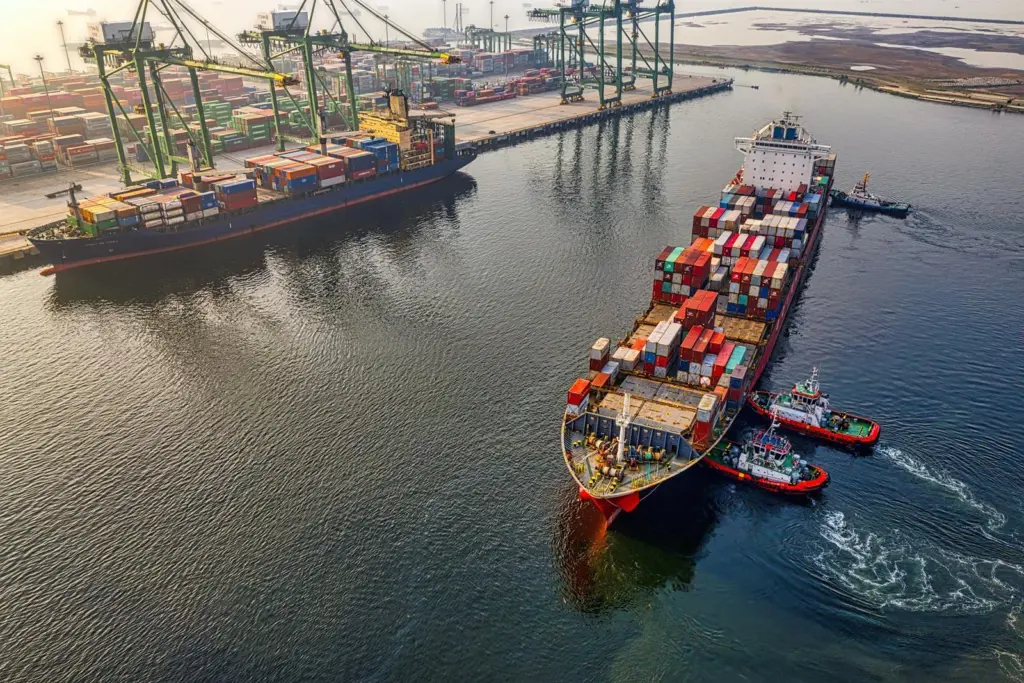
On 14 July, the European Commission published the EU Green Deal’s Fit for 55 plan — a series of carbon market reform proposals to enable it to meet its target to reduce the bloc’s greenhouse gas (GHG) emissions by 55% by 2030, from 1990 levels.
According to EU official data, while shipping accounts for only around 3.5% of the EU’s emissions, the sector is one of the fastest growing sources of emissions that contribute to climate change.
The sector has thus been incorporated into the EU’s new climate plans and there are four aspects that affect it directly.
Verifying emissions
The first part of this is to incorporate it into the EU’s existing Emissions Trading Scheme (ETS) with a phasing in period from 2023-25 and full compliance from 2026.
The EU ETS will apply to emissions from passenger and cargo ships (at over 5,000 tonnage) and will cover 100% of emissions from intra-EU voyages, 50% from extra-EU voyages and 100% of emissions at berth at an EU port.
Shipping companies will be required to surrender EU Allowances equivalent to verified emissions with phasing in set at 20% of emissions in 2023, 45% in 2024, 70% in 2025 and 100% from 2026. Each allowance represents one tonne of CO2 equivalent where prices are currently trading above €60 per tonne. Non-compliance would risk penalties, such as EU port entry denial. Unlike EU industry, that receives a free allocation of allowances, shipping will receive none.
The maritime sector already reports verified emissions as part of EU maritime transport regulations, via the EU MRV (monitoring, reporting and verification), for which the deadline is 30 April each year. The earlier 31 March deadline for compliance with the EU ETS verified emissions rules would need to be adopted.
An area to be clarified for the sector is where compliance will rest throughout the shipping supply chain along with the responsibility for additional emissions costs. One thing is certain, the new carbon costs will result in higher prices for the consumer.
Further, there is the risk to trading patterns. In order to avoid carbon costs and regulatory oversight, shipping companies may choose to opt for ports close to but not within the EEA. For example, this could increase UK port activity (subject to its Clean Maritime Plan).
Energy and fuels
The European Commission also has plans to update its Energy Tax Directive (ETD). This proposal intends to remove marine (and aviation) tax fuel exemptions by 2023. At present, fuels sold to ships for international use are duty exempt. Fuels sold for domestic use are subject to duties set by individual countries.
The International Bunker Industry Association (IBIA) estimates that the resulting tax on HFO (Heavy Fuel Oil) would result in additional costs of US$45 per tonne. The IBIA warns that this would place EEA ports at a competitive disadvantage and may result in a transitioning of bunker fuel demand away from the region.
A new policy proposed with the Fit for 55 plans is the FuelEU Maritime initiative. This aims to broaden market penetration of renewable and low-carbon fuels (RLFs) for shipping.
According to the proposal, the carbon intensity of a ship’s on-board energy needs to be reduced by 2% by 2025, 6% by 2030 and increments every five years thereafter to reach 75% by 2050, all versus 2005 levels.
Separately, renewable and low carbon fuels should represent 6-9% of maritime fuel mix by 2030 and 86-88% by 2050.
For the latter, the marine industry would need to establish, with proof and certification, the full well-to-wake Greenhouse Gas (GHG) lifecycle emissions of alternative non-fossil fuels.
For fuel users, the shipping companies, this would seem to require an extension to existing emissions reporting requirements.
For fuel suppliers who wish to supply alternative fuels, the regulation would require documented well-to-tank GHG emission factors on each respective bunker delivery note (BDN) as well as CO2 equivalents per gram of fuel. A separate certificate would also be required to detail the fuel production pathway.
The industry argues that such reporting adds to complexity, not least because new fuel adoption will incorporate blends, but also costs.
Concerns have also been raised in relation to responsibility. The FuelEU Maritime initiative places the onus of complying with the policy and sourcing alternative fuels on the shipping companies rather than the fuel suppliers. This suggests that the former needs to create the demand for the supply to subsequently emerge.
The fourth aspect to Fit for 55 for shipping relates to the Alternative Fuels Infrastructure Directive (AFID). During its consultations the European Commission concluded that investments in alternative fuels infrastructure for LNG bunkering and onshore power supply (OPS) in ports had been limited in most EU Member States.
The AFID sets requirements for adequate LNG bunkering infrastructure by 2025 and for minimum electric shoreside power by 2030.
The main question for the industry is whether the necessary infrastructure will be in place on time and the implications for any delays.
Industry guidance
It is worth noting that the EU’s new proposals are more stringent than those of the International Maritime Organization (IMO). The IMO is the division of the United Nations (UN) that regulates shipping.
In 1973, the IMO adopted the International Convention for the Prevention of Pollution from Ships (MARPOL) which sets out mandatory measures to improve ships’ energy efficiency.
The IMO has set out ambitions to reduce annual GHG emissions from shipping by at least half by 2050, compared with 2008 levels. It also plans a full phase-out of GHG emissions from shipping as soon as possible this century and to reduce the carbon intensity of international shipping. It targets at least 40% by 2030 and 70% by 2050, compared with 2008 levels.
Aside from the Fit for 55 legislative package, the shipping industry is facing pressure from various stakeholders to act on its carbon footprint faster. There is a growing trend of cargoes being made ‘carbon neutral’ through the use of carbon offsets available in the Voluntary Carbon Market (VCM). There have been a number of widely publicised carbon neutral cargoes. For example, Shell announced the first ever carbon neutral LNG cargo to Europe in March. Unfortunately, the VCM can be very confusing as it is currently unregulated.
The award-winning team at Redshaw Advisors has established decades of compliance and voluntary carbon market expertise. Understanding the complexities of the markets and offering convenient, simple and transparent solutions is the cornerstone of what we do.
Our client base extends across a broad range of sectors and geographies and so we ensure we are always fully informed of developments as they evolve and prepared to anticipate any changes that may arise.
As well as keeping our clients regularly briefed on market and pricing progress, as part of our Carbon Support Programme (CSP), we also construct quarterly plans to provide a clear overview of environmental markets exposure and how to position accordingly. Dedicated advisors are on hand to explain and guide throughout.
Our CSP has saved numerous clients not just time but also money. One such example is a client who saved €2m by following the advice we offered.
Knowing the market as we do, we feel confident that those in the shipping sector can rely on us.
Related Articles
 REGULATION & POLICY GREENPORT
 REGULATION & POLICY GREENPORT
 REGULATION & POLICY GREENPORT