

Strong wind competition
UK ports must be prepared to face competition from Europe over offshore wind business.
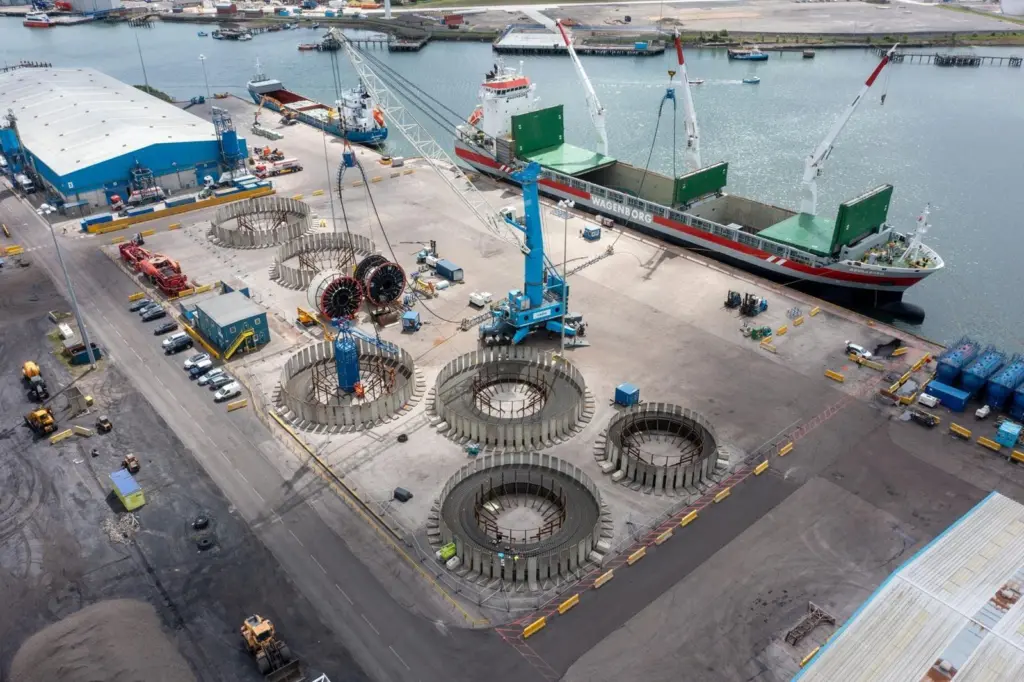
Speaking exclusively to GreenPort, Mark Simmonds, director of policy & external affairs at the British Ports Association (BPA), said getting investment and infrastructure in place is time critical to take advantage of opportunities to do business with offshore wind farm companies.
“It’s an ambition for most of the British offshore wind farm parts to come through UK ports. There will be strong competition from ports in Norway, Germany and across Northern Europe, where ports have support from government or else are very competitive,” said Simmonds.
Government support crucial
There is strong competition particularly in the North Sea and off the South Coast and licensing and consent issues mean it’s not easy to build or expand port infrastructure, so government support is needed.
While the UK Government has reaffirmed its commitment to offshore wind in its Net Zero Strategy, with a target of 40GW by 2030, Simmonds said the BPA has been encouraging the Government “to make a stronger commitment to making sure UK ports access as much offshore wind business as possible”.
Smaller ports can capitalise from offshore wind farms, as well as larger ports, he pointed out.
Ports that aren’t large enough or don’t have the facilities to handle larger wind turbine blades or build O&M facilities could get involved in other ways, like becoming a base for crew transfer vessels.
“It’s not just the build and decommissioning, there’s lots of other work coming through as well. Smaller ports can support different parts of the supply chain.”
Energy hub transformation
Growing offshore wind make sense to help ports become energy hubs, enabling them to decarbonise and support the transition to alternative shipping fuels, Simmonds pointed out.
“They’re going to need a lot of energy. They’ve traditionally been at the end of the energy networks. With energy being generated at wind farms, ports are now going to be right next to where a lot of our energy is generated.
”There’s opportunities to hook directly into that energy generation as Cromarty Firth are doing with their hydrogen project, and exploit it to create jobs, more opportunities.”
Recently established freeports can aid ports looking to get into or grow their share in the offshore wind market.
“Freeports will help ports expand quicker, build new infrastructure, make it easier to create new jobs and make the general area more attractive for investment. We’ve seen that already,” he explained.
Current offshore wind farm projects being developed in Britain include Dogger Bank, Hornsea 2, Moray West and East Anglia ONE.
Ports across thew UK are involved in offshore wind support, including Forth Ports’ Leith, Blythe, Aberdeen, Cromarty Firth, Humber and Tees, Lowestoft and Great Yarmouth. No offshore wind farms have been built in Northern Ireland waters, due to uncertaintly over suitability.
Related Articles
 ALTERNATIVE FUELS GREENPORT
 ENERGY & TECHNOLOGY GREENPORT
 ENERGY & TECHNOLOGY GREENPORT